When these specialist SEN units and resource bases work well, they enable inclusion. However, the success of these units is dependent on how well they are resourced and staffed, and how they interact with the wider mainstream school.
Over the summer, we held a series of focus group with parent carers of children who either currently attend a unit or base or have done in the past. We also spoke to parents who have considered this type of placement for their child.
Your experiences have already been shared with Department for Education. Thank you to everyone who took part in the focus groups. And thank you too to the parent carers who joined us at meeting with government officials.
Your experiences
The discussions revealed significant inconsistency in how these units operate, particularly regarding inclusion, but also in terms of the support they offer.
Parents’ experience of the support in units and bases varied widely. From well-resourced, flexible provision, to under-funded hubs without qualified teachers or adequate therapy input.
“She has some classes where the staff from the unit will drop in partway through to see how she’s doing. With other set lessons like English or Geography, where there’s a lot of writing, there’ll be someone from the unit in the classroom with her.”
“The hub he’s in has never had a qualified teacher teaching the class. There is only a teaching assistant and a lunch lady.… I feel they’re more like a daycare than a school.”
The government has been clear in its intention to increase the number of SEN units. This is reflected in funding commitments, including the £740 million High Needs Provision Capital Allocation, intended to support the creation of 10,000 new SEN places and specialist facilities within mainstream schools.
Recently, many local authorities have increased the number of specialist units in mainstream schools. However, without government guidance, this has led to a postcode lottery in the quality of teaching, specialist support and inclusive practices across units.
Calls to Contact’s helpline suggests these units vary dramatically from one school to another.
What Contact is calling for
Contact would like to see clear guidance for specialist units to ensure they are appropriately funded, staffed and founded on the principle of inclusion. They should respect and protect every child’s right to a mainstream education, while not replacing the role of special schools.
Done well, specialist units have the potential for more young people to feel included in their local school community. However, increasing them without suitable regulations or guidance could lead to them being entirely separate in teaching and location from the mainstream school, segregating pupils with SEN.
The government has announced a new series of events designed to listen directly to parent carers and make sure your experiences shape the future of Special Educational Needs and Disabilities (SEND) support in England.
The 9 face to face and 5 online events aim to put families at the heart of upcoming SEND reforms ahead of the publication of the Schools White paper expected early next year.
The government says it wants this to be the biggest discussion on SEND in a generation, with reforms guided by real experiences from parents, carers, young people and practitioners. Minister for School Standards, Georgia Gould, will kick off the first engagement event which takes place today in Bristol.
Where are the face to face events taking place?
You can sign up to attend the following events taking place in person:
Anna Bird CEO of Contact says: “We know that parent carers spend too much time trying to navigate a system that often feels overwhelming and inconsistent. We welcome any opportunity that gives families a genuine voice in shaping reform.
“Parent carers have so much expertise, born from lived experience, and it’s vital that this is listened to and acted upon. We encourage parent carers to take part in these events if they can – your insights are powerful, and they deserve to be heard.”
The engagement events will focus on:
Early support -getting help in place earlier, when it has the most impact.
Local provision – making sure children can learn in high-quality settings close to home, with the right special provision where needed.
Fairness – so families don’t have to battle the system, and every school is equipped to meet children’s needs.
Effective practice – ensuring support is based on what works and leads to strong long-term outcomes.
Joined-up services – improving collaboration between education, health, care, local authorities, and families.
Registration for all events will be on a first come first served basis. Following this period of engagement, there will also be the opportunity to share your views and experiences in the government’s public consultation following the publication of the Schools White Paper.
Since the Chancellor presented her Budget on Wednesday, talk in some quarters has turned to how the government plans to offset a significant special educational needs (SEN) deficit in England.
The government announced that it will absorb SEN costs into central government department spending from 2028, removing them from local authorities. But the office for budget responsibility (OBR) has estimated that this will cost the government £6billion.
The Department for Education has confirmed that it will not fund this deficit from the core schools budget. Instead, it says the OBR’s forecast does not take into account the forthcoming Schools White Paper, expected early next year. The White Paper will set out this government’s reforms to the SEN system.
Contact is concerned that using the Schools White Paper to plug a £6billion spending gap risks prioritising savings over ensuring successful, long-lasting reforms.
“We’re pleased the government is taking steps to address the local council funding deficits. We await the detail in the upcoming Local Government Finance Settlement.
“However, there is a lack of clarity about how these costs will be met. We are concerned that the government is unrealistic about the amount of time it will take to turn around the SEN system.
“The right reforms will deliver better value for money and, in the longer term, may deliver savings. But is is premature to bank on these savings before they have even finalised their plans.”
Disabled Children’s Partnership publish early intervention report
The Disabled Children’s Partnership and the Speech, Language and Communication Alliance have published a report today showing the economic benefits of acting quickly to provide support for speech and learning challenges.
Yesterday’s budget statement included a number of announcements involving changes in the rules for working age benefits.
Two-child limit scrapped
The biggest change is the scrapping of the two-child limit for Universal Credit claimants from April 2026.
If you claim Universal Credit, you get an additional amount – a “child element” – for each dependent child. However, families haven’t received the element for a third or subsequent child who was born after 6 April 2017. This is the two-child limit. From next April, families will start to receive the child element for their third and subsequent children.
This is a very welcome announcement, which should have a major impact on reducing child poverty within larger families. The government predicts that it could help raise as many as 450,000 children out of poverty.
However, there are concerns that families on Universal Credit with a transitional element may not see any gains in the short term. This is because the extra child payments they get may be deducted from the transitional protection they currently receive.
Universal Credit childcare help
If you get Universal Credit and you work and pay for registered childcare costs, you could receive an extra allowance – a “childcare element” – covering some of your childcare costs.
The government is increasing the maximum amount of childcare costs that can be reimbursed when more than two children are in childcare. The current maximum amount payable for two or more children (£1768.94 per month) will increase by £736.06 per month for each additional child.
Motability tax relief reform
From July 2026, vehicles leased through the Motability Scheme, or equivalent qualifying schemes, will be subject to VAT on any top-up “advance payment” for a more expensive vehicle. Insurance Premium Tax will also apply to vehicles leased through the scheme for the first time.
These changes are likely to make it more expensive for some to lease a Motability vehicle. However, they won’t apply to vehicles designed for, or substantially and permanently adapted for, wheelchair or stretcher users.
Some “premium” car brands are also being removed from the scheme.
Benefits uprating and National Minimum Wage increase
Most working-age benefits will be uprated in line with the September CPI inflation of 3.8% from April 2026.
The standard element of Universal Credit will be increased by 6%.
The Chancellor also announced that the National Minimum Wage will increase to £12.71 per hour from April. This increase that should also lead to a rise in the Carer’s Allowance earnings limit at the same time.
Health and disability assessments
The Chancellor announced a package of measures to start in April 2026.
These include increasing the DWP’s capacity to carry out Work Capability Assessment (WCA) re-assessments. More Personal Independence Payments (PIP) and work capability assessments will take place face-to-face, but there will be fewer people called for PIP reassessments where there has been no change in their function.
Other changes
Some other changes the Chancellor announced include:
Amending the earnings rules for Housing Benefit and Universal Credit claimants in either supported or temporary accommodation from Autum 2026. Tenants in these types of tenancy will have more of their earnings disregarded for benefits purposes.
Extra funding for the Youth Guarantee programme. The government has committed an extra £820 million over three years. This will fund additional employment and skills support for young people, as well as the guarantee of a six-month paid work placement for every eligible 18-21 year old who has been on Universal Credit and looking for work for 18 months.
The government will extend DWP’s Targeted Case Review, a programme that aims to identify incorrect or fraudulent Universal Credit claims, to 2031.
The government will remove green levies from energy bills from 2026 in England, Scotland and Wales, lowering bills by £150 a year. (A different energy system applies in Northern Ireland).
The Sayce review found that large numbers of carers were left facing huge overpayments because of the Department for Work and Pension’s (DWPs) own failures. This has had a very profound impact on many families, causing widespread financial and emotional distress.
The report, commissioned by the Secretary of State for Work and Pensions, confirms that in very many cases, overpayments were caused not by any failure on the part of individual carers. Rather, DWP’s own systems caused problems.
The complexity and inconsistency in the DWP’s own rules for calculating earnings left many claimants in a situation where they may have known there was an earnings limit, but had no way of identifying whether they were exceeding it or what exactly they needed to report. Flawed guidance on averaging earnings only made problem worse. So did systemic delays in the DWP acting on information provided by HMRC about individual carers earnings.
The Sayce review findings reflect Contact’s own research. We found that of those we surveyed getting Carer’s Allowance, 1 in 10 had been overpaid. On average they had to repay the benefits office £1,045. A quarter of families told us they had contacted the Carer’s Allowance unit about changes in their wages, but the information wasn’t updated in time. Half of families with a disabled child who had had to pay back Carer’s Allowance told us they stopped claiming the benefit as a result. This is despite Carer’s Allowance being a vital source of income for carers under enormous physical, emotional and financial pressure.
Government commits to reassessment exercise
This government has committed to carrying out “a reassessment exercise”. This will look again at Carer’s Allowance overpayments caused by averaging of earnings between 2015 and 2025.
Where an overpayment decision resulted from flawed DWP guidance, it will reduce the amount of that carer’s overpayment accordingly. It will also pay back any overpayments it should not have pursued in the first place.
This reassessment exercise won’t start until 2026, and the government will provide more detailed information in the New Year. However, it has already made clear that it will only re-examine overpayments linked to averaging of earnings, and not other issues such as the treatment of expenses.
Government to implement majority of report’s recommendations
The government has also said that it will implement the vast majority of recommendations in the independent review. In addition to the reassessment exercise, this will include:
Changing the rules used to calculate a carer’s average earnings. The government says that internal DWP internal guidance has already been amended to improve consistency and clarity in the rules and to ensure that they better reflect modern working patterns. However, it will also consider the need for changes to the averaging regulations themselves.
Simplify allowable expenses. The DWP will review decision letters to ensure claimants better understand which expenses they can deduct from their earnings.
Address the earnings cliff edge whereby someone loses all of their Carer’s Allowance if they go over the earnings limit by just 1p. The government has said that it will look at the possibility of introducing a taper. This would mean the amount of Carer’s Allowance paid is reduced gradually as earnings increase. However, it warns that such a change would be ‘several years away’.
Smooth interactions between Carer’s Allowance and Universal Credit. The government accepts that where a carer gets both Carer’s Allowance and Universal Credit, any Carer’s Allowance overpayment should be offset against Universal Credit arrears. However, this change is not likely to begin until 2027/2028 at the earliest.
Use data more effectively. The DWP says that it will clear backlogs in acting on earnings alerts from HMRC, respond to 100% of alerts, and act on alerts much more quickly.
Improve DWP processes and communications. The DWP has committed to improving communications with carers, including letters and gov.uk guidance. Existing online services for carers are also to be improved.
Reform enforcement actions. The government partially accepts the recommendation that no one should be issued with a civil penalty for not telling one part of the DWP when they have already told another part.
Improve debt managementfor carer’s allowance overpayments taking more account of hardship and vulnerability.
Rebuild trust by appointing a senior responsible owner within the DWP.However, it has rejected the need to commission an operational audit.
We urge the government to move fast
Anna Bird, Chief Executive at Contact, said:
“We welcome this comprehensive review recognising the harm that has been caused to carers up and down the country from the fundamentally flawed Carers’ Allowance overpayment system. And we welcome the government’s commitment to implementing the vast majority of the review’s recommendations to improve it.
“We urge the government to move fast to look at the tapering of the earnings limit. This would make a huge difference to the parents we support juggling work and caring responsibilities.”
Looking for more information about Carers Allowance?
Tonight we hosted the final ceremony of the Contact Awards 2025 in the Palace of Westminster in London.
Families, Contact staff and other supporters got together to celebrate all the finalists and nominees, who really showed the best of what families with disabled children do for each other.
And we’re delighted that we can now announce our winners!
Parent Carer Award
Lynsey McLuckie from Scotland
Although Lynsey’s daughter is just six years old, she has come such a long way not just in advocating for her own family but to support other families whose children have Tuberous Sclerosis Complex.
Our judging panel felt Lynsey’s story exemplifies how many parents experience Contact – first benefiting from our information and advice, then finding a community to engage with, and then using her growing confidence to share her own experience and offer support and confidence to others.
Change Maker Award
Alma White from Lisburn, Northern Ireland
We loved Alma’s solution-focused approach and utter determination to make change happen. The judging panel also noted that the opportunity for making policy change happen in NI over the past few years has been particularly difficult as there has been no government sitting in Stormont. The work of voluntary organisations and civil society has been really important.
We are delighted that Contact has supported Alma in her amazing influencing work, providing a UK-wide context and making her feel part of a community of Change Makers.
Proudest Moment Award
Stephen Kelly from Sussex
We felt that what was powerful about their story went far beyond a particular moment, but to the incredible, supportive family they are together. We loved how Louise talked about her son – that he gives her the insight she needs to foster other disabled children better, that she could not do what she does without him by her side.
It reminded the panelists of something hugely powerful – that our children’s disability can be our strength and can help us do and be more than we would otherwise have done or been.
Sibling Award
Raphael Chiwandire from London
The judging panel recognised how Raphael shows resilience and an extraordinary level of maturity far beyond his years. Despite sometimes not getting enough rest himself, Raphael never complains. He always shows up each day with compassion and understanding for his brother’s additional needs.
His mum has type 1 diabetes and has periods where is she quite unwell. Raphael steps in without hesitation, helping to care for her, and takes on extra responsibilities with his brother.
Grandparents Award
Emma Steel from Doncaster
The judging panel were particularly impressed by how Emma had made changes to her own life to support her family and her community.
“She is more than a grandparent: she is a lifeline, an advocate, and a daily source of strength.”
An incredible grandparent and really powerful advocate for Contact too.
Friendship Award
Sends4dad, a support group set up by Paul Meadows
The judging panel liked the fact that Sends4Dad brings dads together to share and learn from each other and find new friendships. We loved that this group focused on dads, who are so often missed out. And we liked the practical support, i.e. events, individual support etc. that helped the dads build friendships.
We are pleased that Contact is able to support groups like this across the country. We are grateful for Sends4dad speaking at a recent Contact seminar to raise awareness of the particular experiences SEND dads face.
Special Recognition Award
And at the ceremony, we announced a surprise seventh Special Recognition Award winner.
At Contact our mission is clear: to end the battle. The Special Recognition Award exemplifies that mission and is given to an individual whose commitment shines a light on injustice.
We felt there is no person more deserving of this honour than…
Andrew Turner
Andrew’s journey began with a simple goal: to use his son Mikey’s Child Trust Fund savings for an adapted bike, offering Mikey joy and freedom. What Andrew discovered was a frustrating and overly burdensome process.
Andrew refused to accept that over 80,000 disabled young people should face such a battle.
Because of Andrew’s efforts, along with others like One Family and renaissance Legal and Lord Young, the government have confirmed their ‘impetus’ to resolve this issue. If they do, £210 million will be released to disabled young people. Andrew is a powerful example of the impact that a determined parent can have.
Our inspiring finalists
Congratulations to all our finalists – our judging panel had a grueling task because you are all brilliant!
Your award includes a limited capability for work and work-related activity (LCWRA) element
Then you do not need to do anything. You are already a pre-2026 claimant and the cut won’t affect you.
However, in order to be protected as a pre-2026 claimant, some individuals will need to take action within strict deadlines.
If you are:
Not yet on Universal Credit and want to make a new claim for this benefit as a pre-2026 claimant
You need to do this on or before the 5th January. However, not everyone will have this option. For example, your chances of being able to get Universal Credit for a young disabled person in education will depend on their age and type of course. Many students simply cannot get Universal Credit.
If you are:
Already on Universal Credit and have health problems, but have never asked the Department of Work and Pensions (DWP) to assess your capability for work (perhaps because you are a carer)
You will need to take action even sooner. The deadline for someone already on Universal Credit to submit fit-notes and be protected as a pre-2026 claimant will be as early as 6th December for some claimants.
Technical issues meant the original webinar did not record properly. We have re-recorded the content of their presentation which is now available to watch on Contact’s YouTube channel.
Unfortunately, there is no recording of the questions participants raised during the session. We have instead summarised the questions and posted these with answers below.
The webinar was popular, with almost 50 parent carers in attendance. Our advisers were asked more questions than they were able to answer during the session.
They’ve answered these questions below, with some similar questions merged into a single common inquiry.
Is the health element a separate payment or is it added to your other Universal credit payments?
The health element is not a separate benefit. Instead, it is an extra Universal Credit amount that is added into your overall Universal credit award.
To be assessed as having LCWRA, does a claimant need to meet tests linked to both their physical health and mental health or just in one area?
If someone meets any one of the LCWRA descriptors set out at appendix 3 in this Disability Rights UK webpage – regardless of whether it is a physical or mental/cognitive descriptor – it will be accepted that they have LCWRA.
I’m disabled and have a disabled teen who I care for. I currently receive the carer element in my Universal Credit award. I was told that I can’t receive the health element for myself as well. AndI was also told that I can’t apply for the health element as I am an unpaid carer. Is this correct?
As a disabled carer, you won’t be paid the health element (LCWRA element) on top of the carer element. Instead, you are paid the higher of these two amounts – which will be the health element.
However, the DWP are wrong to say you can’t be assessed for the health element. They must still assess you if you submit fit notes, regardless of the fact that you are a carer. If they decide that you have LCWRA, you will start to get the health element instead of the carer element. Since the health element is more than the carer element, you will be left better off.
So long as you submit fit notes by 6th December, you will be treated as an existing claimant. You will be eligible for the higher rather than lower rate of the health element.
If you are a member of a couple, it may be possible to retain the carer element as part of your couple’s claim. For this to happen, your partner would have to apply to be treated as your child’s carer rather than you. This would allow your couple’s claim to include a health element for you and a carer element for your partner. However, if you are a lone parent, then this option does not exist, and the health element will replace the carer element.
Will the test of “limited capability” be replaced by “no capacity” i.e. someone who is able to work with support a few hours a week will get no Universal Credit health element entitlement?
This is not something that has been proposed. It is still possible for many disabled workers to establish LCWRA, despite the fact that they are actually undertaking some work. However, the rules are complex, so seek individual advice.
What about backlogs in work capability assessments. How do these affect the deadlines you mentioned?
So long as you meet the deadlines explained in the webinar, you will be protected.
The fact that it then takes the DWP several months to complete their assessment and make a decision does not change this fact. It is the date that you claimed/provided medical evidence/asked for a reassessment that dictates whether you are protected as a pre-2026 claimant. It is not the date that the DWP finally get around to making a decision.
My son has already established LCWRA via a ‘credits only’ claim for new–style ESA. It appears he has two options – either apply for Universal Credit soon to ensure he gets the higher element as an existing claimant or claim Universal Credit later and hope that the severe conditions criteria protects him.
That is the general position, although it’s made more complicated if your son is still in education. This is because even if you wanted to claim early, his chances of getting Universal Credit will also depend on whether he is caught by the rules that prevent most students from getting Universal Credit. The fact that he has established LCWRA does not in itself mean he is exempt from the student rules. This will depend on whether he has had a break in his education since he first established LCWRA.
My son has established LCWRA already via a ‘credits only’ claim for new style ESA. He hasn’t claimed Universal Credit yet, but I want to help him do this. Since he has established LCWRA already via his credits–only ESA claim, does this mean that he won’t have to serve a three-month waiting period? Does he have up until 5 March to claim as a pre-2026 claimant rather than by 5 January.
This is unclear. The general position is that to be protected as a pre-2026 claimant, someone applying for Universal Credit for the first time needs to claim on or before 5 January.
While there is a potential argument that someone who has already established LCWRA should have up until 5th April to claim, it is not clear whether the DWP will accept this. Given this fact, our advice is that anyone who is lodging a new claim for Universal Credit – including young people who have already established LCWRA via a credits-only claim – and who wants to be protected as a pre-2026 claimant, make their claim by 5th January at the latest.
Hi, my daughter is 17 and will hopefully go on to specialist college. When should I claim LCWRA for her?
If you’re asking when you should claim Universal Credit for her, this will depend on whether she is currently receiving education. If she’s currently in full-time non-advanced education and hasn’t already established LCWRA via a credits-only claim for ESA, she’s unlikely to qualify for Universal Credit until she either reaches the September after her 19th birthday or has a break in education if this happens sooner.
This means she probably won’t get Universal Credit until a date after the law changes. She won’t be treated as an existing pre-2026 claimant. She will instead be a new claimant, and her chances of qualifying for the higher existing rate of the health element will depend on her meeting the severe conditions criteria.
You should however still consider making a ‘credits-only’ claim for new style ESA just now. While this won’t help her to qualify for the higher rather than the lower rate of the health element, it might make it easier for her to get Universal Credit in the future if she remains in education longer term.
My lad will be 19 in August. I’m now worried that I need to quickly apply for him Universal Credit before the law changes. I’ve read the changes are early next year. I’d have to apply end of December to get him awarded before it’s cut.
If your son is in full-time non-advanced education and not yet reached the 31 August after his 19th birthday, he is likely to be refused Universal Credit. This means that you may not have the option of getting him on Universal Credit by 5 January 2026 – the deadline to be treated as an existing claimant.
In that case, he will end up having to claim Universal Credit at a later date. He will be treated as a ‘new claimant’. His chances of eventually receiving the higher protected rate of the health element will therefore depend on him meeting the severe conditions criteria.
The situation will be different if he is not caught by the student rules e.g. he has left education or is on a part-time course. In that scenario, it would be a good idea to get help to lodge a claim for Universal Credit for him by 5 January.
If he is still receiving full-time education, but you think he is exempt from the normal student rules – e.g. because he has established LCWRA as part of a credits-only claim for ESA and then had a break in his studies before commencing his current period of receiving education – it is more complicated. Him getting Universal Credit will mean that any Universal Credit child payments you get as part of your own UC claim, as well as any child benefit and child maintenance for him, will stop. You will need individual advice about whether this would leave you better or worse off.
If it leaves you better off – i.e. he would gain more in Universal Credit than you would lose in child payments – then you should try and claim by 5 January.
However, if you would be worse off – i.e you will lose more than he gets paid – you need to weigh up whether you are willing to experience that loss now, earlier than you otherwise might, in order to ensure that he gets a higher Universal Credit element as an existing claimant. The alternative would be to keep your child payments for him at the moment and put off claiming Universal Credit until later, in the hope that he meets the severe conditions criteria and so gets the higher health element even though he will be a new claimant. It’s a highly complex area so seek individual advice.
My son has Personal Independence Payment (PIP). I’m concerned about applying for Universal Credit for him due to the impact of the process. Will it affect PIP if we do or don’t apply for this?
Whether or not you make a claim for Universal Credit will make no difference to your son’s PIP award.
My son has LCWRA through a ‘credits–only’ claim for ESA. He is still currently on my Universal Credit claim as he’s in school till July 2026. I think he should meet the severe conditions condition criteria. Will he be classed as a new claimant because he has LCWRA already? Or should I apply sooner, if so when would be best to apply?
Unless your son claims Universal Credit by 5 January, he won’t be treated as an existing claimant. However, this won’t be a problem so long as he meets the severe conditions criteria when he eventually does claim. This is because new claimants who meet the severe conditions criteria are also protected. They will get the higher rate of the health element, in the same way as existing claimants.
Where someone is worried that their child won’t meet the severe conditions criteria, trying to claim Universal Credit before 5 January may be a good idea. However, whether this would even be an option for your son will depend on whether your child is caught by the rules that prevent many students from getting Universal Credit.
We’ve made a ‘credits only’ claim for ESA for our daughter. She isn’t receiving Universal Credit in her own right – she’ll apply before going to uni when she’s 19. In September we contacted the health assessor who carried out her work capability assessment. We were told that our daughter was assessed on the basis of documents only, and that they had sent their report to DWP several weeks earlier. We’ve still not heard from from ESA about the decision. Calling them didn’t help. Is this normal? Is there a way to know the outcome before April 2026?
No it’s not normal. Usually once the work capability assessment has been completed and the results are fed back to the ESA team, they send you a letter confirming their decision. You may need to make a complaint about this. It would be a good idea to approach a local adviser such as a CAB for help.
Please note that even if your daughter establishes LCWRA as part of a credits-only claim, it is unlikely to help her claim Universal Credit before the rules change. I assume that she is under 19 and in full-time non advanced education at the moment. If so, the student rules are likely to prevent her getting Universal Credit until her course finishes in the summer. This means that she will be treated as a new claimant and reliant on meeting the severe conditions criteria to get the higher rather than lower element.
My son is 18 and gets PIP, but not Universal Credit. He is no longer in college. We are trying to understand how we would apply for Universal Credit when he is struggling to work, due to his disability.
Since he is no longer in education, he can claim Universal Credit like anyone else. Either him, or you if you are his appointee, can make a claim online at https://www.universal-credit.service.gov.uk/start.
You should get fit notes from his GP as part of this process. You should claim Universal Credit as soon as possible. Make sure you do this before 6th January if you want him to access the protected higher rate of the health element as an existing claimant.
We have made a ‘credits only’ claim for ESA in August for our 19 year old son.He is currently in a supported internship via his college. However, he has not been invited for a work capability assessment.
The fact that he is in an internship does not stop a work capability assessment from happening. However, he may not necessarily be invited to a face to face assessment. It may be done via a paper assessment instead. You should call ESA to get an update on what is happening with his case.
You should also get individual advice about whether your son has the option of trying to claim Universal Credit before 6 January. This will partly depend on his age (whether he has already passed the September after his 19th birthday) and whether the internship is being treated as full-time non-advanced education.
Even if he does have the option of claiming Universal Credit, you will also need advice about whether this would leave your household better off – taking into account what he will gain as an adult claimant and what you will lose in child payments. If he is able to get Universal Credit, this will bring to an end any child payments you get for him as part of your own family claim for Universal Credit, as well as any child benefit or child maintenance. I would recommend getting individual advice either from our helpline or from a local service such as Citizens Advice
My daughter is 19. We are looking to apply for Universal Credit this month, before the Health element decreases in 2026. She has a Severe Learning Disability with Cerebral Palsy, so she will need the LWCRA. Do we need to apply for ESA credits now as well ?
If your daughter claims Universal Credit now, her chances of getting this will all depend on the type of education she is in and whether she has passed the Sept after her 19th birthday.
If she is able to get Universal Credit (either because she has already left education or because she has passed the August after her 19th birthday and is still in non-advanced education) she won’t need to make a credits-only claim for new syle ESA. Instead, she just needs to submit fit notes as part of her Universal Credit claim. Universal Credit will carry out the work capability assessment themselves.
You will only need to consider making a ‘credits-only claim’ for new style ESA for her if she is refused Universal Credit under the student restrictions.
Am I wrong in thinking that LCWRA is getting scrapped & not replaced? Or are you saying LCWRA is getting replaced name wise but the extra payment is still there?
At the moment, the situation is that the health element will remain but is being renamed and reduced significantly for most new claimants from April. However, the government is also considering going a step further and scrapping the health element for under 22s altogether. However, it has not yet made any decision on whether it is going to do this or not.
Do you have to have a GP note to ask to be considered for capability for work?
Yes, you need to submit a fit note to the DWP for your capability for work to be assessed. This should then trigger a work capability assessment.
My son is 18 and has finished college and his child benefit has stopped. Does he need to be 19 to claim Universal Credit, even if he isn’t a student?
No he doesn’t need to be 19. An 18 year old who is not receiving education can claim Universal Credit. As long as he meets the normal rules he will qualify. In fact, 16 and 17 year olds can also sometimes claim Universal Credit, if they have fit notes and are not treated as receiving education.
I am a grandmother for a child aged 12. Can I claim Universal Credit for them now so that they can be protected as an existing claimant and eventually receive the higher rate of the health element?
No, unfortunately you cannot claim Universal Credit for a 12 year old. The earliest age it is ever possible to claim Universal Credit is from someone’s 16th birthday. If your granddaughter eventually claims Universal Credit in the future, she will inevitably be treated as a new claimant. This means she won’t receive the higher protected rate unless she meets the severe conditions criteria.
Will the Minimum Income Guarantee for those paying care contributions go up in line with Universal Credit uplift?
This question is beyond the remit of our webinar.
Is there a possibility that the government will stop protection to the higher health element in the future?
This seems unlikely. However, there is one issue that is causing concern. That is the fact that the government has consulted on scrapping the health element altogether for under 22s.
As yet, the government has not decided whether it will pursue this option or not. If it does, we don’t know whether existing claimants, or any other groups, will be protected. Contact is campaigning against the scrapping of the health element for 16-21 year olds .
To help bring our new strategy to life, Contact is seeking four new Trustees to join our Board with fresh perspectives, valuable skills and constructive challenge as we enter our next chapter.
We are recruiting for:
A Trustee with income generation expertise.
A Trustee with charity finance and audit experience (must be a qualified accountant).
A Trustee with legal and HR experience.
A Trustee based in Northern Ireland.
Previous Trustee experience is not needed. We welcome candidates who are new to governance and we provide a full induction and ongoing support.
We particularly encourage applications from candidates of Black, African, Caribbean or Asian heritage, younger candidates, people from lower socio-economic backgrounds and people with lived experience of disability or caring. We are committed to building a Board that reflects the diversity of the families we serve.
We’re just five days away from the final ceremony of the Contact Awards 2025, when we’ll announce our six winners narrowed down from over 400 inspiring nominations.
This week, we’re looking at the categories Sibling, Proudest Moment and Parent Carer awards.
Sibling Award: Celebrating the things siblings do for their disabled brothers and sisters or that help make mum and dad’s lives easier
Raphael Chiwandire
Mum Nyasha nominated her 13-year-old son, Raphael:
“Raphael is an incredible big brother to his five-year-old autistic sibling, showing an extraordinary level of patience, care, and emotional maturity beyond his years – especially at night when his younger brother struggles with sleep. Raphael never complains. He always shows up each day with compassion and understanding for his brother’s additional needs.
“As a single parent with type 1 diabetes, there are times when my health is not good. I often rely on him, and he always steps up with kindness. Even with these challenges at home, Raphael is incredibly dedicated to his education. He goes to school every day and gives 110% in everything he does. “His love, resilience, and quiet strength inspire me beyond words. I’m so proud of the young man he’s becoming.”
Our other finalists:
Tabitha (Tabby), inspirational sibling.
Violet Craze, young advocate for deaf awareness.
Proudest Moment: Recognising the challenges your disabled child has overcome that fill you with pride and make you smile
Stephen Kelly
Mum Louise nominated her 17 year old son, Stephen.
“Stephen is the only one in the world with his unique chromosome deletion, which we were informed he wouldn’t grow and talk, although he’s defied all the odds with his determination and empathy.
“As a son of a foster carer he’s supported me through 19 parent and child placements, many with disabilities, lovingly sharing his home, mum and his heart without complaint. He fundraises for a local sports disability charity and has even had a sensory bus named after him.
“Stephen is truly extraordinary, the lives he’s touched speaks volumes for the amazing young man he’s become.”
Our other finalists:
Lee James and Stuart Deadman, sibling superstars.
Harvey Doak, determination in the face of hardship.
Parent Carer: Recognising the amazing things parent carers do In memory of Joseph Hockley Wright
Cath Peaty
SEN professional Louise Green nominated her sister and devoted mother of three, Cath Peaty.
“When Cath’s eldest, Matthew, was excluded from nursery, Cath fought for his inclusion-he’s now thriving at university. Her daughter Willow is dyslexic and awaiting an ADHD diagnosis, faced challenges at school but with Cath’s support and persistence, remains strong and supported. Her youngest, Flo, who has autism, spina bifida, sensory needs, and Type 1 diabetes, now receives the right care after Cath won a tribunal. Cath’s strength and compassion make her an inspiration and role model to all families navigating the world of SEND.”
Our other finalists:
Lynsey McLuckie, powerful advocate and devoted parent carer.
Michelle Redfarn, quiet hero who gives unconditional love.
Well done to all our finalists!
Behind every nomination we received lay a story of quiet strength and everyday heroism. Their compassion and courage make the world a more inclusive and supportive place.
There are ten days to go until the Contact Awards 2025 final ceremony, taking place at the Palace of Westminster in London.
We’ve been introducing you to some of our finalists. And today we’re shining a spotlight on one of the final three in our Change Maker category, for an individual or group who work together to make life better for other families with disabled children in their community.
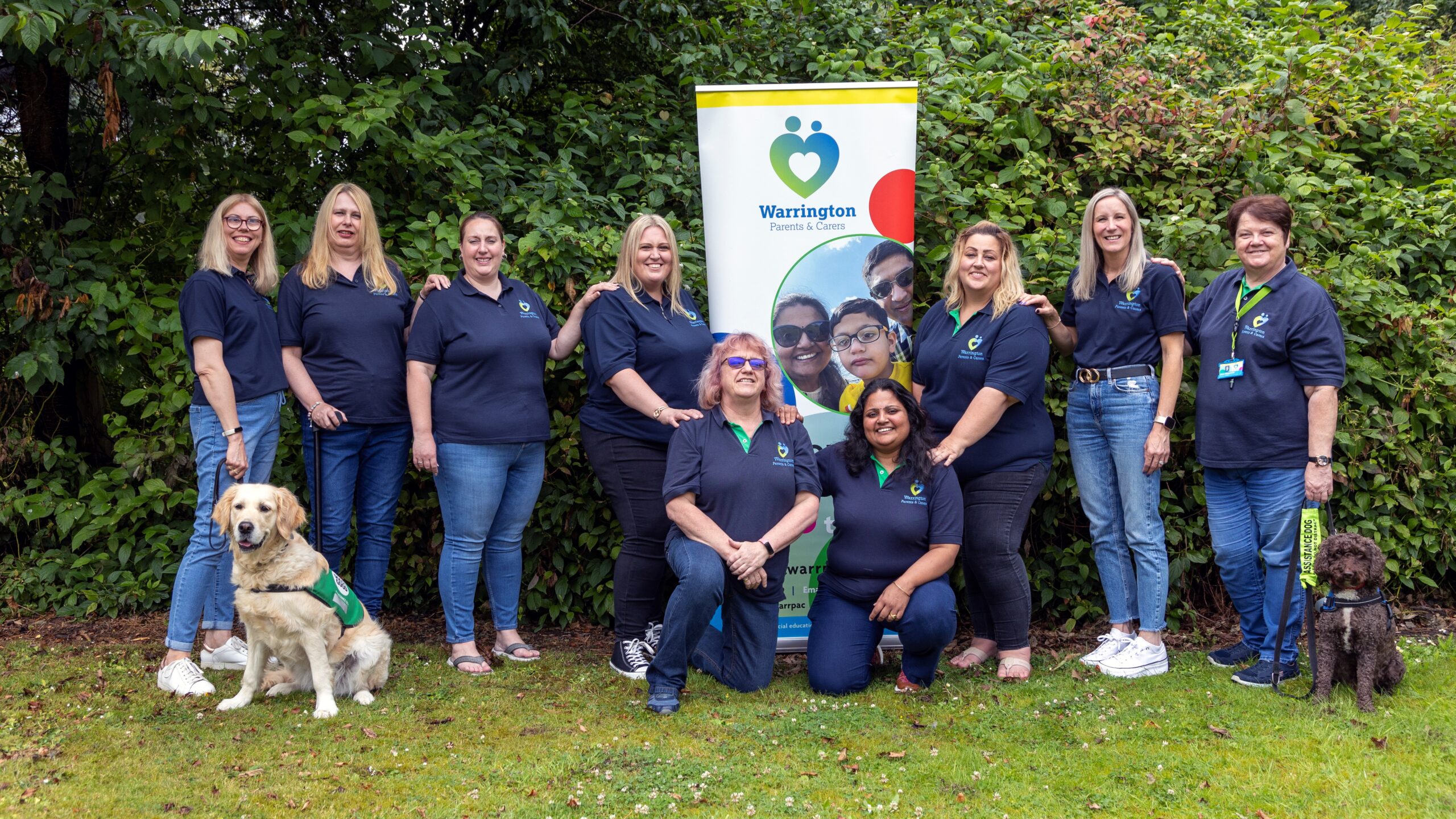
That’s certainly what Warrington parent carer forum (WarrPAC) do. Many parent carer forums received nominations for our awards, highlighting the vital work they do in their local areas. As the government’s parent carer participation delivery partner, supporting this work is very important to us, so we are delighted that our judging panel has chosen of these nominations to go through to the final.
WarrPAc was nominated by their Chair Jean, who said:
“Despite busy lives and full-time jobs, this team give up their limited spare time to support local families navigating the SEND system in England. They also lead collaboration across eight other forums in Cheshire and Merseyside.
“When I stepped back after a medical diagnosis, the team, my team, stepped up without hesitation – offering personal, emotional, and professional support.
“Passionate and selfless, they work tirelessly for others and truly deserve recognition for their commitment to the SEND community.”
At Contact, we often hear from families who want to raise issues that matter to them and their disabled child with MPs and local decision makers. But often they are not sure where to start, or how to do this effectively.
This workshop is funded by the National Lottery Community Fund, Contact is partnering with Hope For The Future as part of the A-future-for-all. We’re aiming to empower parents to drive action.
Influencing Change through Political Advocacy Monday 1 December, 10am – 12pm on Zoom
We particularly welcome parent carers keen to speak out about what’s happening for their child and family and campaign for change.
This free, two-hour online workshop is aimed at helping parent carers of disabled and neurodivergent children build political advocacy skills, so you can:
Understand the political and policy context around children’s disability and lobbying more broadly.
Build a positive relationship with your local councillor and MP.
Craft clear, specific and meaningful asks of my politician or official.
Know what to do if they don’t respond, and how to counter defensive behaviours.
The workshop is open to all parent carers of disabled and neurodivergent children (up to age 25) in the UK. You don’t need any prior knowledge or experience of campaigning. It helps if you’re interested in raising issues that matter to you in the coming months.
We’re delighted to share some of the uplifting nominations from our 18 Contact Award finalists – incredible individuals whose compassion, strength, and dedication make a real difference to families with disabled children across the UK.
This week, we’re shining a light on three of our award categories: Friendship First, Grandparent, and Change Maker.
Friendship First: To celebrate the wonderful friends in your life – just by being in it
Louise Orange
Louise from Armley, was nominated in our Friendship First category by her friend Lora, whose son Phoenix has quadriplegic cerebral palsy. Lora said:
“Louise is such a supportive, thoughtful friend to me, my son, my daughter, and my partner. She uses her time off to help us, plan accessible days out, and lift my spirits when I’m struggling. Despite not having a disabled child herself, she’s become a passionate advocate – contacting the council about inclusive play and accessible spaces so I don’t have to.
“She’s helped me navigate benefits, shared her contacts, and stood by us from the very beginning. Louise never judges, always shows up, and cheers us on loudly. She’s a diamond, and we’re so lucky – she deserves the world.”
Our other finalists:
Linda Dennison, a friend who gives hope at the darkest of times.
Sends4Dad, a vital support group for fathers and male carers.
Grandparents: Recognising the wonderful and every day things grandparents do
Jeff and Chris Morton
Jeff and Chris, from Wakefield, have been shortlisted in the Grandparent category by their daughter Lyndsey for their extraordinary devotion and lifesaving care for their twin granddaughters, Ruby and Sophia, who have complex medical needs. Lyndsey said:
“My parents have shown extraordinary love and support. They’ve resuscitated their twin granddaughters multiple times, managed complex medical needs, and provided constant care. During a four-month hospital stay, they visited daily with homemade meals and emotional strength. After discharge, they stepped in so I could return to work.
“Even now, with nursing care in place, they remain our rock – always ready in emergencies and celebrating every milestone. Their selfless, steady love has not only enriched Ruby and Sophia’s lives but given us the strength to keep going.”
Our other finalists:
Yvonne Evans, devoted and adventurous grandmother.
Emma Steel, nan, carer and lifeline.
Change Maker: For individuals or groups who work together to make life better for families with disabled children
Alma White
Alma from Lisburn, Northern Ireland, is a finalist in the Parent Changemaker category of our awards. She was nominated by her friend Jaclyn, who wanted to honour Alma’s tireless campaign work through Caleb’s Cause NI – a movement fighting for the rights of disabled young people to education and support beyond the age of 19.
Jaclyn said: “With no legal entitlement to education or support beyond 19, families face a cliff edge in care but Alma is changing that. While caring full-time for her son, she has mobilised thousands, engaged politicians, spoken at TEDx Stormont, and become a powerful voice for reform. Her work exemplifies the spirit of the Parent Changemaker Award: community-led, courageous, and profoundly effective.
“Alma has created momentum for change that cannot be ignored. Compassionate, strategic, and relentless, Alma is not just raising awareness she’s leading real change. Her work deserves national recognition.”
Our other finalists:
Warrington Parent Carer Forum – volunteers who give up their time to help other families navigate the SEND system.
Laura Brown, championing communication for all.
We’re so proud of all our finalists
Behind every nomination we received lay a story of quiet strength and everyday heroism. We’re so proud to celebrate people like Louise, Jeff and Chris, and Alma – and all our finalists. Their compassion and courage make the world a more inclusive and supportive place.
If you replied to our transport for 16-19 year olds survey – thank you! Your replies have helped us produce robust and up-to-date evidence on school and college transport and the impact felt by young people and their families.
If you didn’t get the chance to do the survey, your child is a different age, or you have more to say on transport, you can submit your own evidence to the inquiry. They want to hear from organisations and individuals – and it’s easy to do.
What are they asking?
The committee are asking about home to school transport for disabled students of all ages. They are looking at how to manage rising demand, available support for young people; and efforts to contain costs.
What is Contact telling the inquiry?
We will be telling them about the importance of transport for disabled children and young people who often have to travel further just to get the education that meets their needs. Often these children cannot travel independently or use public transport.
We will also illustrate the impact on young people and families when transport is not provided. We will show what it can mean for attendance, parent carer employment and family finances.
The deadline has been extended to Friday 28 November.
You can just write in a document and upload it as an attachment. There is not a form to fill in. Try to keep it short and to the point. And note that the committee are not there to help solve any current transport issues.
You don’t have to answer these questions and can simply focus on your experience as a parent carer. Tell them why transport support is important to you and your child. Tell them if it has recently changed (or if you think it will change at 16), and what the impact might be on your child and you as a family.
For your child, you could think about their ability to travel independently; whether transport helps them attend school or college; if they have a community or friends on transport; and the effect on them if this was removed.
For your family, you could consider whether transport helps you stay in employment; the financial – and time – pressure of parents providing transport; and the impact on siblings.
This December, a team of our amazing staff will be swapping their work clothes for Santa suits as they take part in Santa in the City, a festive fun run through central London.
While it promises plenty of festive fun, the event carries a deeper meaning for our team. Every day, we see first-hand how important Contact’s work is providing advice, information, and emotional support to families.
‘’I love the idea of supporting Contact while having so much fun! I can’t wait to see hundreds of Santas coming together to do good. That’s what Christmas is about right? With the backdrop of London as well, I’m looking forward to a truly festive and inspiring night.’’
Bridie, Helpline Parent Advisor – SEND
For many families, Christmas can be one of the most challenging times of the year, faced with the extra costs, pressures, and isolation that can come with caring for a disabled child.
Funds raised from the event will help Contact continue to be a lifeline for thousands of families across the UK.
Our team hopes to spread not only festive joy but also hope and solidarity, reminding families that they’re never alone and that support is always within reach.
And you can join us!
And there’s still time to join in the festive fun! You can also take part in Santa in the City whether you’re running, walking, or just soaking up the atmosphere!
“I’m looking forward to spending time with colleagues outside of the office! I’ve been really inspired reading the stories from the Contact Awards, especially how much families do to help each other.I’m hoping I can help too in a less conventional way!
Tom, Web manager
By taking part, you’ll help Contact:
Offer vital advice and emotional support to families caring for seriously-ill and disabled children.
Connect families through local groups and online communities.
Campaign for a fairer future where all disabled children can thrive.
So grab your Santa hat, round up your family and friends, and be part of something truly special this Christmas!
“We work closely with families who rely on Contact’s services and know the difference this support makes. Whether it’s helping parents navigate the education system or access financial advice, Contact is there when it matters most.”
Hannah, Fundraising Officer
To support our Santa in the City runners, make a donation, or sign up to take part, visit our Santa in the City webpage.
We are inviting parents to join us for a special webinar via Zoom next Thursday 13th November, 10-11.15 am. We’ll be looking in detail at how the cut may impact disabled parent carers.
What is the cut to the health element?
The health element cut is scheduled to happen on 6 April 2026. It will see the health element drop from £423 to £217 a month for some new claimants.
This cut won’t affect existing recipients of the health element. However, to be treated as an existing claimant, it is not enough to simply be getting Universal Credit before 6 April 2026. Your Universal Credit also needs to include an entitlement to the health element that started before that date.
This means that some parents will need to take action well before April. There is a qualifying period of three-four months between submitting fit notes and entitlement to the health element beginning.
For example, a parent carer on Universal Credit with their own health problems may not have submitted fit notes before. If they would like to be assessed for the health element, it will be in their interests to do so under the existing rules. This ensures that they will be protected and receive higher payments of the health element. To guarantee that they are treated as an existing claimant, they cannot wait until April; they would need to submit fit notes before 6 December!
What will our webinar cover?
The webinar will look at:
What the health element is and how you qualify for it.
Which groups of new claimants will be protected from the cut in the health element.
The steps disabled parent carers can take to ensure they are protected as an existing claimant, and the dates they need to do this by.
The webinar will be of particular interest to the following groups:
Parent carers on Universal Credit who are themselves disabled but who haven’t yet submitted fit notes and asked to be treated as having a limited capability for work.
Parent carers or young disabled people already on Universal Credit and assessed as having limited capability for work only, but whose health has deteriorated and who think they may now also have a limited capability for work-related activity.
Parents of young disabled people who are not prevented from claiming Universal Credit as a student but who have not yet got round to making a claim. For example, young people who are not in education, or those on a part-time course, or those who have passed the 31 August after their 19th birthday and who remain in full-time non-advanced education.
Please note that this webinar will not look in detail at the government’s separate proposal to scrap the health element altogether for under 22s. This is because the government has not yet responded to the consultation it carried out into this proposal.
This webinar will be presented by benefits advisers from Contact’s Family Finance team.
Sign up now!
To find out more about this webinar and to sign up, visit our Eventbrite page. After registering, you will receive a confirmation email containing information about joining the webinar.
A webinar is a presentation live on the internet. You will be able to hear the presentation live, follow the slides and submit questions for the presenters to answer. You will need a home computer, laptop, tablet or smart phone.
Can’t make 13th November?
We will post a recording of the webinar on our webpages, shortly after the event has taken place.
We’re thrilled to announce the 18 incredible finalists in our Contact Awards, celebrating the countless things UK families do when caring for disabled children.
Over 400 nominations poured in from families, friends, and supporters, giving our judges an almost impossible task of narrowing the list down.
Thank you to everyone who nominated. From dedicated parent carers to supportive siblings, and campaigners changing lives in their communities, this year’s finalists represent the strength, compassion and resilience that fuels families of disabled children every single day.
Our Contact Award categories and finalists are…
Parent Carer Award
Recognising the phenomenal efforts of parent carers who ensure their children are included in everyday life. This award is in memory of Joseph Hockley Wright, who helped transform the lives of thousands of parent carers across the UK through his generous support for Contact.
Our finalists:
Cath Peaty
Lynsey McLuckie
Michelle Redfarn
Change Maker Award
For individuals, families or parent groups who’ve led campaigns or initiatives to improve the lives of others.
Our finalists:
Warrington Parent Carer Forum.
Laura Brown.
Alma White.
Watch our awards video
Proudest Moment Award
Celebrating the powerful, joyful moments when children overcome challenges that make their families beam with pride.
Our finalists:
Harvey Doak.
Lee Jame and Stuart Deadman.
Stephen Kelly.
Friendship First Award
Shining a light on the special friends who support parent carers.
Our finalists:
Louise Orange.
Sends4Dads.
Linda Dennison.
Grandparent Award
Honouring the quiet yet profound support that grandparents bring to the lives of disabled children and their families.
Chris and Jeff Morton.
Yvonne Evans.
Emma Steel.
Sibling Award
Celebrating brothers and sisters who bring love, laughter, and essential help to their families.
Raphael Chiwandire.
Tabitha Foxwell.
Violet Craze.
Our Award ceremony
Anna Bird, CEO at Contact says: “Congratulations to all our finalists and to everyone who was nominated for one of our Contact Awards this year. Choosing just 18 finalists from over 400 nominations was extremely difficult!
“I’m looking forward to celebrating with all our finalists in London later this month, but the Contact awards are about much more than accolades – they’re about honouring love, endurance, and community. They remind us that behind every single nomination we received is a story of quiet strength and everyday heroism – something we’re proud to shine a spotlight on.”
Contact’s Awards ceremony on Monday, 24 November will take place at the House of Lords in London.
For families of young people who lack mental capacity, the process of accessing their savings at 18 often requires an application to the Court of Protection (COP) in England and Wales. The process in Scotland is simpler, using the Access to Funds scheme.
We want the government to back a simplified process already used by some Child Trust Fund providers.
It is important to note that for young people with other assets, or medical negligence settlements, a Deputyship order via the Court of Protection is likely to be the appropriate route (or alternatives in Scotland).
Why a flowchart?
You have been telling us that even knowing where to start in this process is a challenge. We hope that our flowchart will help provide some much needed guidance.
It is designed as an essential ‘first steps’ tool, providing a clear, step-by-step path to help you work out what to do next.
We also want to reach as many families as possible and encourage them to take action before their young person turns 18. Before this age, the parent still controls the account.
However, if your young person is now 18 or over, please don’t despair! We have seen families able to help their child access their savings without the need for a lengthy court process.
Who is the flowchart for?
Families in England, Wales, Scotland and Northern Ireland can use the flowchart.
It is not designed to replace professional legal or financial advice.
We’d like to say a HUGE thank you to dads, Nick and Martin — the popular social media influencers behind The Smithy Family and Martin & Bex — for braving the notoriously tough Three Peaks Challenge last weekend in aid of Contact and raising a whopping £27,800!
From 24th–26th October, the pair climbed Ben Nevis, Scafell Pike and Snowdon to raise awareness and vital funds for families with disabled children. Halfway through their challenge, their friend, Jay joined the climb. Jay helped support and fuel Nick and Martin’s passion and determination to complete the challenge – and they did!
“My whole life I’ve been told I will never be able to accomplish much. But throughout my life I have proven that with true grit and determination, anything can be accomplished — even with special needs. There is no mountain that can’t be climbed, there are no barriers that can’t be broken.
“Martin and I have completed the Three Peaks Challenge without any training to prove to people that you can do anything you set your mind on. Even if the odds are stacked against you. We chose the charity Contact because we believe they make a difference. With their help, we can make a change to the way the school system works with kids with special educational needs.
“The whole system needs an overhaul, especially education, health and care (EHC) plans. We are delighted to have raised such a significant amount of money for them.”
Nick and Martin’s extraordinary commitment, strength, heart, and determination have inspired us all – thank you so much!
Could you take on a challenge for Contact?
Would you like to take on a challenge in aid of Contact?
No matter where you live or what your skills are, there’s something for everyone! Take a look at upcoming fundraising events you could join.
Get the latest SEND updates, benefits advice, practical help caring for your child, plus free workshops and family events in our weekly email newsletter.
(Make sure you select ‘News updates’)
We use cookies on our website to give you the most relevant experience by remembering your preferences and repeat visits. By clicking “Accept”, you consent to the use of ALL the cookies.
This website uses cookies to improve your experience while you navigate through the website. Out of these, the cookies that are categorized as necessary are stored on your browser as they are essential for the working of basic functionalities of the website. We also use third-party cookies that help us analyze and understand how you use this website. These cookies will be stored in your browser only with your consent. You also have the option to opt-out of these cookies. But opting out of some of these cookies may affect your browsing experience.
Necessary cookies are absolutely essential for the website to function properly. These cookies ensure basic functionalities and security features of the website, anonymously.
Cookie
Duration
Description
_GRECAPTCHA
180 days
reCAPTCHA sets a necessary cookie (_GRECAPTCHA) when executed for the purpose of providing its risk analysis.
cookielawinfo-checbox-analytics
11 months
This cookie is set by GDPR Cookie Consent plugin. The cookie is used to store the user consent for the cookies in the category "Analytics".
cookielawinfo-checbox-functional
11 months
The cookie is set by GDPR cookie consent to record the user consent for the cookies in the category "Functional".
cookielawinfo-checbox-others
11 months
This cookie is set by GDPR Cookie Consent plugin. The cookie is used to store the user consent for the cookies in the category "Other.
cookielawinfo-checkbox-advertisement
1 year
Set by the GDPR Cookie Consent plugin, this cookie records the user consent for the cookies in the "Advertisement" category.
cookielawinfo-checkbox-necessary
11 months
This cookie is set by GDPR Cookie Consent plugin. The cookies is used to store the user consent for the cookies in the category "Necessary".
cookielawinfo-checkbox-performance
11 months
This cookie is set by GDPR Cookie Consent plugin. The cookie is used to store the user consent for the cookies in the category "Performance".
CookieLawInfoConsent
1 year
CookieYes sets this cookie to record the default button state of the corresponding category and the status of CCPA. It works only in coordination with the primary cookie.
PHPSESSID
session
This cookie is native to PHP applications. The cookie stores and identifies a user's unique session ID to manage user sessions on the website. The cookie is a session cookie and will be deleted when all the browser windows are closed.
viewed_cookie_policy
11 months
The cookie is set by the GDPR Cookie Consent plugin and is used to store whether or not user has consented to the use of cookies. It does not store any personal data.
Functional cookies help to perform certain functionalities like sharing the content of the website on social media platforms, collect feedbacks, and other third-party features.
Cookie
Duration
Description
_hjAbsoluteSessionInProgress
30 minutes
Hotjar sets this cookie to detect a user's first pageview session, which is a True/False flag set by the cookie.
Performance cookies are used to understand and analyze the key performance indexes of the website which helps in delivering a better user experience for the visitors.
Cookie
Duration
Description
_gat
1 minute
Google Universal Analytics sets this cookie to restrain request rate and thus limit data collection on high-traffic sites.
Analytical cookies are used to understand how visitors interact with the website. These cookies help provide information on metrics the number of visitors, bounce rate, traffic source, etc.
Cookie
Duration
Description
_fbp
3 months
Facebook sets this cookie to display advertisements when either on Facebook or on a digital platform powered by Facebook advertising after visiting the website.
_ga
1 year 1 month 4 days
Google Analytics sets this cookie to calculate visitor, session and campaign data and track site usage for the site's analytics report. The cookie stores information anonymously and assigns a randomly generated number to recognise unique visitors.
_ga_*
1 year 1 month 4 days
Google Analytics sets this cookie to store and count page views.
_gid
1 day
Google Analytics sets this cookie to store information on how visitors use a website while also creating an analytics report of the website's performance. Some of the collected data includes the number of visitors, their source, and the pages they visit anonymously.
_hjFirstSeen
30 minutes
Hotjar sets this cookie to identify a new user’s first session. It stores the true/false value, indicating whether it was the first time Hotjar saw this user.
CONSENT
2 years
YouTube sets this cookie via embedded YouTube videos and registers anonymous statistical data.
Advertisement cookies are used to provide visitors with relevant ads and marketing campaigns. These cookies track visitors across websites and collect information to provide customized ads.
Cookie
Duration
Description
_fbp
3 months
Facebook sets this cookie to display advertisements when either on Facebook or on a digital platform powered by Facebook advertising after visiting the website.
test_cookie
15 minutes
doubleclick.net sets this cookie to determine if the user's browser supports cookies.
VISITOR_INFO1_LIVE
5 months 27 days
YouTube sets this cookie to measure bandwidth, determining whether the user gets the new or old player interface.
YSC
session
Youtube sets this cookie to track the views of embedded videos on Youtube pages.