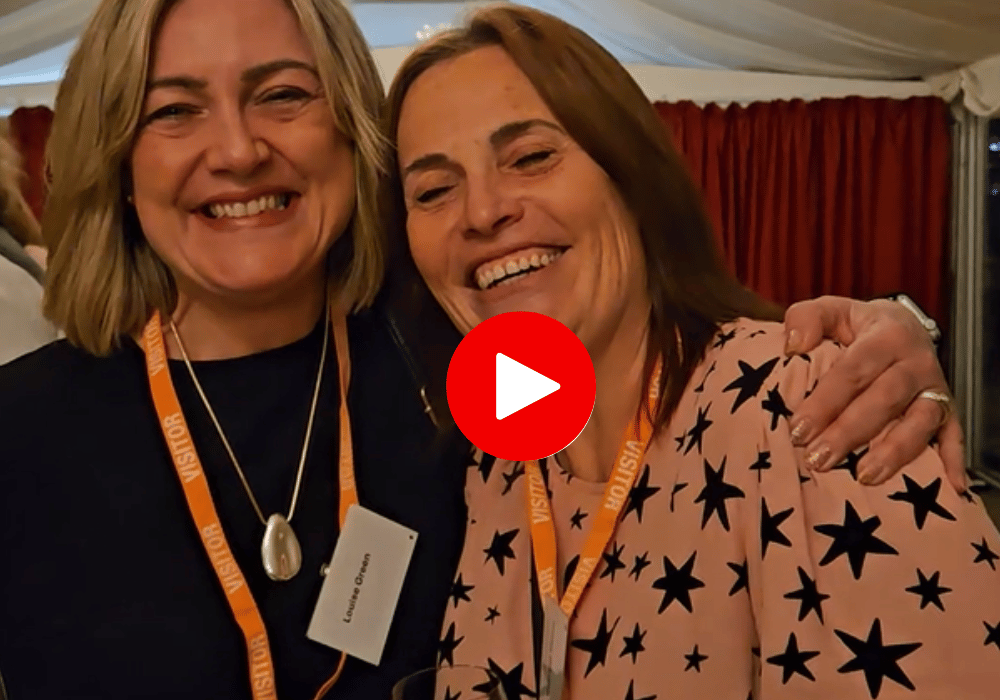
In December, we were blown away by the incredible supporters who took part in Santa in the City, raising an amazing £4,000 to support our services! Their festive spirit, determination, and generosity made a real difference.
And now it’s your turn!
As a new year begins and you set fresh goals, why not challenge yourself to do something extraordinary? By taking part in one of our challenge events, you’ll push your limits and help us continue our vital work supporting families across the UK.
Our supporters often tell us that taking part is about more than the challenge. It’s about the families it helps.
“Santa in the City was a wonderful event to take part in and fundraising for. It was a gift to be able to share photos in the silly Santa suit and bring smiles to many faces. I’m sure the funds raised will help bring many more smiles.”
Sophie, supporter
Choose an event that suits you
You don’t need to be an expert athlete or an experienced fundraiser. We’re here to support you every step of the way, from training tips to fundraising ideas!
Are you ready to take on a challenge in 2026? Whether you prefer to run, walk, swim, climb, bounce, or crawl through mud, we’ve got an event to suit every ability and appetite for adventure. These are just a few of the exciting challenges on offer, with many more to choose from – see a few below.
Great North Swim
Dates: 12 June – 14 June 2026
Location: Lake Windermere, Lake District.
Fundraising Target: £300
Take the plunge in the UK’s biggest open-water swimming event. Set in the stunning surroundings of Lake Windermere, the Great North Swim offers a range of distances to suit both beginners and seasoned swimmers.
Tough Mudder series
Dates: 9 – 19 May 2026
Location: Multiples locations across the UK
Fundraising Target: £300
Ready to get muddy? Tough Mudder is the ultimate team challenge, packed with epic obstacles designed to test your strength, stamina, and teamwork. With events taking place across the UK, you can choose a location that suits you and take on a challenge that’s as much about camaraderie as it is about grit.
Inflatable 5K Series
Dates: Multiple Dates
Location: Multiple locations across the UK
Fundraising Target: £150
Bounce, climb, and slide your way through the world’s biggest inflatable obstacle course! With over 30 obstacles across a 5K route, the Inflatable 5K is pure fun for all ages and abilities. Choose from locations across the UK, bring your friends, and turn fitness into laughter while raising funds for a great cause.
Sign up now!
Seen a challenge you’d love to take on? Email [email protected] and turn your 2026 goal into something that truly makes a difference.
Not quite what you’re looking for? Explore our full list of events and discover a 2026 challenge that’s perfect for you.
With more heavy snow expected today across the UK, many of us will be relying on central heating more than usual to get through the colder days.
With energy costs still high, this puts even more pressure on families with disabled children facing higher than average bills.
Below we explain what help you might be entitled to.
Warm Home Discount Scheme
Under this annual scheme, you can receive a rebate worth up to £150. This does not come to you. Instead, it is deducted from your winter fuel bill. The scheme applies in England and Wales, and it operates in Scotland but differently. It doesn’t run in Northern Ireland.
InEngland and Wales, you don’t have to apply if you are eligible. Instead, you should receive a letter from your energy supplier in early January and receive the discount by end of March 2026. If you think you are eligible but don’t receive a letter, contact the scheme using details on the government’s site.
The Department for Work and Pensions (DWP) pays a Cold Weather Payment of £25 to low-income families on certain means-tested benefits when temperatures in your local area fall (or are forecast to) to 0 degrees or below for seven days in a row.
The DWP will make a payment for each seven-day period of sub-zero temperatures between 1 November 2025 and 31 March 2026.
The government has published long overdue draft statutory guidance for the Down Syndrome Act 2022 in England and Wales, along with a public consultation inviting responses before 30 March 2026.
Families of children with other genetic conditions or learning disabilities can also respond to the consultation.
What the draft guidance covers
The guidance:
Sets out what public bodies in health, social care, education and housing should or must already do under existing laws to meet the needs of people with Down syndrome.
Aims to improve understanding of Down syndrome and reduce the barriers families often face when seeking support.
The guidance explains how existing duties under the Care Act, Children and Families Act, Mental Capacity Act and Equality Act should apply in practice, stressing:
Personalised, non-stereotyped support.
Better awareness and training for frontline staff.
Coordinated planning across services.
Reasonable adjustments.
An estimated 40,000 people with Down syndrome of all ages live in the UK. Many struggle to access appropriate support despite existing legal protections.
Why this matters for families
While the draft guidance largely repackages existing duties, by bringing these duties together in one document, it has the potential to make it much clearer to local authorities and the NHS what they should already be doing. It may also make it easier for families and carers to hold public bodies to account.
Although the Act focuses on people with Down syndrome, the consultation welcomes views from families of children with other genetic conditions or learning disabilities who have similar needs.
Have your say
The consultation runs until 30 March 2026 and includes an easy read version for families and young people. Responses will be used to shape the final statutory guidance before it is issued to all public bodies in England.
Alternatively, you can share your views and experiences for inclusion in Contact’s consultation submission by emailing [email protected]
We’re delighted to end 2025 with the amazing news that another FIVE parent carers of disabled children have won £1,000 each in the Contact Weekly Lottery!
With mums Deborah, Lauren, Christy, Beth and Julie all hitting the jackpot in November and December, this brings the total to 16 big wins in 2025. That’s roughly one £1,000 winner every three weeks.
Our latest winner Julie, who won in the same week as Beth, said: “It feels fantastic to support a charity that truly understands and uplifts families like mine. As a parent to a 16-year-old with Down syndrome, I’m so grateful to be part of something that makes such a difference,” she said.
Beth was equally over the moon: “It’s truly made my whole year! I still smile every time I think about it. As a parent to a daughter on the spectrum, I know how meaningful these moments of support and joy can be, and this win will make our Christmas feel even more special.”
She signed up to our lottery after reading about a dad who’d won £1,000 — and is now encouraging everyone to join in: “For just £5 a month, you’re supporting a wonderful charity – and you might even be lucky enough to win £1,000 too!”
“My daughters are disabled, and as a family we know how important this kind of support can be. It feels really good to help children and families who need – and truly deserve – that support. It’s such a lovely charity, and with the added bonus of winning some money, there really isn’t a downside!”
Deborah, one of our recent £1,000 prize winners
Could you be our first big winner of 2026?
After such a brilliant end to 2025, we’re looking forward to celebrating more big wins in the new year… Could you be next?
For just £1 a week, you’ll have a chance to win cash prizes every single Friday — all while helping to fund our vital services for families with disabled children across the UK.
We’ve had thousands of winners since launching our lottery in 2020. And the best part? The majority of our £1,000 and £10,000 winners have been parent carers themselves, who play the lottery to support other families like theirs.
Now’s your chance to make 2026 a year of solidarity. Join the Contact Lottery today and help more families get the support they desperately need in the new year — all with a weekly chance to win money along the way!
As 2025 comes to a close, we want to say a heartfelt thank you for being part of the Contact family.
It’s been our privilege to share this year with you. We hope our advice, information and support have helped you feel more confident, more informed, and less alone – and helped your child get the support they deserve.
This year, Contact stayed focused on what matters most: being there for families with disabled children -supporting you, listening to you, and standing by your side every step of the way.
It has been quite a year and it’s important to celebrate the wins of 2025 – because there were a lot of them!
Watch this joy-filled video to see some of our highlights of 2025. We hope it brightens your day.
Looking forward to the year ahead
We’re grateful to everyone who has already donated to Contact’s Winter Appeal this year. Thanks to your support we can continue to make a positive impact on the lives of families with disabled children up and down the country – helping them to feel seen, heard and supported.
Thank you for being part of our community of help and hope – it means so much to us.
On behalf of everyone at Contact, we wish you and your family a joyful New Year.
See you in 2026!
From all of us at Contact, we’d like to send warm wishes to all our families for a very peaceful and happy Christmas.
We hope you’re enjoying the holidays. But remember, if you’re looking for help while our helpline is closed until 9:30am on Friday 2 January 2026, you can still find plenty of guidance and support on our website at anytime.
Our chatbot, Charlie is available throughout the holidays to help you find the information and advice you need, 24/7. Just look for Charlie at the bottom right corner of our website.
Wishing everyone a very Happy Christmas from all of us at Contact!
P.S If you’re able and would like to support our work, you can also find details of our Winter Appeal on our website – but please don’t feel any obligation.
The Call for Evidence is seeking insight from young people, parent carers, employers, frontline services, and anyone with relevant lived experience or expertise.
It asks two central questions:
What is stopping more young people from participating in employment, education or training?
What would make the biggest difference to support more young people to participate?
The review is particularly interested in evidence about:
Rising mental health and neurodevelopmental needs.
The role of the benefits and employment support.
Transition points between health, education, skills and benefits systems.
Why this matters for disabled young people
For profoundly disabled young people, the barriers to participation are very different from the wider population. Families tell us that financial stability, including the Universal Credit health element, is essential for disabled young people to:
Attend college or specialist education.
Access day provision, therapies or social care.
Participate safely in their community.
If the Universal Credit health element is removed, many disabled young people could lose the very support that enables them to participate in education, training or social care in the first place.
This means the Milburn Review must consider the impact of potential benefit changes when examining the root causes of youth inactivity.
We will be submitting evidence informed by what families tell us every day. If you’d like to share your views with us directly, please email [email protected]
Take action
Email your MP our briefing on the impact of scrapping the Universal Credit health element for severely disabled young people under 22
My name is Derek, and for many years I’ve been advising parents who get in touch with our helpline. Parents with disabled children often contact us when they feel most vulnerable.
The trust and confidence they place in us is humbling. The expert advice we give can be life-changing.
Right now, we are hearing from more and more families feeling exhausted, isolated and worried about their children’s future. We can feel their emotional burdens over the phone. But our team is here to listen and provide practical advice to help you find a way through.
I know Christmas is a busy time and you’re likely to be rushed off your feet. But I have one small request – could you donate just £10 to Contact and in return we’ll send you something special? Your gift could help us answer more calls for families who need us.
Our team’s expert advice and guidance can transform a family’s financial situation, like we did for Sonia*.
Sonia phoned us because she was really struggling with her heating bills and rent costs. She is a lone parent who juggles part-time work while caring for her severely disabled son and two other children.
We chatted and found out how hard it was keeping up with bills while having to take so much unpaid time off to look after her son. Through our benefits check, we discovered something life-changing:
“I had no idea that I was missing out on a carer element. Your advice not only helped me get an extra £200 in Universal Credit each month, but I also got a lump sum payment of £3,400 to cover what I’d missed out on.
“This will make such a difference to my family. It’s amazing. For once I won’t need to worry about how I’ll be able to afford all the things my disabled son needs.”
Help another mum or dad get our support
It’s these kinds of calls that motivate me every day to speak to as many parent carers as possible. If you can, will you donate £10 so another mum or dad can get our support to afford essentials for their disabled children this winter?
To show our thanks, our supporter care team will post you four special stickers for every gift of £10 or more so you can display your support for families with disabled children wherever you go this winter.
Very best wishes, Derek Senior Parent Adviser at Contact
*Sonia’s story is real, but her name has been changed to protect her family’s confidentiality.
The review is expected to take three to six months and inform implementation of the new NHS Long Term Plan. Separate chapters for children and adults will look at:
Similarities and differences between mental health conditions, ADHD and autism regarding prevalence, drivers, early intervention, and treatment.
Co-occurrence of these conditions.
Inequalities in prevalence, access, and experience.
Challenges facing clinical services.
Extent to which diagnosis, ‘medicalisation’ and treatment improve outcomes.
Differences between the levels of need and disorder for mental health conditions, ADHD, and autism.
Role of medicalisation of mental health conditions, ADHD, and autism, including the associated risks and benefits.
Effectiveness of short versus long-term interventions to support recovery and/or improve quality of life.
Contact is concerned this it is happening at a time when there is a growing narrative that children who are neurodivergent or have mental health conditions, are being ‘overdiagnosed’. Contact is urging the government to use the review to build trust with families, not undermine it.
Very real needs
Contact CEO Anna Bird said:
“The independent review must not be used to cast doubt on the very real needs of children with ADHD and autism. Rising demand is not a sign of ‘over‑diagnosis’; it is a sign that we have got better at recognising the signs, which is something to be celebrated. It’s also an indication that many children have gone without support for too long.
“Every child has the right to be seen, heard, and supported. We urge decision‑makers to use this review to build trust with families, not undermine it, and to ensure that children get timely assessments and the help they need to thrive.”
ADHD taskforce review
Professor Peter Fonagy will chair the review team, co-led by Professor Gillian Baird and Professor Sir Simon Wessely. It will draw on the recent independent ADHD taskforce review which found unsupported ADHD costs economy around £17 billion a year because people with ADHD are at higher risk of unemployment, family breakdown, and mental health problems.
This event is for families in England and Wales only.
If you are the parent to a 14-23 year old, they are likely to have a government issued Child Trust Fund. If they are younger, you (or wider family) might be saving via schemes such as a Junior ISA.
At Contact, we know that many of our parent carers have concerns for their child’s financial future and want to help them in any way possible.
However, if a young person lacks mental capacity or needs support in managing money, the process to access their savings at 18 can feel quite daunting. Many of you tell us that the mental capacity process as a whole feels confusing and overwhelming.
This is particularly evidenced in our Child Trust Fund campaign, where we are supporting families who are struggling to unlock their child’s savings.
Location: Online (a Zoom link will be sent when you sign up).
What will the webinar cover?
Renaissance Legal’s leading and trusted experts Philip Warford and Sarah O’Sullivan will explain:
Assessing mental capacity and what happens if a person doesn’t have it.
The Court of Protection process.
What are the potential issues and solutions around accessing Child Trust Funds/Junior ISAs.
A Q&A to finish.
Sign up now
These webinars are always very popular due to Philip’s accessible style of presenting. We encourage you to book your place today as spaces are limited.
A webinar is a live presentation via the internet. You will need a tablet, smartphone or computer. There is no required audience participation (unless you want to ask a question in the chat) and cameras will be off, so you can relax in the comfort of your own home.
The festive period is full of family events, but we know it can be tricky to find activities that are accessible and inclusive for children with disabilities and additional needs.
There is plenty on offer, from relaxed Santa visits and sensory play sessions to accessible films, craft activities, silent discos, ASN friendly theatre, ice skating and Christmas parties. Many events are free or low cost, and take place in familiar community venues, libraries, museums and outdoor spaces.
We have listed events by region so you can see what is happening near you. Our activity list includes options across Scotland, from Aberdeen to the Western Isles, so we hope you find something that helps your family enjoy the festive season.
As we have not attended these events ourselves, it is always worth checking details with the organiser before booking. Euan’s Guide is also a reliable place to find up to date accessibility information for venues.
Contact’s Chief Executive, Anna Bird, has given evidence to the Joint Committee on Human Rights inquiry about the experiences of families with disabled children of the social care system.
Discrimination is an everyday reality for families with disabled children. Through our work with families, we regularly witness harms caused to disabled children and their families by the current social care framework. These harms include:
Postcode lotteries and disproportionate safeguarding responses that breach equality.
Disabled children disproportionately subject to Deprivation of Liberty orders due to lack of community provision and adequate support at home.
Weak social care undermining disabled children’s right to learn and participate.
Complaints processes that fail families, leaving rights unenforceable.
Anna said: “Social care is consistently the third most common inquiry dealt with by Contact’s helpline. We frequently hear from parents investigated instead of supported when they reach out for help from the social care system. And support, if it arrives at all, only arrives once a family hits crisis point.”
“We are calling on the government to implement the Law Commission’s proposed reforms to disabled children’s social care law in full. This is a real opportunity for a simpler and fairer system for disabled children and their families. The government has invested money in Family Help. While welcome, it is unlikely to make the social care system work for disabled children and their families.”
Low expectations of the system
We have heard from a grandmother who took on caring for her autistic grandson after the death of his mother. He had to wait 16 months for social care support. At that point, they told her she would be getting half the hours they first promised and that she couldn’t save up the support to have a proper break.
One mum told us: “I had a half an hour call with the disability needs assessment team. It was awful. She did everything to stop me moving forward with an assessment. Meanwhile my son was screaming in the background. She said, ‘we only deal with the most serious cases- children with very complex needs.’
“My son is a very complex boy and it’s hard to keep him safe. But she just said it was normal for parents to supervise five-year-olds at all times. That one really got to me. I am never going to be a ‘normal’ parent, and no ‘normal parenting’ can keep my son safe.”
Another mum told us: “I completed the online self-referral form to see if we could get a direct payment to fund a PA to support my adopted disabled daughter. The form was so long. All the questions related to safeguarding, abuse and neglect. There were only two mentions of disability way down the form. They turned her down twice and we were told ‘yes’ on the third assessment. That took six months to assess and six months to get a PA. I have low expectations of the system.”
Crucial to grasp the opportunity for reform
Research from the Disabled Children’s Partnership shows that half of families with disabled children have faced delays in assessments for support for care, equipment or adaptations. And Cerebra has found that practices in the social care system create unintended harms, trauma and distress.
Anna added: “Social care and health are key parts of the puzzle ensuring the Government’s SEND reforms are successful. If a disabled child’s needs are unsupported at home, life is much harder for their family, caring 24/7, and it has a knock-on effect in the classroom too.
“It’s clear to us day-to-day working with thousands of families with disabled children that their rights are not well protected under current legal framework for social care. It’s crucial that we grasp the opportunity of the Law Commission reforms.”
A major new study has found disabled children and their families are disproportionately put through invasive safeguarding investigations.
A Section 47 investigation involves social workers looking into whether a child is “at risk of significant harm” and deciding whether to take protective action.
University of Lancashire researchers analysed nine years of local authority official census returns for Children in Need and found:
A 145% rise in Section 47 investigations involving disabled children since 2015, three times the increase for non-disabled children.
A 95% increase in child protection plans in the same period.
Children with a disability or mental health concern are more than three times as likely as those without these factors to be investigated by child protection services.
Regional disparities indicate that responses are shaped more by resource constraints and local thresholds than the needs of children.
Child protection investigations in 2024-5 hit a record high of 230,590, according to latest Department for Education figures. This comes alongside a fall in the number of cases where a child was found to have suffered harm.
“Disability-related struggles misinterpreted as neglect or abuse”
Author Dr Andy Bilson, Emeritus Professor of Social Work, said the pattern suggested “disability-related needs are frequently misinterpreted as signs of parental failure, leading to disproportionate and intrusive state intervention.”
“Rather than indicating greater levels of harm, this pattern reflects widespread misinterpretation of disability-related struggles as neglect or abuse. Social workers, often with limited disability training, approach families as potential risks rather than carers seeking support.”
Contact CEO Anna Bird said misuse of safeguarding investigations was a shocking feature of the disabled children’s social care.
“Families with disabled children need support, not suspicion. Parents are too often subjected to intrusive, parent-blaming and humiliating safeguarding assessments when they ask for a bit of help – only to be offered little or no help when social workers find no evidence of neglect or abuse.
“Disabled children are legally entitled to support, but the current system leaves families scrutinised rather than supported.”
Anna will give evidence today at the Parliamentary Joint Committee on Human Rights’ enquiry into children’s social care.
Social services turning up with police officers
Families who faced investigations say local authorities misuse the process to avoid providing adequate support and deflect blame on parents.
During research for our NHS continuing care campaign, we spoke to families subjected to safeguarding investigations. Often this was after asking for more help.
One parent was subjected to two safeguarding investigation in one year after asking for more nights of respite. Social services even turned up at the house with police officers.
Another single parent said a social worker threatened to put her seriously ill child in foster care if she didn’t accept a reduced care package.
Minister for Children, Families and Wellbeing, Josh MacAlister, must provide an initial response to the Law Commission recommendations by 16 March 2026.
Contact is calling on the government to implement the reforms in full – in line with our Social Care Asks.
We are asking parents to write to your MP today to urge them to press the government to act quickly.
Transport is not a luxury for families with disabled children and young people – it is an essential part of education.
Transport supports improved outcomes in disabled young people’s participation in education or training. And it supports employment in parent carers with reduced welfare costs.
Fewer disabled children are travelling by council-run school buses, and councils are relying more on taxis. However – it is still a small proportion of children getting taxis.
“More children with special educational needs and disabilities are travelling further to school to get a suitable education, because there is not enough support locally. One of the consequences of that is increased costs for school transport. So getting the SEND system right for disabled children is crucial.
“Transport is not a luxury for families with disabled children. It’s essential to ensure children can go to school and parents, who have enormous day and night caring pressures, are able to work.
“Inefficiencies in how councils plan, and an overreliance on private contracts, are contributing to the bigger transport bill. So there are savings to be made without jeopardising children’s ability to get to school.”
Contact submitted written evidence to the inquiry, including the results from two surveys we conducted to gather families’ experiences of school transport.
Key findings include:
81% of those receiving local authority-provided transport are satisfied/extremely satisfied.
58% of parents say school transport helps their child’s independence. 41% said it enables them to get other children to school, and 50% said it helps them to work.
The average journey time is 43 minutes one way for those travelling on council provided transport
The average journey time is 51 minutes one way for those getting a lift from parents.
60% experience a change to their school transport arrangements when their child turns 16 due to a loophole in the law.
Thank you to everyone who completed the survey, which helped us to speak out about the loophole in the law for disabled learners.
All carers in Scotland who were getting either the Carer Support Payment or Carer’s Allowance on 13 October 2025 should have received a lump sum payment of £293.50 from Social Security Scotland.
The supplement is an extra payment, paid twice a year, to carers in Scotland on one of these two benefits. You don’t need to apply for the supplement as it is should be paid to you automatically.
Most carers should have received their payment on the 4 December. Some people may have to wait a few more days. If you’re eligible, you will receive a letter notifying you a payment has been made.
If you think you qualify but have still not received a letter or payment by 15 December call Social Security Scotland for free on 0800 182 2222.
When these specialist SEN units and resource bases work well, they enable inclusion. However, the success of these units is dependent on how well they are resourced and staffed, and how they interact with the wider mainstream school.
Over the summer, we held a series of focus group with parent carers of children who either currently attend a unit or base or have done in the past. We also spoke to parents who have considered this type of placement for their child.
Your experiences have already been shared with Department for Education. Thank you to everyone who took part in the focus groups. And thank you too to the parent carers who joined us at meeting with government officials.
Your experiences
The discussions revealed significant inconsistency in how these units operate, particularly regarding inclusion, but also in terms of the support they offer.
Parents’ experience of the support in units and bases varied widely. From well-resourced, flexible provision, to under-funded hubs without qualified teachers or adequate therapy input.
“She has some classes where the staff from the unit will drop in partway through to see how she’s doing. With other set lessons like English or Geography, where there’s a lot of writing, there’ll be someone from the unit in the classroom with her.”
“The hub he’s in has never had a qualified teacher teaching the class. There is only a teaching assistant and a lunch lady.… I feel they’re more like a daycare than a school.”
The government has been clear in its intention to increase the number of SEN units. This is reflected in funding commitments, including the £740 million High Needs Provision Capital Allocation, intended to support the creation of 10,000 new SEN places and specialist facilities within mainstream schools.
Recently, many local authorities have increased the number of specialist units in mainstream schools. However, without government guidance, this has led to a postcode lottery in the quality of teaching, specialist support and inclusive practices across units.
Calls to Contact’s helpline suggests these units vary dramatically from one school to another.
What Contact is calling for
Contact would like to see clear guidance for specialist units to ensure they are appropriately funded, staffed and founded on the principle of inclusion. They should respect and protect every child’s right to a mainstream education, while not replacing the role of special schools.
Done well, specialist units have the potential for more young people to feel included in their local school community. However, increasing them without suitable regulations or guidance could lead to them being entirely separate in teaching and location from the mainstream school, segregating pupils with SEN.
The government has announced a new series of events designed to listen directly to parent carers and make sure your experiences shape the future of Special Educational Needs and Disabilities (SEND) support in England.
The 9 face to face and 5 online events aim to put families at the heart of upcoming SEND reforms ahead of the publication of the Schools White paper expected early next year.
The government says it wants this to be the biggest discussion on SEND in a generation, with reforms guided by real experiences from parents, carers, young people and practitioners. Minister for School Standards, Georgia Gould, will kick off the first engagement event which takes place today in Bristol.
Where are the face to face events taking place?
You can sign up to attend the following events taking place in person:
Anna Bird CEO of Contact says: “We know that parent carers spend too much time trying to navigate a system that often feels overwhelming and inconsistent. We welcome any opportunity that gives families a genuine voice in shaping reform.
“Parent carers have so much expertise, born from lived experience, and it’s vital that this is listened to and acted upon. We encourage parent carers to take part in these events if they can – your insights are powerful, and they deserve to be heard.”
The engagement events will focus on:
Early support -getting help in place earlier, when it has the most impact.
Local provision – making sure children can learn in high-quality settings close to home, with the right special provision where needed.
Fairness – so families don’t have to battle the system, and every school is equipped to meet children’s needs.
Effective practice – ensuring support is based on what works and leads to strong long-term outcomes.
Joined-up services – improving collaboration between education, health, care, local authorities, and families.
Registration for all events will be on a first come first served basis. Following this period of engagement, there will also be the opportunity to share your views and experiences in the government’s public consultation following the publication of the Schools White Paper.
Since the Chancellor presented her Budget on Wednesday, talk in some quarters has turned to how the government plans to offset a significant special educational needs (SEN) deficit in England.
The government announced that it will absorb SEN costs into central government department spending from 2028, removing them from local authorities. But the office for budget responsibility (OBR) has estimated that this will cost the government £6billion.
The Department for Education has confirmed that it will not fund this deficit from the core schools budget. Instead, it says the OBR’s forecast does not take into account the forthcoming Schools White Paper, expected early next year. The White Paper will set out this government’s reforms to the SEN system.
Contact is concerned that using the Schools White Paper to plug a £6billion spending gap risks prioritising savings over ensuring successful, long-lasting reforms.
“We’re pleased the government is taking steps to address the local council funding deficits. We await the detail in the upcoming Local Government Finance Settlement.
“However, there is a lack of clarity about how these costs will be met. We are concerned that the government is unrealistic about the amount of time it will take to turn around the SEN system.
“The right reforms will deliver better value for money and, in the longer term, may deliver savings. But is is premature to bank on these savings before they have even finalised their plans.”
Disabled Children’s Partnership publish early intervention report
The Disabled Children’s Partnership and the Speech, Language and Communication Alliance have published a report today showing the economic benefits of acting quickly to provide support for speech and learning challenges.
Get the latest SEND updates, benefits advice, practical help caring for your child, plus free workshops and family events in our weekly email newsletter.
(Make sure you select ‘News updates’)