A lot of the content from the hub comes from our now-closed microsite of the same name. Launched in 2019, Talking about Tomorrow was put together with parent carers to help other families with teenage disabled children.
We’ve rebuilt the microsite at contact.org.uk, covering all the same key topics you need to know as your child grows up, including:
Susan Walls, Contact’s Head of Programmes in Scotland, Northern Ireland and Wales, says:
“Our Talking about Tomorrow microsite has been a popular resource for families in Scotland since it launched. Putting it together was a co-productive process, in which parent carers told us what kind of information they need as their child moves through their teenage years.
“As website technology has developed, we’ve decided to move all this great content to our parent site, contact.org.uk, which has improved functionality and accessibility features. We’re delighted to give Talking about Tomorrow a new home alongside all our highly-respected advice for families across the UK.”
The Department for Education has confirmed a delay to the publication of the Schools White Paper for England, which is now expected early next year, to allow for a further period of co-creation with families, educators, and experts.
The government emphasised the need to take time to ‘get it right’ and ensure reforms are shaped by those with lived experience of the SEND system in England.
Responding to the announcement Contact’s CEO, Anna Bird said:
“While further delays to the publication of the White Paper and SEND reform plans will be disappointing news to many parent carers we support, it’s great to hear the government is committed to co-creating its reforms with parents and young people.
“Meaningful engagement with parents, children and young people is the key to doing just that. Contact looks forward to helping the government hear what parent carers want and need as they work towards the publication of the White Paper.”
The government says it remains committed to long-term SEND reform and to strengthen accountability for inclusion.
If you are the parent or carer of a disabled 16-19 year old in England who gets (or needs) transport to school and college, then read on.
At 16, things can change. As transport provision is left up to local authorities, we know that more and more young people are left without their usual school bus or taxi. This can have a real impact on families.
So, we’re running a survey to find out how your young person’s transport is working right now. It will take you less than five minutes to complete.
Does it improve outcomes? Is it value for money? How best to manage rising demand?
The committee is asking for evidence to help them understand the issues families are facing. This will help them make recommendations for change.
The findings will form part of the evidence we submit to the committee, so your experiences will be vital in showing MPs the need to improve transport provision.
At Contact, when we speak on your behalf, we want to make sure we raise issues that matter to you.
By sharing your experiences, you are highlighting the problems that your family (and many others like yours) are facing. That will help us engage with decision-makers with strong evidence and an accurate picture of day-to-day life for families.
And that will help us, together, make the case for change.
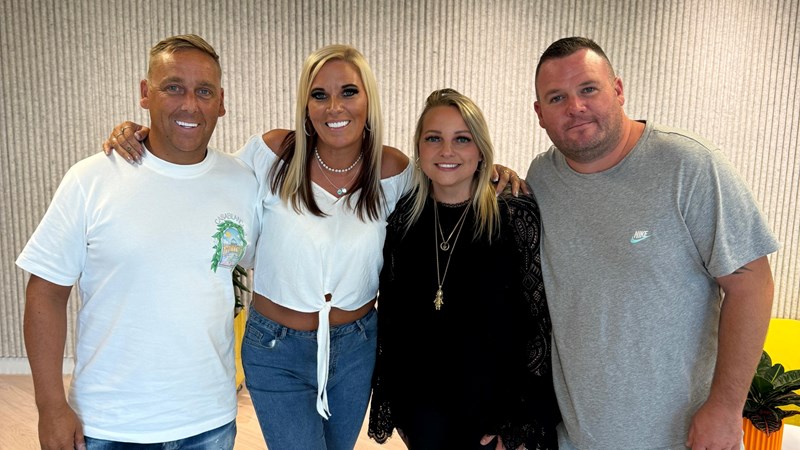
Next weekend, popular TikTok dads Nick and Martin from The Smithy Family and Martin & Bex will be joining forces to take on the Three Peaks Challenge in aid of Contact
A deeply personal challenge
For Nick, this challenge began as something deeply personal. Like many parents of children with special educational needs (SEN), Nick and his family have faced challenges navigating a system that often leaves families feeling unheard and unsupported.
“This started as something deeply personal for me and my family. But the more I saw how broken the system is, the more I realised it’s not just our story. Too many families are fighting the same fight in silence.
“When I was researching this, I came across an article from Contact that completely stopped me in my tracks. It said that only 9% of pupils are receiving speech, language and communication support — a fundamental for any child in school. It made me wonder what the numbers must look like for children with more complex needs.
“Contact are campaigning to change that and doing everything they can to support families like ours. That’s exactly why we’re proud to be supporting them. Taking on the Three Peaks is our way of turning frustration into action and showing that real change starts when ordinary people stand up and say enough is enough.”
Contact are doing real, hands-on work to help families
Nick’s story struck a chord with his close friend Martin, who didn’t hesitate to join him in the challenge.
“When I saw what Nick and his family were going through, I couldn’t just watch from the sidelines. This challenge isn’t just about climbing mountains. It’s about standing shoulder to shoulder with a friend, raising awareness, and helping to make life fairer for families who need support.
“We chose Contact because they’re doing real, hands-on work to help families with children who have SEND. If we can help shine a light on that, and inspire even a small bit of change, it’ll all be worth it.”
Together, Nick and Martin will be climbing the highest mountains in Scotland, England, and Wales all over one weekend. It’s a test of endurance, strength, and spirit. But for The Smithy Family Team, every step represents hope for families across the UK who deserve better support.
Can you support the Smithy Family Team?
The team are calling on friends, family, and supporters to donate, share their story, and cheer them on as they take on this incredible challenge for Contact.
We are supporting a parent-led campaign to help disabled children access their savings. Currently, 80,000 disabled young people in England & Wales risk losing £210 million. A difficult and costly process means many are unable to access the savings held in their Child Trust Fund.
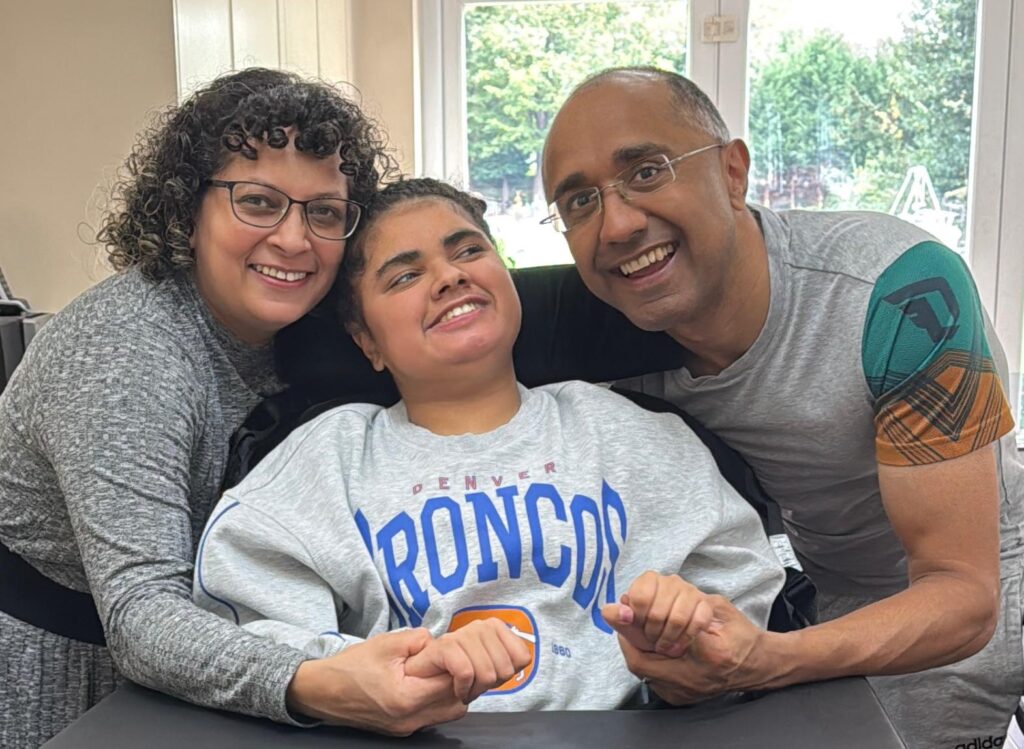
In this latest Your Voice, parent carer Sapna and Nilesh explains how hearing the stories of other parents in the same situation helped unlock their daughter Jia’s savings.
A complicated process with up-front fees
We are proud parents to Jia. Jia is 20 with a rare genetic condition, resulting in complex needs including epilepsy, respiratory issues and global developmental delay. We also have two other younger children. Like many parents with disabled children, we diligently saved hard for Jia using the government-appointed Child Trust Fund (CTF).
We started to hear that gaining access to Jia’s CTF might not be straightforward, due to Jia lacking mental capacity. When Jia was 16 we went to our provider Nationwide , who informed us we’d be able to access her savings via the Court of Protection at 18. We revisited then and were told to “do a Court of Protection form”. We very quickly realised that this was not just a simple form! It was a really complicated process, which required us to find medical professionals to fill in paperwork and pay fees up front. We also didn’t want full Deputyship as Jia has no other assets. Sadly, we struggled to find suitable legal advice, and those that could help us quoted £2.5k+.
Having to repeat our story takes its toll
Over the next few months, we talked to friends in similar positions. We asked various practitioners in Jia’s life, such as those visiting from Preparing for Adulthood. Many also didn’t know what to to do. Two more visits to the Building Society with mountains of paperwork (proof of Appointee, PIP, identity etc) followed, each time with Jia and her siblings. Each visit took 1.5 hours, with Jia experiencing multiple seizures during this time.
The first visit we were told that the Court of Protection was the only route and sent away. On our second visit, we had even more paperwork evidence (care plans, paperwork from adult services). We were optimistic there must be another way. This time the Building Society rang their special support team. But we were ultimately sent away yet again with advice to speak to our local council for help. Spoiler alert: they couldn’t.
Like many families, day-to-day we try and go about our lives without thinking of every roller coaster moment that has led us to this point. But when we have to repeatedly tell our story, it really takes its toll. Each conversation leaves you deflated. At this point we gave up, with the process taking time and energy that we didn’t have. Over £10,000 in savings for Jia was just sat there but we couldn’t see a way through.
Sapna, Jia and Nilesh Patel
A turning point
Jia started college, and through conversation with another family, and a different CTF provider, we began researching our options again. This time we came across Contact’s website and then Andrew Turner’s campaign on LinkedIn. This was a turning point, making us realise we were not the only ones going through this and there was momentum to effect change! We also read about some providers releasing funds through the ‘Industry Process’. This uses the Appointee Scheme and means that families were not needing to get Deputyship.
This led to us discovering the Unlock Our Savings Facebook group, run by Maria at Contact and Andrew Turner. We began discovering the journeys of other families and learning from their experiences. We watched other families affected by the issue, speaking out on BBC Breakfast and Moneybox, including Contact Changemakers Claire and Finley. One of the families featured had a Child Trust Fund with Jia’s provider Nationwide. They talked though their experience of accessing their child’s savings. This made us realise that it was possible without going through the Court of Protection.
The phone call we hadn’t dare expect
We headed back to Nationwide, armed with BBC video clips and details from the Facebook group. We met with the Branch Manager, who worked with us to open a case with the special support team on our behalf. This time, we gained some traction. After all, if it was possible to do this for another young person, then why not Jia? After reviewing all of our evidence, some further questions and signing an indemnity form, our case was taken to panel. A week later, came the phone call that we hadn’t dare expect – the Building Society had agreed to release all of Jia’s savings based on the evidence that we had provided. The money was transferred to our account that same afternoon! The relief was overwhelming and took a good few days to sink in. It was one less fight we would have to fight.
We want to share our story to give hope to others. Talking about money can be taboo, but it was through others generously sharing their experiences that we have been able to help Jia access her savings. We can now use that money for what we always intended – to enhance Jia’s life such as upgrading her bathroom.
When we found the Unlock Our Savings campaign, we were in a pretty dark place. The campaign gave us a community and the realisation that we were not alone. There were others actively trying to make this situation better for families like ours.
Our message to the government
Our message to the government is that it was Labour that originally created Child Trust Funds. With that comes the responsibility for making sure that all disabled young people can access their savings. We ask you to finally make this a high priority and fix this urgently for families like ours.
Thanks to everyone who has been involved in our brand refresh project so far including taking part in focus groups, workshops and surveys. One of the things we are now exploring is a new charity name.
Research we carried out with parent carers and other supporters told us that 70% think it’s time for a name change.
So with your help we’ve got a short list of 3 names plus our current name, and we’d love you to help us make the right choice.
Please take a few minutes to complete our short survey. We’re asking for your thoughts on the name only – you’ll see a sample strapline alongside each name just to show how it could look (the final wording of the strapline will be decided later).
Omo Idegun, a parent carer who has worked with our Wales team, shares her experience of setting up Wrexham Africa Community CIC to help turn loneliness into belonging.
“I’m a single parent living in Wrexham, raising two incredible children: my daughter, a dedicated young carer and my son who is autistic. Our journey has been shaped by love, advocacy, and the belief that community makes us stronger.
“My connection with Contact began at a pilot consultation in Wrexham, funded by Awards for All. I spoke passionately about the importance of parent support groups, how they must uplift every member, not just a chosen few. That moment sparked deeper involvement: I joined the Wales Parents Steering Group.
“In 2022, I travelled to Cardiff with my children to attend Contact’s Celebration Day and carers’ consultation ahead of their successful three-year National Lottery bid. It was a huge experience, especially for my son, but we made it. I stayed calm and planned carefully, knowing how much that helps him feel safe. I even recorded a short video reflecting on the event, which Contact used in their bid submission. Later that day, we joined others at the theatre to watch Sister Act. It was brilliant, joyful, uplifting, and unforgettable.
“In 2020, I founded Wrexham Africa Community CIC,a group dedicated to celebrating African culture, building connections, and supporting one another through events, networking, and heritage. I saw a gap in support and celebration for Africans living in Wrexham and surrounding areas. These projects began with a simple but powerful idea:
Every voice should be heard. Every culture should be celebrated.
“Through Wrexham Africa Community, we’ve helped turn loneliness into belonging. We’ve created a space where African voices are not just heard, they’re honoured. We’ve supported newcomers, empowered young people, and built bridges across communities.
“In 2024, with support from Wrexham2029, City of Culture funding, Africa Oyé, and Wrexfest, we launched our pilot music festival: AfroFiesta, a vibrant celebration of African and Caribbean culture. Afro Fiesta is more than a festival. It’s a stage for learning, connection, and joy. We’ve brought together hundreds, even thousands of people to experience music, dance, food, and stories from across the diaspora. What started as a small idea has grown into a movement that’s helping Wrexham become more diverse, lively, and united.
“This year, we proudly hosted the second edition of Afro Fiesta. And we’re just getting started!”
Currently local authorities can “devise their own eligibility criteria” depending on the financial resources they have. This is in stark contrast with adult social care, where local authorities must follow national eligibility criteria.
One parent in our social care focus group turned down for support told us that their local authority tightened the criteria after the family lodged a complaint. Others were told their child needed to have more than one disability to qualify for support.
The Law Commission’s own research involving 104 local authorities found 14 had no publicly available eligibility criteria. Of the remaining 90 local authorities, “no two sets of criteria were the same”. Others had potentially discriminatory criteria that excluded children with specific conditions or disabilities like autism.
What does the Law Commission recommend?
The Law Commission report recommends that the government:
Reforms the law to create a single duty to meet the social care needs of disabled children, subject to national eligibility criteria.
Does further work to evaluate the likely impact of the eligibility criteria and what the criteria should be.
Involve authorities, families of disabled children and those representing their interests.
Publishes new statutory guidance as an interim while the work is carried out, which states that local authorities must “have regard to” when drafting their own local criteria.
We believe families should be central to any work carried out to agree eligibility criteria for disabled children’s social care and when developing new statutory guidance. This work needs to start now.
What happens next?
The government has until March 2026 to provide an initial response to the Law Commission recommendations and a further six months to provide a detailed response.
Contact has welcomed all 42 of the Law Commission’s recommendations.
We are urging parents to help us Spark a Fairer future for disabled children.
In this article, our campaigns and engagement lead Maria explains what you can do to take part in our campaign work – whatever time you have to give.
You have a million things running through your head right now. Order the repeat prescriptions. Check the draft plan. Chase the assessment. Email the school. Do the forms. All the forms. Keep the world turning. Rinse, repeat.
But you want to make a difference for your child and others like them. Let me show you how.
I’ve got 2 minutes and 1 nerve remaining, but I want to help
Your time is precious – let’s use it to benefit your family directly.
Contact has teamed up with Renaissance Legal to offer a webinar to help you Start planning for the future with confidence.
For parents in England & Wales, this will cover Wills, Trusts and what you need to consider financially. Philip has a warm and accessible presenting style, and it will be strictly cameras off, so you can grab a coffee and watch from the comfort of your sofa.
At Contact we welcome the light that Kellie Bright is shining on the fight for education that families with a child with additional needs are facing. Did you see her recent Panorama documentary?
At Contact we remain determined to elevate parent voice across the UK, on issues across the board. If you would like to share your story via Contact’s Your Voice platform, get in touch by emailing [email protected].
Over 400 parent carers took part in our bi-annual information and advice services survey this September. Our survey helps us ensure we’re meeting your needs and is an opportunity for you to suggest how we can improve.
Aside from knowing how satisfied you are with our support, we want to know the impact we have.
Christine Membi is a parent to two children and lives with her family in Glasgow. They live with sickle cell disease, as do many other families across the UK.
Sickle cell disease is a very much misunderstood condition that predominantly affects people from African and Caribbean backgrounds. This often that means that the right support is not always available.
Here, Christine tells us more about the condition and how she became involved in setting up the Hope Project to provide support to those suffering with Sickle Cell Disease and their families.
“Sickle Cell Disease (SCD) can affect anyone and could be life threatening. It predominantly affects people from African and Caribbean backgrounds. As such, we have experienced barriers to services, support and health inequality. So, in 2016 I along with just a handful of other families set up The Hope Project Scotland.
We had a noble idea of providing support to families living with SCD. Now we are a pro-active dedicated group, which started in an environment where Sickle Cell was not well known.
We have since grown and now have over 280 registered members across Scotland. Members can connect with each other and access medical information, holistic and social support along with support for their mental health. We also help people with other rare blood disorders.”
Building a supportive community
“We exist to help patients and families in dealing with its complications. We aim to build a community to help ease stress, reduce isolation, loneliness and trauma that’s often caused by the unknown.
“With so many medical appointments ,accessing appropriate childcare and safe travel is a concern for our families. It can often be difficult to find funding for very basic things like heating (an absolute necessity for people living with this condition, knowing that the majority are on very low income and sometime do not get the disability benefit). Funding to keep the group running is a constant challenge especially in recent years.
“The Covid pandemic affected our families immensely. Challenges included accessing medical support, PPE, medicines, cost and risk of travel to hospital, risk of infection on public transport or shopping… Opportunities to speak to someone in the group who could provide some advice, help them get a break, provide practical things like hand sanitiser were essential. We were able to access some funding for Christmas treats too. These were so welcome and uplifting at a time of great difficulty.
“We look after our members’ mental health. This is very important to keep them from having painful crisis. Anxiety and stress trigger these crises and consequently hospital admissions.”
Support from Contact
“We continue to provide information, guidance and parent resources. We run regular awareness-raising days, family activities, support on sleep issues, access to support for parents to build good mental health and to counselling, training for self-esteem and confidence building; awareness raising session on Sickle Cell with professionals and wider public and ultimately empower families and build self-esteem.
And we now have chat group where young people can talk about any concerns they have growing up with SCD along with social, sport and music interests. We have a number of interesting, focussed sessions including a recent cooking project providing the skills and culinary flavours of African and Caribbean food. This was a joyous family event – if slightly competitive!
“Contact has worked with us to help build our community of support from the very beginning. They’ve provided wider resources, support in hospital, family finance advice and information to our families in person. They have helped us to build resilience as a group and to influence policy and legislation to improve the lives of all families with sickle cell. Contact understands who we are, and that matters.
“The world has changed since we set up our group. It can at times feel a bit scary, but we always pull together and look forward to the joy our families bring us every day in every way.”
Join The Hope Project on Saturday 8 November for a traditional family day out
Taking place at Alhambra House in Glasgow from 2-6pm, the Hope Project’s fun day on 8 November is for all the family to learn and share in the cultural diversity of families through traditional dress, food, music and great conversation.
You’ll be able to meet Contact’s Scotland team there too!
At Contact, we want to make sure families of disabled children and those with additional needs can access the support they need, wherever they live in the UK.
We are currently reviewing how parents access services in Scotland, Wales, and Northern Ireland. We want to understand what works, what could be improved, and whether parents feel their voices are heard and understood enough in policy making. Your experience really matters and will help shape our work.
We are asking parent carers to take a short survey (5–10 minutes, mostly tick-box or multiple-choice questions) about:
Where you go for advice and support.
What support you need or would like to see.
How well informed you feel about policies and rights for families with disabled children in your country.
How well you think politicians and decision makers understand the challenges families face.
What more could be done to make sure parent voices are heard and acted on.
The survey is anonymous. Every response helps us push for better support and stronger parent carer voices in Scotland, Wales, and Northern Ireland.
If you care for a child or young person with disabilities or additional needs and live in Scotland, Wales, or Northern Ireland, we would love to hear from you.
Please choose the survey link for your nation below:
A direct payment allows families to buy care and support services themselves, But the current law is vague about whether payments must be sufficient, leaving many families out of pocket or unable to recruit paid carers.
Many families tell Contact that direct payments are not enough to attract paid carers. Parents are forced to top up wages from their own pockets or struggle on without help and return unspent funds to the council.
What did the Law Commission find?
Direct payments offer flexibility, but they’re not working effectively, and disabled children’s needs are going unmet. The commission found:
Payments are often too low to secure the support a child needs.
Families struggle to recruit carers due to workforce shortages
Local authorities don’t always review payments or step in when recruitment problems arise
Parents face complex responsibilities like managing sick pay, holiday pay, and liability insurance
What does the Law Commission recommend?
The law currently says direct payments should be “adequate,” but government guidance only requires them to be “reasonable” which leads to inconsistency and unfairness.
The commission recommends:
Reforming Section 17A of the Children Act 1989 to guarantee that direct payments are sufficient to meet the actual costs of providing care to meet a disabled child’s assessed needs.
Introducing new statutory guidance so payments are consistent across the country and reflect real-world costs.
Local authorities should not be required to make a direct payment if it would have an adverse impact on other care services they provide for disabled children or if securing the provision is not an efficient use of the authority’s resources.
What other reforms is the Law Commission recommending to fix disabled children’s social care?
A new legal framework.
National eligibility criteria.
New legal duties to assess and meet the needs of disabled children.
This webinar is for families in England and Wales only.
At Contact, we understand that as a parent carer, planning for your child’s financial future can feel overwhelming.
Families often tell us that they are worried about how being left money might negatively impact their child’s entitlement to means-tested benefits and social care support. However, this can be daunting and difficult to know where to start.
To bring some much needed clarity, Contact is partnering with Renaissance Legal to offer a free one hour webinar about planning for the future of a disabled loved one.
When is the webinar?
Date: Thursday 23 October 2025
Time: 10am – 11am
Location: Online (a Zoom link will be sent when you).
Renaissance Legal’s leading and trusted expert Philip Warford will explain how to safeguard means-tested benefits and how to provide financial security for your disabled loved one as well as the rest of the family.
The webinar will cover:
The importance of writing a Will and Letter of Wishes.
Protecting means-tested benefits and support packages through trusts.
The different types of trusts.
Contact’s offer and services.
A Q&A session at the end.
These webinars are always really popular due to Philip’s accessible style of presenting. We encourage you to book your place today as spaces are limited.
A webinar is a live presentation via the internet. You will need a tablet, smartphone or computer.
There is no required audience participation (unless you want to ask a question in the chat) and cameras will be off, so you can relax in the comfort of your own home.
October is Black History Month and the theme this year is ‘Standing Firm in Power and Pride.
For over 20 years, Black History Month has brought people together to celebrate culture, history and achievements of Black and minority ethnic communities – remembering the past and focusing on the future.
There are lots of ways for you to get involved this year. Take a look at the excellent Black History Month website for articles, profile and history articles and a calendar of events taking place around the country.
Contact is here for all families
Anna Bird, Contact’s CEO says: “At Contact becoming an anti-racist organisation is a priority and we are actively striving for greater equity, diversity and inclusion for our families.
“This is more important than ever, as racism and harmful political talk about immigration are on the rise. There’s a duty on all of us at Contact to stand with the families we support, speak up when we see unfair treatment, and make sure Contact is a place where everyone feels supported—no matter their race, religion, or background.”
Shining a light on Black children with Down Syndrome
And if you’re in London why not check out the lights at Piccadilly Circus on 6 October when to celebrate both Black History and Down Syndrome Awareness Month, stories of families supported by the Black Down Syndrome Project will illuminate the Piccadilly Circus and highlight the work of world re-knowned photographer, Misan Harriman’s work celebrating Black children with Down syndrome.
Anna also called for teachers to receive a comprehensive package of training to teach children with SEND. And she said that schools must have access to specialist support like education psychologists and speech and language therapists.
Anna acknowledged that the government will need to commit to up-front investment, but explained that the economic benefits – not to mention the value to disabled children and their families – far outweigh the costs.
“The government has been out speaking to parents throughout the summer, and we know that parents will have been saying the same things to them. We’re asking for no dilution of rights and in fact for every child to have the legal guarantee that support will be there when they need it.”
The new youth guarantee initiative hopes to support young people into regular, long-term employment.
Government must consider barriers young disabled people face
Una Summerson, Head of Policy at Contact, says:
“We welcome the government’s drive to reduce youth unemployment. It is right to ensure every young people has access to education, training or a job . However, we are worried that the government hasn’t fully considered the barriers disabled young people face.
“We are keen to understand more how the scheme will work for this group. Young people whose needs are too high to allow them to access either training or employment, but who may be capable of carrying out some tasks, will be left with a greatly-reduced Universal Credit figure if the government goes ahead with plans to remove the health element for under 22s.
“There will always be some young people for whom employment isn’t possible, particularly with lack of funding and support for special educational needs (SEN). Provision needs to be made for young people in this situation. Retaining entitlement to the health element in Universal Credit for young people is an effective way of achieving this. The Pathway to Work Green Paper acknowledges that the government needs to ‘consider what special provisions need to be put in place for those young people where engagement with the youth guarantee is not a realistic prospect’. It hasn’t yet made clear what form these ‘special provisions’ will take or which young people will be eligible.
“Contact does not accept that there is any justification for slashing financial support for any young disabled person aged under 22, regardless of the extent that they can or cannot engage with the youth guarantee.”
Danielle, a parent carer from Essex, shares her twins’ journey through the special educational needs and disabilities (SEND) system and what she told Minister Gould must change for families like hers.
My twins, Teddy and Barney, were born 14 weeks premature. They’ve had a mountain to climb from day one, with multiple diagnoses including Autism, ADHD and developmental delay. Despite everything, they’ve made remarkable progress. They’re bright, capable boys with huge academic potential – but also significant communication, social, emotional and sensory needs.
With education, health and care (EHC) plans and full 1:1 support in place, they thrived in their small village mainstream school. We felt hopeful about their futures. But the move to secondary school turned into a nightmare.
Dehumanising, isolating, and overwhelming appeal process
We contacted 20 schools before finding two specialist provisions we felt could meet their complex needs while still giving them opportunities to access a differentiated mainstream curriculum. We made our wishes clear to the local authority as early as Year 5. But months later, the local authority named a mainstream school that had already expressed grave concerns about being able to keep Teddy and Barney safe.
Our requests for meetings and assessments were ignored. Mediation was ignored. In the end, we were forced into an exhausting appeal process, fighting two cases at once while caring for the boys and trying to keep working. The process felt utterly dehumanising, isolating, and overwhelming. No parent should ever have to go through it.
Thankfully though, through working closely with Teddy and Barney’s Headteacher and classroom team at their primary school, engaging with the wonderfully supportive SENCO at the ‘named’ mainstream secondary school, working with our personally-funded educational psychologist, valuable advice from SENDIASS, personally funded legal training from IPSEA, and with the overwhelming support of the community of friends in related fields willing to provide evidence statements and advice, we made it through with a positive outcome. But so many families aren’t as fortunate.
I know children right now who are still at home, without education, because of systemic failures.
Change is possible
And sadly, Teddy and Barney’s story is not unique. Families are left chasing answers, ignored, and treated as adversaries rather than partners. At Bright Futures Essex, the parent-led support group I run, we hear the same frustrations again and again. Parents don’t want a fight – they want to be listened to, given honest advice, and supported with compassion.
From listening to families, and teachers, we have identified the following things that must change:
Collaboration and Communication – Parents and schools need honest, timely communication and a culture of trust. We should be working with the local authority, not battling against it.
Teacher Training – Teachers need practical, specific training on Autism, ADHD, PDA, language delay and trauma-informed strategies. Without this, “inclusion” is just a word on paper.
Attendance – The one-size-fits-all approach to attendance does not work. We need to stop rewarding attendance as it is an absolute lottery and has nothing to do with ability or attitudes to learning. This is a divisive strategy and bares little connection to effort or attainment. We are approaching it all wrong. By starting with the goal of 100% attendance we are setting young people up to fail. We should be looking at why they are not attending school and how we can make school feel safe and accessible.
The single biggest change that could make a real difference would be the reintroduction of the Specialist Teaching Service. Specialist teachers are experts who work directly with children, support teachers, and guide families with real strategies. They could bridge the gap while families wait for assessments, and give schools the tools they need to support children immediately.
Having a voice at the highest level
On Monday 15 September, I was honoured to meet Minister Gould after the SEND Rally. Thank you to Contact for helping give me this platform.
She listened with empathy to my experiences and other SEND families, and later in the Westminster Hall debate, she committed to working with families going forward. That gave us a glimmer of hope — but councils must step up right now.
Our children deserve a system that meets their needs, values their potential, and gives them the futures they deserve.
Get the latest SEND updates, benefits advice, practical help caring for your child, plus free workshops and family events in our weekly email newsletter.
(Make sure you select ‘News updates’)