Parent Carer Forums: Tips for responding to Consultations and Inquiries
These tips for forums responding to consultations and inquires have been co-created with the National Network of Parent Carer Forums.
Government consultations whether run by your local authority, national government (such as Department for Education), or Parliament (such as a select committee) are an important way for parent carers to influence policy, services, and funding decisions.
This briefing explains what consultations and inquiries are, why they matter, and how your Parent Carer Forum (PCF) can respond effectively and strategically.
What is a Consultation or an inquiry?
A consultation is a formal process where a public body asks for views before making decisions. These may cover:
- Changes to local special educational needs and disability (SEND) services or eligibility
- Health and social care strategies
- National policy or legislation
- Funding formulas or inspection frameworks
- Parliamentary inquiries into issues affecting families with children and young people with SEND.
An inquiry investigates major issues affecting the public. For example, investigations into safeguarding practice, or a serious incident.
Consultations or inquiries may take the form of:
- Online surveys
- Written call-for-evidence submissions
- Workshops or engagement events
- Public hearings or inquiry oral evidence sessions
A consultation asks for views on a proposal before decisions are made. An inquiry investigates what has already happened and examines an issue in more depth and may make recommendations.
Parent Carer Forums voice matters
Parent Carer Forums are uniquely placed to respond to consultations because they draw on the experiences of many families with children and young people with SEND 0-25, identifying shared themes and common issues across services.
Forums can provide unique insight into how policies work in practice. Your contributions help government officials and decision-makers understand:
- The real impact of proposals on families
- Gaps in current services
- Barriers in accessing support
- Equality and accessibility issues
- Practical alternatives that would work better
- Have knowledge of how systems in local areas operate and engage strategically with Parent carers and PCFs
Public bodies are required to consider responses.
Tips for responding to consultations or providing evidence to an inquiry
Who should respond?
While members of a PCF can work together to develop a response, only one submission should be made per PCF. If you are responding on behalf of your PCF, it is important you have the agreement to do so from your Steering Group (or equivalent governing body) and you would be expected to use data and lived experienced gathered from your engagement with families in your local area. As a PCF you may also choose to do specific engagement with families on the consultation or inquiry topics. It is important that your response reflects your local community.
Read the consultation carefully
Most consultations or requests for evidence will have a page that give you information on how to fill out the consultation which you may find useful.
Identify:
- The purpose of the consultation or inquiry
- Most consultations and inquiries allow you to respond to specific questions to that are important to you. You do not need to respond to all questions if you choose not to.
- The deadline for the date of your response or submission
Gather evidence and experiences
It’s important that the PCFs submission represents the lived experience and views of your members. To support your response to a consultation or to submit evidence to an inquiry you may wish to consider:
- Feedback on the lived experienced gathered via your PCF activities such as, coffee mornings, dedicated engagement events, workshops and surveys.
- Any public local data that reflects your concerns and is relevant for example if providing a response to a consultation on waiting times for children and young people you may wish to refer to your areas published waiting times.
- It is important that if you are providing specific examples that consent is obtained before sharing, (this is not required for publicly available information). This is because written evidence can be published and case studies may have identifying features. You should be explicit that consent has been obtained.
- Formal research is not necessary, documented lived experience is valid and valued.
Writing an Effective Consultation response
Consultations:
When reviewing a consultation, there is often supporting documentation provided alongside it. This usually explains how to complete the consultation and outlines the questions being asked.
You may find it useful to prepare your answers, for example in a word document before your start your online response to the consultation.
Most consultations will follow a set of questions that will ask for key details about you or your organisation.
Where possible when replying to questions draw upon your evidence of the lived experience of your membership that you have gathered.
Written evidence to an inquiry
When submitting written evidence, there is often guidance which outlines the questions they would like you to answer. UK parliament have guidance that can help you in submitting evidence for a select committee.
Key points to consider:
- Check the guidance in relation to providing your organisations contact details. This is often asked for as you upload evidence, and you are asked NOT to include this in the evidence itself.
- You can request anonymity or confidentiality when you submit your evidence, unless specified as guaranteed it will be down to the organisation if they choose to publish it, so it’s worth checking the information if you have a concern.
- Often you only need to respond to the questions or issues that are relevant to you, you don’t have to respond to all questions or issues.
- Your response should be concise and clear to read.
- It is good practice to use section headings and numbered paragraphs.
- Original responses are preferred. Submitting a response that has been published or submitted by another organisation may mean it is not accepted.
- If sharing lived experience of families, ensure you reference you have permission to do so.
- It’s important to share good practice examples and positive lived experiences of families. This can be helpful for commissioners and policy makers to know.
How to Prioritise Which Consultations to Respond To
Parent Carer Forums often work with limited capacity. We recommend you prioritise which consultations and inquiries you choose to respond to.
Good points to consider are:
Relevance: Will this affect families with children with SEND directly? Is it important to your membership that you represent their views in this consultation/inquiry?
Importance: Does the consultation reflect your members experiences and feedback? If not, you may decide that investing time completing a consultation, may not be a priority
Impact: Could the proposal significantly change rights, access, or services and provisions?
You may want to prioritise:
- New legislation or statutory guidance
- Major system reviews (SEND, social care)
- Local provisions and services that are important to families, for example if your local Short Break services launched a consultation on their offer.
You may want to give less consideration to:
- Consultations and inquiries that have minimal impact for families, CYP with SEND.
- Consultations and inquiries that are not aimed at representatives’ bodies representing the lived experience of families
After responding
It’s important to keep a copy of your submission or written evidence.
Once you’ve submitted your consultation response or written evidence you may wish to:
- Share your submission with your PCF Region and NNPCF Regional Director
- Share your submission with local organisations you work with, such as local charities, your local authority and integrated care board.
- Share with your membership, to share you have represented the lived experience of your community and encourage them to submit their own submission.
- It is not good practice to encourage your members of other organisations to submit an identical copy of your response.
Outcome of the consultation or inquiry
It’s important to review the outcome of the consultation and inquiry. It’s good to reflect to your membership where you have influenced a positive change.
Specifically with inquiries written evidence can be published and your submission could be referenced in the report
You may find the report or outcome is relevant to your day-to-day work and practice. You may wish to use published reports and new guidance and legislation to support conversations about improvements to send provisions and services in your area.
Responding to Consultations and Inquiries
The slides for the recorded session are here: Consultations and inquiries online learning presentation slides.
Updated March 2026
Do you have any thoughts about this page? Visit our How to feedback page to share them.
Looking for something else? You can find a full list of pages on our Parent carer forum handbook contents page.
Related content
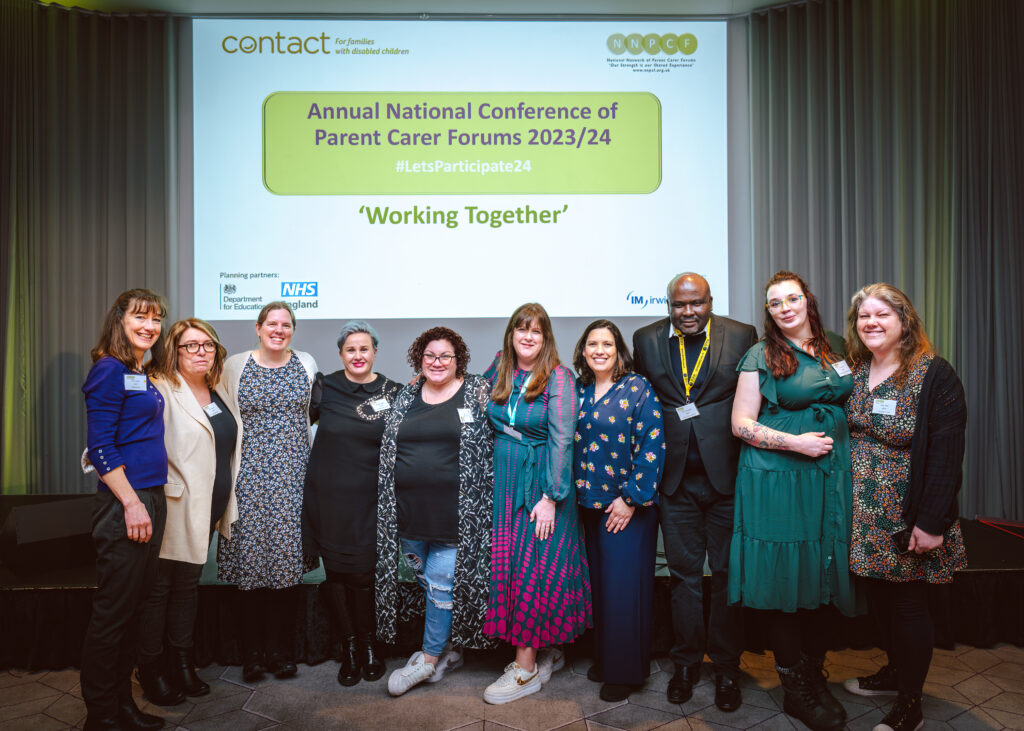
National Network of Parent Carer Forums (NNPCF)
In this section, we look at the role of the NNPCF that all forums are a member of.
Read more
NNPCF website and social media
View information available to all forums via the NNPCF website and social media platforms.
Read more
Participation and co-production
The purpose of parent carer forums is to work in partnership, collaboration, or co-production with local services.
Read more
Working in partnership
Working in partnership, including with health services, local authorities and other groups.
Read more
Communication and gathering the parent carer voice
From reaching out to more families to forum websites, social media and communication plans.
Read more