Parent carers – please help spread the word about our life-changing services for families by inviting your child’s primary school or nursery to take part in DinoDay, our annual awareness and fundraising event.
DinoDay is Contact’s annual event on 19 June to raise awareness of disability and help fund our vital support services.
Schools can join the fun by hosting exciting activities to raise awareness of disability in the classroom, as well as encouraging donations through sponsored events.
Once they register their interest, we’ll send them everything they need to get involved. Our pack includes fun games and activities, inclusive educational exercises for the classroom, information about Contact, and helpful disability resources.
Contact has been very clear in every conversation we’ve had with ministers about SEND (special educational needs and disabilities) reform. We don’t want to see any change to the legal status of education, health and care (EHC) plans. And there should be no weakening of the powers of tribunals.
We will continue to campaign and influence against any reduction in rights, and we’ll also be feeding back on it in our consultation response. We encourage you to do the same by taking part online.
The publication of a white paper does not change existing SEND law. Your child’s legal rights to support remain in place.
What’s this about?
Lawyers have been working on a proposed judicial review challenge on behalf of a vulnerable disabled child. These lawyers have shared that the Department for Education (DfE) has responded indicating there is no duty to consult on some elements of the government’s SEND reforms, in part because decisions have already been made.
These elements include powers of the SEND tribunal. The consultation document includes a proposal that in future the SEND tribunal will no longer be able to name an education setting in EHC plans. Instead, the tribunal will only be able to order the local authority to rethink a placement decision (see page 105).
There are also further questions around the role of the tribunal in the delivery of educational provision. This is because the proposals state that a child with an EHC plan would also have some of their provision set out in an Individual Support Plan (ISP).
What do we think?
We believe the role of the tribunal is vital to ensure all children receive the education they are entitled to. It is an important final measure where all else has failed, or when families can see it is the only route to resolution.
In focus groups we have run with parents, the important role of the tribunal has come up consistently. We will be feeding that into the consultation. We have always strongly, clearly and publicly stated that we would oppose any reduction of the tribunal’s powers.
These proposals to change the tribunal were never discussed with us before the publication of the schools white paper. We have contacted the DfE and made this position clear.
What has the DfE said?
The DfE has said via email that “nothing is determined on SEND Reform until we introduce legislation which will then be subject to Parliamentary scrutiny.”
They add that they are “consulting widely and want to hear from parents, young people, educators and SEND experts about how we get this right”.
What’s next?
We’ll continue to make our position clear and feedback to you what we are hearing from government.
We would also encourage anyone concerned about the changes to make this clear by responding to the consultation. We know the consultation is missing questions about the tribunal. But that should not stop you from responding about your thoughts on the proposals. We will be doing so.
What is a consultation?
When the government wants to make changes, it may run consultations where they ask for people’s views before making decisions about services, policies, or funding.
Even a short response can help highlight issues and improve services for children and young people with SEND. It’s important to remember that:
Your lived experience matters. It’s valuable evidence.
You don’t have to answer every question in the consultation – you can just answer the ones that matter most to you.
You should share your examples of what works well and what doesn’t.
Your answers don’t have to be formal or academic – short points are fine.
If you feel the consultation is missing questions about something important to you, you can still submit your views wherever feels most appropriate, explaining why it is important to you and your thoughts and concerns. Contact’s response will include our thoughts about the tribunal.
Our Contact Northern Ireland Family Support Advisers will be at The Braid Centre, Ballymena, this Wednesday 25 March from 9.30am–3.30pm as part of a large event run by the Northern Health Social Care Trust (NHSCT).
The event connects families of disabled and additional needs children with a wide range of voluntary and community organisations offering information and advice.
Look out for the Contact NI stand, come and meet our team to talk through any questions you have. No appointment or referral is needed. You can find information about the event and venue on the NHSCT website.
What else is Contact NI up to?
Our Contact NI team works with families across Northern Ireland to offer support, advice and information.
Support for families in the Northern Trust area
This service is for families in the Northern Trust area. (This covers Antrim and Newtownabbey, Causeway Coast and Glens, Mid and East Antrim, and Mid Ulster)
Our Family Support Advisers can offer free, confidential support and information to families of disabled, rare conditions, and special educational needs children (up to age 25), with or without a diagnosis. The Northern Health Social Care Trust (NHSCT) supports this work.
Our help includes:
Information on benefits and financial support.
Education and school support.
Health services and diagnosis pathways.
Preparing for transitions to adult life.
We also offer a free and confidential listening ear service for parent carers who need emotional support.
To get in touch with a Family Support Adviser, email [email protected].
We’re delighted to share that we’ve just published our popular “Introduction to Disability Living Allowance (DLA)” animations in Welsh.
You can watch on our YouTube channel or below – use the button in the top right to shuffle through the three videos.
Download our guide to upcoming benefit changes
The next two years will see a number of changes to the benefits system that will impact on families with disabled children.
Some of these changes will happen in the next few weeks – including cuts in the Universal Credit health element for many new claimants and the scrapping of the two-child limit rules.
In the longer term, the government also plans to introduce a right to try work for disability benefit claimants and even has plans to scrap the work capability assessment altogether.
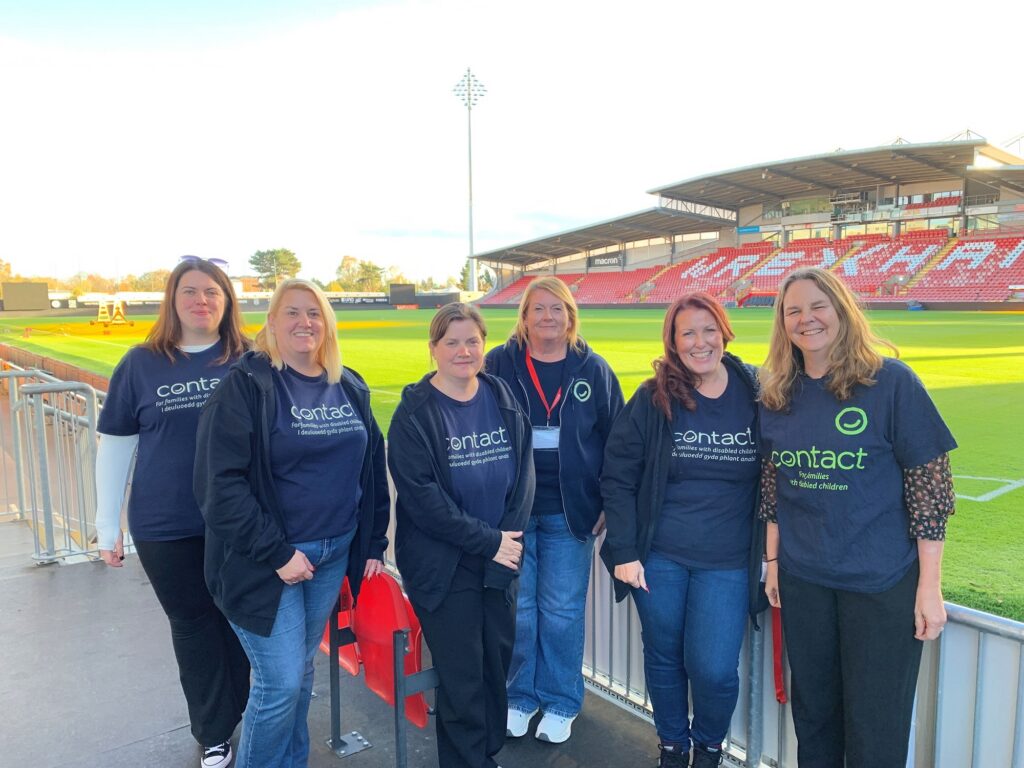
From the moment families arrived you could feel the excitement building. Wrexham football club is now owned by Hollywood actors Ryan Reynolds and Rob McElhenney. TV cameras followed their progress in the “Welcome to Wrexham” documentary series.
There were no cameras on the day of our event, but there was plenty of action!
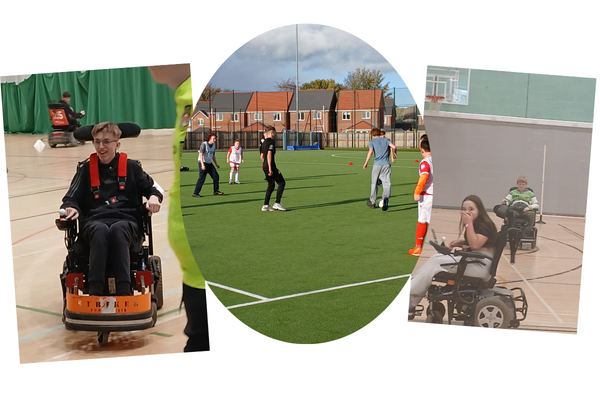
Over 30 children and young people took part in a range of sporting activities, from powerchair indoor football to outdoor football sessions and table top games. It was a joy to watch them proudly receiving their participation medals at the end.
Alongside the activities, families were able to visit information stands. Andy’s Man Club support men’s mental health through open conversation. Stand NW support families of children and young people with speech, language and communication needs and additional learning needs in North Wales.
Katherine Wyke, Contact Cymru Manager, said:
“Events like this can sometimes feel tense or overwhelming for families. So it was wonderful to see everyone come together and feel able to be themselves. Families told us how relaxed and comfortable the day felt.
“A huge thank you to everyone involved, especially the Wrexham AFC team and coaches, for helping create such an inclusive, positive day where families felt welcome, supported and celebrated. And a special thank you to women’s first team star Rosie Hughes. Her presence was a huge highlight for many of our families!”
Last chance – don’t miss our webinars for Wales families
We still have spaces on our upcoming webinars all about preparing for your child’s future.
A new payment for carers in Scotland looking after more than one disabled person comes into force this Sunday.
This is one of a number of changes the Scottish government is introducing to carers benefits from 15 March. Alongside two new payments also comes improvements to the Carer Support Payment – the main benefit for carers in Scotland.
Below we explain what you need to know about all the changes to look out for this week.
New Carer Additional Person Payment
The Scottish government is introducing a new payment known as the Carer Additional Person Payment. This is for those who get Carer Support Payment and who provide care to more than one disabled person on a qualifying disability benefit. You need to be getting the Carer Support Payment to be able to apply for the new payment.
The amount you get will depend on how many additional disabled people you provide at least 20 hours’ care to each week. You will receive £10 per week (£10.40 from April) for each extra disabled person you care for in addition to your main caring role. There is no set limit on the number of additional disabled people you can claim a payment for.
You won’t get a Carer Additional Person Payment for a disabled person if someone else already does. You can, however, receive a payment for a disabled person despite someone already getting Carer Support Payment as their main carer.
Example of Carer Additional Person Payments
Roddy and Fatima have two severely disabled children, both on Child Disability Payment at the highest rate for personal care. Roddy gets Carer Support Payment because he provides more than 35 hours care to their disabled son Adam. Fatima gets Carer Support Payment as their daughter Anita’s main carer.
As well as looking after Anita, Fatima provides more than 20 hours a week’s care to Adam. She also provides more than 20 hours’ care to her mother, who gets the daily living component of Adult Disability Payment. In addition to being Adam’s main carer, Roddy spends more than 20 hours a week helping to look after Anita.
Fatima is entitled to a Carer Additional Person Payment of £20 for two disabled people (Adam and her mum). Roddy gets a payment of £10 as he cares for one additional disabled person (Anita).
How to apply for a Carer Additional Person Payment
If you already get Carer Support Payment, initially you can complete a “CAPP only” claim form (paper or digital). To access this, call Social Security Scotland on 0800 182 2222 or go online at mygov.scot.
This form is available to existing claimants for six months only. After that, you will need to report a change of circumstances to Social Security Scotland if you want to claim for the first time, or add or remove an additional disabled person.
New Scottish Carer Supplement
The Scottish government is also creating a new payment called the Scottish Carers Supplement. This is replacing the Carer’s Allowance Supplement – a lump sum payment made every six months.
Rather than getting a lump sum, anyone on Carer Support Payment will now receive an additional weekly payment of £11.29 (£11.70 from April) instead. This works out the same amount as the previously-paid lump sums, only it’s now spread out as a weekly amount.
You need to be in receipt of the Carer Support Payment to get the Scottish Carer Supplement. If you only receive the Universal Credit carer element but haven’t claimed Carer Support Payment, you will not qualify.
As long as you are living in Scotland and receiving Carer Support Payment on 15 March 2026, you will receive the supplement automatically without needing to make any application.
Scottish Carer Supplement is ignored as income for Universal Credit and other means-tested benefits such as Council Tax reduction.
Improvements to the Carer Support Payment
Alongside these two new payments, the Scottish government is making some changes to the Carer Support Payment rules.
Extending bereavement run-on
When a cared-for person dies, their carer currently continues to receive Carer Support Payment for eight weeks after their death.
This is being extended to the first 12 weeks where the cared-for person dies on or after 15 March 2026.
Temporary breaks in care
Under existing rules, someone on a temporary break in caring will continue to get Carer Support Payment only if they have been caring for a minimum number of weeks. (This is 14 or 22, depending on their circumstances.)
From 15 March this requirement will be scrapped. Anyone on Carer Support Payment will retain payments throughout a short break in caring, regardless of when they started caring. These new “temporary breaks in care” rules will also apply to Scottish Carer Supplement and any Carer Additional Person Payment.
Frequently Asked Questions
Universal Credit income deductions
I get Universal Credit with a carer element. I also get Carer Support Payment, but that is deducted from my Universal Credit. My Carer Support Payment may increase because I start to get an extra Scottish Carer Supplement and a Carer Additional Person Payment. But won’t that extra money simply be deducted from my Universal Credit leaving me no better off?
It’s true that the Carer Support Payment you receive is treated as income and deducted from your Universal Credit. That is not changing. However, the good news is that any Scottish Carer Supplement or Carer Additional Person Payment you get is treated differently. These new additional amounts are ignored as income and won’t affect your Universal Credit payments.
Does an underlying Carer Support Payment entitlement count?
I am the full-time carer for my severely-disabled grandchild. I recently qualified for my state pension, and this has replaced my Carer Support Payment. However I still have an “underlying entitlement” to that benefit. Will I get the Scottish Carer Supplement?
Unfortunately not. Both Scottish Carer Supplement and Carer Additional Person Payment are only paid to those who actually receive Carer Support Payment. You can’t get them if you only have an underlying entitlement.
Overlapping caring hours
I am a lone parent with two disabled children, both on Child Disability Payment. My frail elderly father, who gets Pension Age Disability Payment, also lives with me. I care for him for more than 20 hours a week. However sometimes the care I give to my dad overlaps with the care I am providing to my children.Does it have to be separate hours to qualify for the carer additional person payment?
You should be able to get Carer Support Payment for one of your children and the Carer Additional Person Payment for two people: your other child and your dad. It’s OK that you are looking after more than one person at the same time – these hours still count. You don’t have to show that you are caring for them at different times.
The Universal Credit carer element
I get both Carer Support Payment and Universal Credit with a carer element. If I qualify for a Carer Additional Person Payment because I look after a second person, will I get a second carer element in my Universal Credit too?
No, getting a Carer Additional Person Payment does not lead to a second carer element in your Universal Credit.
The draft guidance is for schools and is an update to the 2015 statutory guidance. It affects all children with medical needs, from asthma and epilepsy to diabetes, allergies, and long‑term health conditions.
Why this matters
If your child has a medical condition, this guidance shapes:
How schools plan to keep your child safe.
Who is trained to support them.
How schools manage medication.
How they handle emergencies.
How the school communicates and reviews your child’s needs.
How the school supports your child to fully participate in school life.
School governors, academy proprietors and pupil referral units must “have regard” to statutory guidance when carrying out their statutory duty to arrange to support pupils at school with medical condition, including on school trips.
How does this draft differ from the current guidance?
Changes proposed include:
A major new section on allergy safety.
Schools must publish their medical conditions policy – not just have one.
Clearer process for identifying children with medical conditions.
Clearer definition of who needs an Individual Health Plan, what it must include, and how often it must be reviewed.
Stronger focus on inclusion, wellbeing, and a participation in school life.
What the consultation doesn’t include
The consultation excludes guidance on the all-important delegation of clinical and healthcare tasks. These are tasks that a regulated healthcare professional gives to non-healthcare staff in the school caring for children.
There is no publication date for promised DfE and Department of Health and Social Care joint non-statutory guidance.
Amanda Elliot, Contact’s health lead, says guidance on how to care for medically complex children in school was long overdue:
“Parents and schools urgently need clarity on arrangements for safe delivery of more complicated health and clinical care in schools. Medically complex children are missing school as a result. One parent was forced go into school to tend to her child’s tracheostomy in a school broom cupboard, which is completely unacceptable.”
How to have your say
The DfE wants to hear directly from parents, carers, families, and young people. The consultation closes at 11:59pm on 1 May 2026.
You can read the draft guidance and respond to the consultation directly on the DfE website.
Alternatively, you can share views via Contact’s consultation response by email [email protected]
This advice applies in England only
Low-income disabled households with a water meter will get reduced water bills as part of reform to the WaterSure scheme in England.
All suppliers will offer the scheme to households in which someone claims DLA, PIP or Attendance Allowance and the household income is less than £25,745.
Your household will still need to have a high essential use of water due to having three or more children or a medical need. However, you will no longer need to provide notes from your GP proving this. Alternative proof like a prescription or NHS letter may be accepted.
A further change will see water suppliers use the lowest calculation of those available to determine the WaterSure cap. This will save households of more than one person on average £26 a year. The cap will also be adjusted for single households, who will save an additional £100 as a result.
Attempts to address rising home-to-school transport costs with cuts to post-16 provision is putting access to education at risk for children and young people with SEND (special educational needs and disabilities), the Public Accounts Committee (PAC) has found.
In the PAC’s report published today, the committee describes the £2.3 billion school transport service as “vital”, but financially unsustainable. Councils have responded with cost-saving measures, including restricting non-statutory provision, particularly for 16–19-year-olds. But the committee says these are likely to affect attendance and participation and could contribute to rising NEET levels. (NEET stands for not in education, employment or training).
Contact welcomes the committee’s scrutiny, but urge against solutions that remove door-to-door transport for those children who need it.
Post-16 “cliff edge” keeping parents out of work
The report highlights a sharp “cliff edge” at 16, when changes to entitlement mean local authorities have discretion over what support, if any, they provide.
Parents and colleges gave evidence to the committee of young people missing learning or failing to start courses because of a lack of suitable transport . The report also notes specific concerns about the impact of the cliff edge on children and young people with SEND.
Parents help shape PAC report
We’d like to thank everyone who replied to our transport for 16-19 year olds survey. Your replies helped us produce robust and up-to-date evidence on school and college transport which we then fed back to the PAC.
The report contains evidence from Contact throughout. We highlighted the importance of transport to disabled students and their families and the impact of cuts to post-16 transport. 40% of families report an impact on their ability to work due to a lack of transport.
Among its key recommendations, the committee asks the Department for Education (DfE) to:
Set out how planned SEND reforms will reduce transport costs and when savings will materialise.
Improve its understanding of the relationship between transport, attendance and NEET,
Make transport data collection mandatory and standardised to establish a clear baseline for reform.
The committee calls on the Ministry of Housing, Communities and Local Government to ensure its new funding formula properly aligns resources with need and to address SEND deficits without forcing further service cuts.
Urgent need to stabilise funding without harming disabled students
Contact welcomes the committee’s scrutiny of school and college transport and the impact it has on disabled students and their families.
We share the ambition that the proposed SEND reforms will improve inclusive education for SEND children and young people, which should, in turn, relieve some of the pressure on home to school transport. In the meantime, efforts to contain costs must not have a negative impact on disabled students.
The committee’s report recognises that a shift in expectation from door-to-door school transport to broader “travel assistance” may work for some children, but will not suit all. Those with the most significant needs may always require bespoke home-to-education transport.
For SEND students and their families, there remains an urgent need to stabilise funding, protect services and improve post-16 provision. Transport must be a bridge to education, not a barrier.
Thanks to funding from the Motability Foundation, Contact is campaigning to improve transport to school or college. Read more about our school transport campaign.
Right now, 80,000 young disabled people are locked out of money their families saved for their future. Due to mental capacity rules, their families must go through the Court of Protection to access their child’s money. This is a prohibitively lengthy, costly and complex process. There were just 70 court applications from families between September 2020 and May 2023.
There is a route that safeguards money with rigorous checks and balances, but allows easier access to savings. This route is called the “industry” process. The UK’s largest Child Trust Fund provider, OneFamily, has safely released funds to more than 2,500 disabled young people this way. But not all providers offer this route.
That’s why we are calling on the government to legislate so families can access this same fair route no matter where their savings are held. Today’s event, organised by parent campaigner Andrew Turner, Contact and OneFamily, will shine a spotlight on this matter.
“Every young person should be able to benefit from their savings in Child Trust Funds or Junior ISAs. There’s compelling evidence that the court process is inaccessible to families simply trying to help their child access one small savings account. We need bold action from the government to put an end to this obvious inequality.”
Sarah Smith, MP for Hyndburn and Haslingden, is sponsoring the event at the Palace of Westminster. She says:
“Families shouldn’t have to face a disproportionately complex court process to access their trust fund. I know Ministers are committed to finding a workable solution, but this inadvertent omission has been allowed to stand for far too long. Now is the time to set all bureaucratic obstacles aside and solve the issue.”
Anna Bird, Chief Executive at Contact, adds:
“Parents with disabled children are under enormous everyday pressures. They don’t need an extra battle to access money invested for their child’s future. We know this industry process safeguards young disabled people’s money at the same time as ensuring families don’t have to go through an arduous court process. We’d like to see the government back it.”
We want to say thank you to all our supporters who emailed their MP asking them to attend today’s event.
It’s important to note that the Child Trust Fund may have been converted to a Junior ISA. If so, you may encounter the same challenges accessing a Junior ISA as accessing a Child Trust Fund.
Following our recent Facebook Q+A on Universal Credit for disabled students, our Family Finance Team have created a new interactive flowchart to help parents work out whether their young person is likely to qualify for Universal Credit while still in education.
If you have any questions about trying to claim Universal Credit for a disabled young person in education, you can also call our free helpline on 0808 808 3555 (Mon-Fri; 9.30am-5pm).
The cross-party committees are seeking evidence from parents, young people, families and professionals. The aim is to examine how well the system is meeting mental health needs.
Amanda Elliot, Contact’s health lead welcomed the inquiry:
“It’s long overdue. It is vital we understand the relationship between disabled children’s mental health and the way they are supported in and out of school. Persistently high rates of school exclusions, placement breakdowns and anxiety-related school refusal show something needs to change. There is important work still to be done to get this right for our children.”
What the committee will look at
The inquiry will examine:
Mental health support and services in education and community settings – such as mental health support teams in school – from early years up to the age of 25.
Contact will be making a written submission. If you would like us to include your views and experiences and mental health and education, email [email protected]
We will be closely examining the white paper and update you on the detail over the next few days.
Schools white paper consultation opens
The government has now published its consultation document and asks for comments from everyone with an interest. There are 39 questions (Annex C) which cover how to best support children and young people, targeted support, specialist support, accountability and responses to changes to the system. P
You can take part online (please note you don’t need to answer every question).
You can also respond to this consultation via email at [email protected], or by post to: SENDAP Reform, Sanctuary Buildings, Great Smith Street, London, SW1P 3BT
The consultation closes on11:59pm on18 May 2026.
Join a Contact focus group
We’re running a series of focus groups to find out what you think about the schools white paper.
Your views will inform our response to the white paper consultation.
All schools will have to create an Individual Support Plan (ISP) for every child with special educational needs and disabilities (SEND) that clearly set out the help a child will receive, the government has announced today. The support will follow a national framework and be tailored by teachers and specialists.
The government says extra funding will make services like speech and language therapy and small group teaching easier to access.
The publication of a white paper does not change existing SEND law. Your child’s legal rights to support remain in place.
Education health and care (EHC) plans for complex support
Anna Bird, CEO of Contact and Co-chair of the Disabled Children’s Partnership says:
“The government’s announcement on plans to improve the special educational needs system in England, in particular their vision to improve support for children without the battle that many parents currently encounter, is one we warmly welcome.
“In particular we applaud the announcement of a new legal right to an Independent Support Plan – school-based support. This was a key Contact recommendation. If children are supported in school as soon as their additional needs become apparent, many families will not have to go through a lengthy and traumatic legal process to get support for their child.
“We are also relieved to see the SEND tribunal is retained. This is vital for families to hold the system to account when things go wrong or secure an EHC plan or a special school place if their child needs one.
“We are concerned about the eligibility of EHC plans, which is not clear from today’s announcement. We will look at the details of the white paper and work with families, ministers and MPs to ensure changes to the law work for every child with additional needs.”
No child will lose support already in place
The government has said that no child will lose effective support already in place:
Every child with a special school place in 2029 will keep it if they want it until they finish education.
Children with EHC plans in mainstream schools will not be moved to ISPs until at least 2030. And this will only happen when moving between school stages (for example, primary to secondary).
Transition for children with an EHC plan in mainstream settings who will best supported in the future via an ISP, rather than an EHC plan, will only begin from 2030 once the new inclusive mainstream system has been fully built. This will only happen as children naturally move between phases, like from primary to secondary
ISPs will be in place for children transitioning from an EHC plan before they move to the new system. This will mean there is no break in support.
We will be closely examining the Schools White Paper and update you on the detail over the next few days.
Contact welcomes the government’s £4 billion investment over three years to make mainstream schools more inclusive and reduce the adversarial battles families face.
Anna Bird, CEO of Contact and Chair of the Disabled Children’s Partnership, said:
“The government’s promise to tackle the SEND crisis so that every disabled child can achieve and thrive is a vision we share.
“We strongly welcome investment in better training of teachers, readily-available specialist support and more accessible buildings in mainstream schools where SEND pupils can be mates they grow up with. These changes could transform the lives of hundreds of thousands of children.
“We are concerned though that the government has failed to answer parents’ questions about whether legal changes will reduce existing rights. Families are worried these might make it even harder to hold the system to account when things go wrong or secure an education, health and care (EHC) plan or a special school place if their child needs one.
“We will look at the details of the white paper and work with families, ministers and MPs to ensure changes to the law work for every child with additional needs.”
Inclusive Mainstream Fund
The proposed £1.6 billion Inclusive Mainstream Fund could significantly improve school-based support (currently known as SEN Support), reducing the need for families to pursue lengthy EHC plan processes simply to secure appropriate help.
Investment in early identification, tailored interventions and adaptive teaching is essential. Supporting staff to recognise and respond to common special educational needs is a positive step.
However, strengthened SEN Support must not become a substitute for specialist provision where it is required. EHC plans remain a vital legal safeguard and must be protected.
It is currently unclear whether the fund will be ringfenced. We would support ringfencing to ensure funding is used specifically to improve SEND provision. We would also welcome clear national oversight potentially through an accountability mechanism similar to Ofsted — to ensure transparency and impact.
Experts at Hand (£1.8bn)
We applaud the proposed ‘Experts at Hand’ service. This will create a local bank of SEND professionals including occupational therapists, educational psychologists and specialist teachers. Access to specialist expertise without requiring an EHCP could reduce delays and unmet need.
However, this proposal will only succeed if there is a credible plan to address workforce shortages. There are currently significant gaps in the availability of occupational therapists, educational psychologists and speech and language therapists. Without a parallel workforce expansion strategy, delivery risks falling short of ambition.
We support the new requirement for all teachers to be trained to support children with SEND. And we welcome the £200 million already announced for teacher training.
The proposal to use special and alternative provision schools to provide outreach and short-term placements recognises their expertise. However, this must not overstretch specialist settings or compromise the support available to children already placed there.
The role of specialist provision
We agree that children should not have to travel long distances to access suitable support. Greater quality local provision is welcome.
However, locality can never take precedence over a setting’s ability to meet a child’s full range of needs. Some children will always require specialist provision, and there must remain a clear, protected place for specialist settings within the system.
Supporting families to navigate the system
We hope the government will build on investment in Best Start Family Hubs to strengthen SEND outreach and provide practical support to families navigating the system, particularly at key transition points.
What happens next?
We will be closely examining the Schools White Paper when it’s published later today to ensure:
It does not become harder to secure an EHC plan.
Specialist provision remains available where needed.
Families can still hold local authorities to account.
We’ll continue working with families, policymakers, Ministers and MPs to ensure reforms genuinely reduce conflict and improve outcomes. We will also keep families updated as more information becomes available.
“It is deeply disappointing to see another leak about SEND (special educational needs and disabilities) reform that will add to the anxiety of families already broken from dealing with a system that doesn’t work. Behind all the speculation are parents who just want the ordinary for their children. A safe education, access to the health and social care their sons and daughters deserve, and a chance for them to make friends.
“As our conversations with families, released today, confirm, that is not happening. Because of lack of support, almost half (47%) of parents feel they can’t safely care for their children. 37% have been forced to give up work, and 57% feel they have been lied to by authorities that are meant to support them.
“What the vast majority (98%) of families want from SEND reform is a legal guarantee to support that is outlined in a written plan and for well-trained education, health and care departments to work together to deliver that.
“What families fear most is higher thresholds for eligibility to EHC (education, health and care) plans, decreased rather than increased accountability of decision makers, and withdrawal of the right to challenge decisions.
“The Disabled Children’s Partnership has been fighting hard to make sure the voices of the hundreds of thousands of parents and young people our membership represents are heard. We will continue to do this during the 12 week consultation on the Government’s plans.”
Contact is here with support and advice
With all the current uncertainty, parent’s trust in the system is understandably at an all time low.
Yesterday the County Councils Network (CCN) published a report warning about the rising demand for school transport for children with SEND (special educational needs and disabilities). It warned that costs are going up at an unsustainable rate and could cost councils £3.4bn by 2030-31.
In the report they suggested that one way to reduce council costs would be to means test for school transport. This would mean that families above a specified income threshold could be required to make a financial contribution to home-to-school transport.
“School transport should be based on a child’s need and not what their parents earn. Means testing access to school transport would not only be a reduction in rights for disabled children and young people by restricting their access to education, it could also prevent parents from working. Families with disabled children already have higher costs. Means testing based on parents’ income could potentially ignore these extra burdens. A family earning what’s considered above the threshold on paper may have far less disposable income in reality. Families just above the threshold could face thousands of pounds in transport costs as a result.
“Transporting disabled children to school is far more complicated than for their non-disabled peers. Many disabled children can’t attend the schools local to them because either they require specialist provision, local schools aren’t accessible, or don’t have the places. Means testing transport doesn’t just balance budgets – it risks locking disabled children and young people out of education altogether.”
If you need information or advice, look at our online resources for transport in England or contact our helpline.
Are you a parent carer looking for extra support?
Get the latest SEND updates, benefits advice, practical help caring for your child, plus free workshops and family events in our weekly email newsletter.
(Make sure you select ‘News updates’)