Contact believes the government is failing to address the cost of living crisis families with disabled children are facing in its latest Disability Action Plan.
32 actions to transform daily life
In the plan, the government sets out 32 immediate actions to “transform” daily life for disabled people. These include a commitment to make playgrounds more accessible and improved information for families with disabled members.
Some actions listed are:
A training module to support education professionals to identify young and sibling carers.
An online information hub for local authorities on creating accessible playgrounds and opportunities for disabled children to get involved in physical activity.
New guidance for local authorities on accessible playground, although no mention on whether this guidance will be mandatory.
A guide for local authorities to support “more constructive relationships” with disabled parents.
A new accessible online information hub for families with disabled people.
The plan acknowledges that disabled people raised cost of living concerns in the action plan consultation. In response, there is an action for the Disability Unit to “continue to engage across government” and share insights from the consultation to highlight concerns on the impact of the cost-of-living crisis on disabled people.
Amanda Elliot, Contact’s health lead, said overall the Disability Action Plan was disappointing and too narrow in scope:
“While the plan offers families a glimmer of hope on accessible playgrounds, it stops short on committing to mandatory guidance for local authorities to make sure this happen. The plan also does nothing to address the dire lack of accessible holiday schemes for disabled children.
“We know through our helpline and parent carer surveys that the most pressing and “immediate” issue for families of with disabled children are financial. There is nothing in the action plan that offers our families any hope this will improve.”
Stephen Kingdom, campaign manager of the Disabled Children’s Partnership, welcomed the action on accessible playground but said the plan did not provide “a complete strategy to address the systemic failures for disabled children and young people.”
Contact would like to see an increase in the amount of money disabled households can get towards adapting their homes.
Currently families can claim up to £30,000 through the Disabled Facilities Grant if they are assessed as needing adaptations to their home, such as installing a stair lift or putting in a downstairs bathroom. This amount has been capped since 2008 and due to the increased cost of equipment and building work, it is now worth a lot less in real terms.
Shortfall
Anna Bird, Chief Executive at Contact, said: “This is an area of huge frustration for families. We hear from many having to make up the shortfall through fundraising. Many are carrying on with inappropriate housing – carrying children up and down stairs, bathing children in paddling pools in their living room.
“Our research found that over a quarter of families with disabled children say that their home makes their child’s condition worse or puts them at risk. This can send families into crisis, and we know the costs of helping families at that point are much, much higher. Getting the right equipment and environment so families can look after their child at home, saves money in the long run.”
Longer-term solution needed
An external review commissioned by the government in 2018 recommended that the upper limit of the Disabled Facilities Grant should rise in line with inflation. The government did put an additional £100 million into the pot for Disabled Facilities Grants in 2023 for two years, but Contact believes a longer-term solution is needed.
One family, Contact is in touch with through our Decent Homes campaign, has been waiting two years for adaptations to give Finlay, aged 17, the independence he needs. Although the family has been assessed as needing adaptations, the council will only pay £40,000 towards the costs, which are £94,000.
He can’t access the kitchen
Mum, Alexa, said: “I work full-time as a teacher and we are maxed out on our mortgage, so we can’t meet the shortfall. The house doesn’t work for Finlay, he can’t get into the kitchen, he can’t get to the fridge. A local company gifted us a festival toilet which is a portakabin on the back of the house. We are really grateful but it’s not a long term solution, as it’s freezing in winter.”
A Manifesto for Disabled Children and their families sets out what the campaign group wants to see from the next government. There will be a general election by January 2025 at the latest, and political parties are currently putting together their offer to voters.
The DCP, a coalition of more than 100 organisations backed by thousands of parent carers, is calling for parties to put families with disabled children at the heart of the next government.
The key asks of the Manifesto are:
Make disabled children a priority. Those at the heart of politics need to prioritise the needs of disabled children and their families. They must acknowledge disabled children and their families as equal, valued members of society. We want all parties to commit to the appointment of a Minister for Disabled Children and to producing a cross party disabled children’s strategy.
Clarify and enforce rights, and review the law. The next Government must commit to stronger accountability within the SEND system; to making the education system inclusive; and to ensuring that disabled children and young people receive the support they need across the education, health and social care systems.
Address funding shortfalls and create a dedicated fund for disabled children. Making disabled children the priority and having a system that is fit for purpose with effective accountability will help make this happen. But the right level of funding is also vital.
We encourage all supporters to share our manifesto with their prospective parliamentary candidates. You can find out who that is at Who can I vote for?.
In a huge win for parent campaigner, Natalie Hay and Contact, the Schools Minister has agreed to update free school meals guidance following a debate in Westminster yesterday.
The changes will make clear that local authorities and schools are legally obliged to offer reasonable adjustments to children who can’t have their free school meal in the regular way, such as by providing supermarket vouchers.
MPs from all parties supported our motion
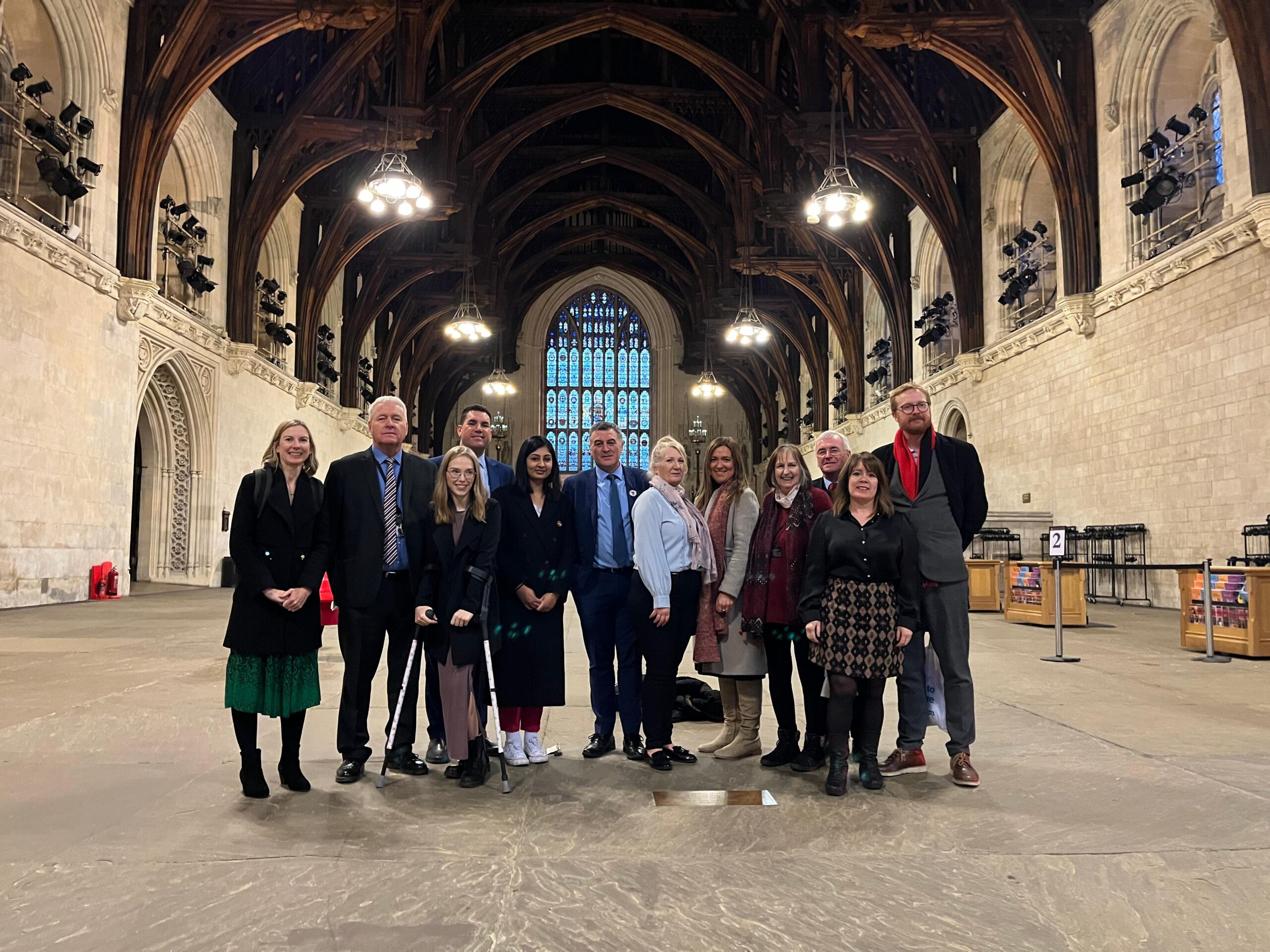
Labour MP Ian Byrne led the debate in Westminster yesterday, Wednesday 10 January. In his opening speech, Byrne highlighted new figures from Contact that show more than 164,000 eligible disabled children are unable to access the free school meals they should be receiving.
Mr Byrne said that “families should not have to face this battle”. He called on the government to update its free school meals guidance making local authority and school responsibilities clear.
What followed next restored our faith in the political process. More than 20 MPs from all parties made powerful speeches in support of the motion. They referenced numerous constituents’ stories and quoted Contact’s research. An engaged, well-briefed Minister responded for the government.
As one parent put it: “I was moved to tears by watching MPs out there that care.”
We will keep a watchful eye to make sure the government follows through on its commitment to update guidance.
Thank you to all our supporters
Thank you again to all our supporters who invited their MP to the Westminster Hall debate. You sent more than 1,400 emails to your MPs. It’s parents like you who helped us achieve this campaign win.
Legal win for children not in school who are missing out on their free school meal
Last month, the government conceded that free school meals should be provided to eligible children who are unable to attend school due to their special educational needs and have a package of support often referred to as education otherwise than at school (EOTAS). This was thanks to legal action by a group of parents led by Natalie Hay. Natalie independently raised £8000 through crowdfunding to instruct human rights lawyers to take this to court.
As a result, almost 2,000 disabled children across England missing out on a free school meal can now get funding for a free lunch from their local council.
The government committed to preparing guidance for local authorities (expected in March 2024) to ensure that local authorities are providing access to a meal for those with EOTAS.
This legal action was a pivotal part of the campaign, because the government conceded that discrimination could be happening and agreed to update the Free School Meal guidance to ensure eligible children with a package of EOTAS can access their free school meal.
This was also confirmed at the Westminster Hall debate. Until guidance is published, if you are in this position please use our template letter B.
Tens of thousands of eligible disabled children are missing out on their free school meal entitlement due to their disability or sensory needs.
This is despite the law being clear that most should be offered an alternative such as a supermarket voucher.
Children with conditions such as diabetes, epilepsy and autism are subsequently missing out on the equivalent of £570 a year of financial help. This is causing families to get into debt and turn to foodbanks.
MP calls for simple fix to make big difference
Ian Byrne MP for West Derby is leading a Westminster Hall debate today, Wednesday 10 January, about fair access to free school meals for disabled children.
The Merseyside MP has a proud history of campaigning to eradicate food poverty.
He said: “Over 100,000 eligible disabled children are missing out on their free school lunch, which is truly shocking. Access to food is a basic human right. I want to see universal free school meals. But while we wait for that, we must ensure the current system is fair and equal.
“Disabled children and their families are already more likely to be living in poverty due to the difficulties of juggling care and work. Research shows they have also been disproportionately affected by cost-of-living pressures.
“I was determined to lead this debate to highlight the discrimination that is taking place, after meeting an affected constituent. I am calling on the government to update their free school meals guidance. It must be made clear that schools and councils need to provide an alternative, ideally a supermarket voucher, to disabled children who can’t access a free school meal in the regular way. This is a simple fix that could make a big difference.”
Children missing out for various reasons
Research we carried out in March 2023 found different reasons why disabled children can’t eat their free lunch:
60% can’t eat school meals due to their health condition, dietary requirements or sensory processing difficulties.
22% are off school due to a long-term medical condition or illness.
18% are not in school as they have an education package provided by the council or are waiting for a suitable school place.
6% attend a school without a canteen.
Last month, the government conceded that free school meals should be provided to eligible children who are unable to attend school due to their special educational needs and have a package of support often referred to as education otherwise than at school (EOTAS). This was in response to legal action by a group of parents.
As a result, almost 2,000 disabled children across England missing out on a free school meal can now get funding for one from their local council.
Families shouldn’t have to fight for help
Campaigners hope that this decision paves the way to all eligible children getting their free school meal. Today’s Westminster Hall Debate should be another catalyst to achieve that goal.
Natalie Hay founded the inclusive free school meals campaign three years ago. She realised many eligible disabled children were missing out on their free lunch, despite receiving supermarket vouchers in lockdown. She set up an online support group, which has grown to more than 2,700 affected family members.
"I know how hard it is, as a carer, to fight for things."@NatalieHay11 explains how her son's illness motivated her to start a campaign to improve access to free school meals for pupils with disabilities.
Anna Bird, Chief Executive at Contact, said: “The current free school meals scheme is inaccessible to tens of thousands of eligible disabled children. We are grateful to Ian Byrne MP for championing this issue for affected families up and down the country.
“Almost all affected families say that missing out on school meals increased pressure on their weekly budgets. At a time when grocery bills are sky high, it’s vital that families get all the help they are entitled to without having to fight for it.
“We urge the government to act swiftly and update its free school meals guidance. This should make clear that local authorities and schools are legally entitled to offer reasonable adjustments to children who can’t have their free school meal in the regular way, such as providing supermarket vouchers.”
Want to watch the debate Live?
Tune in and watch the debate live on Parliament TV at 4.30pm.
We want to thank the almost 1,500 campaigners who asked their MP to attend today’s important debate.
With less than a week to go, please don’t forget to invite your MP to the parliamentary debate on free school meals for disabled children on 10 January at 4.30pm.
More than 500 supporters have already invited their MP to the debate. It’s really important we get as many MPs there as possible.
You can now tweet/post on X your MP about this important debate below.
All you need to do is type in your details and we will automatically identify your MP’s Twitter (X) profile and add it to the tweet template.
Please note you need to use X (formerly known as Twitter) to take action
This is a unique opportunity for the School Minister, Damian Hinds MP, to hear why disabled children are wrongly missing out on a free lunch and how he can put a stop to this.
Contact’s research found that a third of eligible disabled children are missing out on their free school meals, losing almost £600 a year of financial help. There are many reasons why a disabled child can’t access their free school meal including special diets or sensory processing difficulties, being off school due to a long-term illness or waiting for a suitable school place, as well as those who have an educational package called EOTAS.
The law says disabled pupils should be offered an alternative, such as a supermarket voucher, as a reasonable adjustment if they are unable to access a school lunch in the regular way. However, government guidance makes no mention of this, meaning many schools are wrongly refusing parent requests for a food voucher.
At the debate, we want MPs to ask the Government to update the Free School Meals Guidance so it’s clear that schools and councils must provide free school meals, in some form, to eligible disabled children who can’t access them in the regular way.
A government minister will have to respond to the debate so it’s important that lots of MPs attend to show what an important issue this is for families with disabled children.
In this article, Maria, parent carer and engagement lead in our campaign team, reflects on a year of parent carer campaigners fighting for change.
I know that this time of year can be joyful, but it can also be hard.
Our social media feeds and TV screens are full of festive cheer, in ways that rarely reflect real life. At times like this, families often tell us that they feel forgotten.
I want you to know that Contact sees you and how hard you work, all year round, to fight and provide for your child.
We see and hear you
I’ve been working in Contact’s campaigns team for just over a year now. Alongside my colleagues, Amanda, Elaine, Imogen and Una, we are here to make sure that everyone else sees and hears your family too.
We’ve been meeting with ministers and senior decision makers, highlighting the issues that you are facing in the media and speaking with many of you to ensure that we are focussing on the issues that matter to you.
Thankfully, there are quite a few journalists with lived experience of childhood disability, and two of them – Jessie Hewitson and Sam Carlisle – had articles published this week hitting back.
We’ll be doing even more of all this in 2024. So please do keep talking to us and supporting our campaign work. Together we are stronger.
Sending you our best wishes for the festive season and thank you for supporting us.
The 11-time Paralympic gold medallist asked the DfE whether they plan to update free school meals guidance to advise schools and local authorities to make reasonable adjustments – such as providing vouchers – to ensure children aren’t missing out.
We’ve been supporting a parent-led campaign, led by Natalie Hay, aimed at stopping disabled children missing out on free school meals. Of the 1/3 eligible families missing out:
60% can’t eat school meals due to dietary requirements or sensory processing difficulties.
22% are off school due to a long-term illness or medical condition.
18% have EOTAS (Education Otherwise than at School), similar to home education, or are off school waiting for a suitable school place.
The law says that public bodies, such as school and councils, must make “reasonable adjustments” to make sure they don’t treat unfavourably or discriminate disabled people. And we think the free school meals guidance for schools and local authorities needs to make this clear.
Imogen Steele, Contact’s Policy Lead on free school meals, said:
“We thank Baroness Grey-Thompson for raising this important issue in the House of Lords. Eligible families are losing the equivalent of £570 a year in financial help.
“We are calling for swift action from the government to update its guidance to ensure this discrimination stops. It was disappointing to hear Baroness Barran, the Parliamentary Under-Secretary of State for Education, failing to commit to this in her response to Baroness Grey-Thompson .”
School transport is an integral part of the school day for some disabled children.
But as local authorities struggle with severely reduced budgets, some are looking at ways of reducing their spend through changes to school transport arrangements for disabled children.
Una Summerson, Head of Policy at Contact, said: “We understand the very real difficulties that local authorities have with their squeezed budgets, but it isn’t fair to balance the books on the backs of families with disabled children. What’s more the law is very clear on what transport must be provided to disabled children.
“We have seen school transport policies placing emphasis on cost cutting rather than transport based on individual need and legal entitlements. It places all responsibility on parents which adds unnecessary extra pressure on family life.”
Disabled children are more likely to travel further to nursery, school or college. Unlike their non-disabled peers, many can’t travel independently, even as they reach secondary school age. For these reasons, school transport is a vital service.
Information about your child’s rights to school transport
On Wednesday, Chancellor Jeremy Hunt set out the government’s plans for the economy in his Autumn Statement. Read our CEO’s response.
Below we outline some of the main benefit changes relevant to families with disabled children.
Benefit changes at a glance
The Chancellor announced:
Uprating working-age benefits and disability benefits next year in line with consumer price inflation of 6.7%.
Lifting the freeze on the local housing allowance, which caps benefit payments towards rent in the private sector. Local housing allowance will increase so it covers the cheapest 30% of properties in each area. This should mean more help with rent for private tenants on Universal Credit or Housing Benefit.
Confirming the introduction of a new ‘Back to Work Plan’. This will target jobseekers who ‘disengage’ via a stronger sanction regime and more intensive work coach support.
Expanding DWP programmes that support mental and physical health. This includes a new WorkWell service to support those at risk of entering long-term unemployment to either enter or return to the workplace.
Abolishing class 2 National Insurance contributions currently paid by self-employed people from April 2024, while allowing self-employed people to continue to access contributory benefits such as the state pension.
As part of a ‘crack down’ on benefit fraud and error, new powers will allow access to data held by third parties such as banks.
Response to consultation on proposed changes to the work capability assessment
The work capability assessment is a disability assessment the government uses to decide how much benefit disabled adults on certain benefits like Universal Credit and Employment and Support Allowance should receive. It also determines whether they should be look for work while claiming that benefit.
There are three possible outcomes of a work capability assessment:
You can be found fit to work.
You can be found to have a ‘limited capability for work’.
You can be found to have a ‘limited capability for work and work related activity’(LCWRA).
The government intends to scrap the work capability assessment and replace it with the Personal Independence Payment assessment. However, that change is not expected to take place until 2026/27 at the earliest.
In the meantime, the government intends making changes to the work capability assessment. This will see a reduction in the number of new claimants having a LCWRA. In responding to a consultation, the government has confirmed that it plans to make these changes from April 2025, for new claims only.
Understanding limited capability for work/and work-related activity (LCWRA)
If you have a limited capability for work, you don’t have to look for work, but you must still take part in work-related activities to get you more ready for work. For example, you may have to take part in training. Having a limited capability for work does not lead to any additional benefit payments.
However, if you have LCWRA, you won’t need to meet any work-related conditions like job seeking or training. You’re also eligible for an extra amount of benefit.
Changes the government is proposing
Substantial risk to health
The government plans to amend the rules that allow a disabled person to be treated as having a LCWRA where taking part in work-related activity would place them or others at ‘substantial risk’. These rules will become more restrictive.
Although yet to announce full details about how it will apply the new rules, the government says that it will protect those with physical health problems. This means that where being taking part in work-related activities would lead to a deterioration in your physical health, the government will protect you as someone at substantial risk.
Mobilising
It also plans to remove difficulties with mobilising from the list of activities used when deciding whether someone has a LCWRA. Currently those who cannot mobilise for more than 50m without pain or discomfort are one of the groups having a LCWRA.
The government claims that those with the most significant mobilising needs will not lose out as a result of this change. Instead, the substantial risk rules will treat them as having a LCWRA.
Difficulties in physically mobilising will still factor in deciding whether someone has a limited capability for work.
Getting around
In assessing whether someone has a limited capability for work, there will be a reduction in points awarded for difficulties in getting around without the help of another person, for example due to mental health problems.
Other changes consulted on
The government has decided that it will not proceed with proposed changes in how the work capability assessment deals with problems with incontinence or in engaging in social engagement.
Anna Bird, Chief Executive of disability charity Contact, said: “Now into a second year of sky-high costs for food, heating, rent and mortgages, families with disabled children say they face a constant battle to keep afloat. Disappointingly there was little in yesterday’s Autumn statement to alleviate the hardship many are experiencing.
“There was no targeted support and no commitment to a social tariff to help with families’ higher energy costs. Families with disabled children pay £1,600 a year more than other households for their energy, to run vital equipment like ventilators, adjustable beds, hoists and suction pumps. They now face a difficult winter without the support they desperately need.
“The Chancellor chose to focus on tax cuts rather than investing in public services that disabled children and their families depend on. Families are exhausted from filling gaps in support for physiotherapy, speech and language, as well as mental health services. Over the last 10 years support services have been cut back and families are left to do more, often complex care. This has devastating impacts on their wellbeing and their ability to be in paid employment.
“On top of this the lack of action on fixing the Carer’s Allowance earnings limit, is another blow to those families who would like to combine caring with paid employment.”
We will spell out what the Autumn Statement 2023 means for families with disabled children in more detail soon.
While unpaid carers provide up to £162billion worth of care a year, they can less easily earn income and face additional care-related costs. Many carers can’t combine work and care. And it isn’t an option to turn the heating down or reduce spending on essential equipment.
The combination of low levels of welfare support system and the rising cost of living is causing financial hardship among carers of disabled children and adults.
What we’re calling for
On behalf of unpaid carers, we join the Carer Poverty Coalition in urging the UK Government to:
Reform the benefits system to better support carers, including increasing means-tested benefits relating to carers (e.g. Carer Element, Carer Premium and Carer Addition).
Ensure all social security benefits, including Carer’s Allowance and its associated premiums, are uprated by at least the rate of inflation when rates for 2024/25 are announced later this year.
Hold a full review into Carer’s Allowance and its eligibility rules, so that carers can continue to provide unpaid care whilst also being able to look after their own health, wellbeing and financial security.
Increase the level of Carer’s Allowance, so that it better reflects the level of financial penalty carers incur.
We also want to see more support for carers to work where they’re able to:
Long-term and sustainable funding of social care to support carers juggling paid work and care with appropriate breaks.
Specialist support for carers who have not been in paid employment for some time. This includes financial and practical support, work placements and confidence-building.
Changes to the eligibility criteria for certain carers’ benefits to enable more carers to combine paid work and unpaid care, to enable both more paid work and higher paid work for carers.
Targeted energy support for families
The Autumn Statement provides another opportunity for the Chancellor to commit to targeted energy support for families most in need.
In the last 12 months there has been a 21% increase in calls to Contact’s helpline about exclusions of disabled children from schools. Of particular concern is that younger children with an additional need are facing exclusion – some aged just four and five.
Anna Bird, Chief Executive of disability charity Contact, said: “The impact of exclusion can be devastating on a disabled child. It makes them feel isolated and affects their confidence and attendance, as they don’t feel like they belong in the school environment. Parents are often unable to work.
Last resort
“Exclusion of a disabled child should only be used as a last resort. There is a legal requirement for schools to make reasonable adjustments for disabled children, such as providing a quiet space or teaching in a small group. We know that exclusions often happen due to lack of support.”
Disabled children have always been disproportionately affected by exclusions. But as schools struggle with budget cuts there is less access to specialists such as Speech and Language Therapists and Educational Psychologists. In addition there are fewer special school places and there are long waiting times for assessments. This has led to the situation getting worse.
There are lots of schools who do everything possible to avoid exclusion, ensuring children get assessed and using reasonable adjustments, such as providing a safe space or allowing the use of ear defenders.
Not following behaviour policy
But in some cases, schools aren’t following their own behaviour policy or government guidance. Some are excluding children illegally, asking a parent to collect their child at lunchtime because they are having a bad day or telling a child not to attend a particular activity.
It is feeding into the growing problem of persistent absence, as disabled children faced with seclusion and exclusion don’t feel they belong in the school environment. Absence rates for disabled pupils are significantly higher than their non-disabled peers.
Anna Bird added: “We’d like to see government invest more in SEN support in schools. There needs to be a strong focus on the specialist workforce and support is needed within schools to make disabled pupils feel welcome and included in the school environment.”
Is your child affected by exclusion or behaviour management at school?
Today, MPs debate the Kings Speech, which sets out the government’s plan for the year ahead. Opposition MPs are using the debate to highlight data that shows over two million children could be regularly missing school by 2025 if the number of pupils absent from classrooms continues at the current rate – one in four of all children currently at primary and secondary school.
Contact welcomes the focus on persistent absence and calls for greater understanding of children with special educational needs and disabilities (SEND) and why they feature so prevalently in persistent absence figures.
Unmet need
Una Summerson, Contact’s Head of Policy, said: “Absence rates for pupils with SEND are significantly higher than their peers. And they are rising, especially across special schools. This is often down to unmet need.
“Just under 40% of calls to Contact’s helpline come from parents who say the school or local authority is not providing the right support for their child. We also hear from parents that the school environment and culture is sometimes detrimental to their child’s needs.
“A focus on mental health is important, but we also need to look at other reasons that children with SEN may be absent. This includes medical reasons, a lack of support in school, delays in assessment for support, lack of suitable school places and disproportionate use of exclusion on children with SEND.”
There is also a disproportionate number of pupils with SEND who are home educated, with reported pressures to do so. Contact has long called for a compulsory register of children who are home educated.
Earlier this year Contact submitted evidence to a parliamentary inquiry on persistent absence. The committee’s report stated: “growing demand for mental health services and special educational needs support, as well as cost-of-living pressures, have compounded a problem that worsened following the Covid lockdowns but remains present”.
Advice for families whose children are absent from school
We have information for parents about absence from school for medical reasons, how to support children back to school after a period of absence and the use of fines for parents whose children are persistently absent.
As services have been stripped away, unpaid carers have been filling the gaps. They are having to do more, often providing complex care in the home themselves. In addition, families with disabled children have been disproportionately affected by increased costs in energy and food. This is due to the need for electrical equipment for the care of their child and often special diets.
Carers need benefit earnings limit increase
In order to get Carer’s Allowance, your earnings after allowable deductions must be no more than £139 per week. Parents working more than 13 hours on the National Living Wage of £10.42 will find their wages over the limit. As a result, they’ll lose entitlement to this vital benefit.
This policy not only creates a disincentive to seeking paid employment, but often puts carers in a difficult situation with their employers.
Many carers think the earnings limit should increase to be in line with the National Living Wage, and so does Contact. That’s why we are calling on the Chancellor to use next month’s Autumn Statement to increase the Carer’s Allowance earnings limit in line with increases in the National Living Wage rate.
This small but significant measure will allow carers to earn more without losing their entitlement to Carer’s Allowance. And it’ll send a positive message to carers that they are valued.
Contact is deeply concerned that families asked to claim Universal Credit under managed migration will be left much worse off if they have a disabled child who is “looked after” by their local authority in a residential setting.
These families will be denied access to the system of top-up payments called transitional protection. These payments ensure that everyone moving onto Universal Credit via managed migration isn’t worse off.
We have already spoken to a family likely to see a drop in income of £850 per month. Unfortunately, they won’t get transitional protection payments to make up these losses.
We are urging the Department for Work and Pensions (DWP) to rectify this problem before managed migration rolls out to more families.
Families will struggle to keep in contact with their children
Derek Sinclair, our Family Finance expert, says:
“We are really concerned that some families on tax credits whose disabled child has looked-after status face a substantial drop in income when the DWP asks them to claim Universal Credit.
“This isn’t just an issue for families with a disabled child in residential care. In some cases, a disabled child in residential school or residential college can have ‘looked after’ status, even though their accommodation is on a voluntary basis.
“Parents with a looked-after child in residential accommodation still incur significant costs. They pay for their child’s clothes and personal belongings as well as travel, leisure and social activities. In many cases, looked-after children will return home frequently, not only during school holidays but at weekends too.
“Faced with such a significant drop in income, families may struggle to maintain regular home visits and keep in contact with their child. This will have a detrimental impact on the mental health of the family and the disabled young person.”
Why are families with looked-after disabled children likely to be worse off?
The treatment of looked-after children is much less generous under Universal Credit than tax credits. Under tax credits, a parent can continue to receive amounts for a child looked after by the local authority in residential accommodation, so long as they are in that residential accommodation solely because of their disability.
Under Universal Credit, a parent cannot receive any amounts for a looked-after child. This is the case even if they are in a residential accommodation for disability reasons. The only exceptions to this will be where either:
A child is only looked after as part of a planned short break.
A child with looked-after status is living with their parents.
Won’t these families get transitionally protection to make up for this loss so long as they claim via managed migration?
No, they are unlikely to benefit from transitional protection to make up for the loss of payments.
In deciding how much transitional protection someone gets, the DWP is meant to compare the amount of legacy benefits someone was getting with an “indicative” amount of Universal Credit they expect them to receive. If their “indicative” Universal Credit figure is lower, they receive a top-up payment to make up the difference.
However, the indicative Universal Credit figure is not necessarily the true amount they will get under Universal Credit. Instead, the indicative Universal Credit figure is based on certain “assumptions”. One assumption is that they will receive Universal Credit payments for any child they’ve been getting tax credits for. This means the DWP assumes they will receive Universal Credit payments for a looked-after child, despite knowing that they will get no such payments. By artificially inflating the Universal Credit indicative figure, the DWP treats a family’s income as if it won’t drop under Universal Credit, even though in reality it will reduce greatly.
This means affected families will either get no transitional protection or a much smaller amount of transitional protection that does not make up for the loss of payments for their looked-after child.
When is a child treated as looked after by a local authority?
This means that a child is being looked after by a local authority under section 22 of the Children Act; section 17 (6) of the Children Scotland Act; or section 74 of the Social Services and Well-Being (Wales) Act 2014.
Most children in local authority-funded residential care will have looked-after status. Some children in residential schools or colleges whose placements the local authority funds/part-funds may also fall under this definition. Someone accommodated under section 20 of the Children Act falls under section 22.
What can I do if I have a looked-after disabled child and I get a managed migration notice?
We are working with another charity – the Child Poverty Action Group – to convince the government to change these rules.
In the meantime, if you are a family getting tax credits for a disabled child in residential accommodation who has looked-after status, and you have received a managed migration notice giving you a deadline to claim Universal Credit, phone the Contact Helpline as soon as possible. You can call us on freephone 0808 808 3555 (Mon-Fri; 9.30am-5pm) .
The DWP can cancel a managed migration notice if they accept this is in the best interests of the claimant. There is an argument that they should consider doing this in cases involving a looked-after child, given the financial loss you will face.
We have heard from lots of parents who have successfully used the free school meals template letters to request an alternative, such as a voucher, to their child’s free lunch.
More template letters available
And in response to requests from parents we have written more template letters to cover different situations where eligible children can’t access a free school meal due to their disability. These include:
If your child attends a state-maintained school, academy or free school; is missing out on free school meals because they have been expelled, and you want to ask the local authority to provide an alternative. (Template E)
If your child is not currently registered at an education setting because they are awaiting a placement in a specialist setting and you want to ask the local authority to provide an alternative. (Template F)
If you live in Scotland and your child is eligible for free school meals but isn’t receiving them because of their disability, and you want to ask the school to provide an alternative. (Template G)
These are in addition to the template letters A-D which we published last month.
We expect more template letters in the coming weeks for families in Northern Ireland and for those who have children aged 16+.
Your questions answered
During our recent Free School Meals webinar there were lots of questions from parent carers whose children can’t access their free lunch due to their disability.
The legal team were unable to answer questions about specific cases, but we have rounded up some general themes that emerged and have answered those for you.
If a child attends a non-maintained or independent school which is named in an EHCP, does that mean the local authority does have a duty to provide?
Councils have the power to provide a free school meal to an eligible child in a non-maintained or independent school under section 513 of the Education Act 1996. This means they have a choice whether to provide, which is different to a duty. If your child falls into this category and is eligible for free school meals but can’t access them, you can use template letter A to request one. If you can show that they are attending the independent or non-maintained school because it is the only setting able to meet their special education needs, this may help, but there is no guarantee.
If a child is in Year 2, but not eating school meals. Should they get vouchers if not SEN registered?
It depends if the reason your child is not eating meals is due or suspected to be due to a disability or medical condition which has yet to be diagnosed. If that is the case you can use template letter C to request that reasonable adjustments can be made. You will need to explain why the child is unable to eat the school meal, for instance due to a sensory or dietary need.
Is a child eligible for vouchers in holidays and in any school break during the year?
The holiday food voucher scheme is run by the Department of Work and Pensions through the Household Support Fund. However, councils decide how to run their fund so the provision available will differ depending on where you live. You can find out more about the fund here.
If a child is post 16 and attends part school, part college, but can’t access free school meals, are they eligible for an alternative?
We are currently working on a template letter for post 16 young people.
Q. Should a school backdate the free school meal vouchers to when my child was unable to get them.
A school doesn’t have a duty to backdate free school meals. We have heard from some parents that they have had vouchers backdated, but it is at the school’s discretion and they are not bound to.
Legal backing
Public law human rights lawyers Alex Rook, Rosie Campbell and Katie Sinclair from Rook Irwin Sweeney and Steve Broach from 39 Essex Chambers wrote the free school meals guide and template letters A-D. Parent and founder of the free school meals campaign Natalie Hay independently raised funds through a crowdfunding website to enable the legal team to do this.
Get the latest SEND updates, benefits advice, practical help caring for your child, plus free workshops and family events in our weekly email newsletter.
(Make sure you select ‘News updates’)