Summary Equality Diversity and Inclusion Toolkit
A short, easy to read toolkit with tips to help parent carer forums reach out and create a welcoming and inclusive culture.
In this article
Summary
To work well in your local area, it’s important that forums are representative and include parent carers from the wide range of families living there. See communication and gathering parent carer voice section of the handbook.
Making any events, meetings, or training you put on welcoming to all will help improve attendance and increase your forum’s membership.
It will also mean that the views of families of children and young people with special educational needs and disabilities (SEND) that you share with local services will be a true reflection of the experiences of all families and communities
This short guide is a summary of our full Diversity and Inclusion toolkit.
It will help your forum:
- Know where to look and find different community groups in your area and think about their different needs
- Put on inclusive events
- Take action now and in the future to become more inclusive
- You can use this summary on its own, or alongside the full Diversity and Inclusion toolkit.
How to find information about your community (demographic data)
Learning about your community will help you understand how to reach different groups in your area. There are various resources that can help you to find out more:
- Polimapper – Search by local authority for the most common languages spoken in your area.
- Deprivation data – this give you an indication of how deprived your area is in comparison to other areas in England. It looks at 7 domains of deprivation, income, employment, education, health, crime, barriers to housing and living environments.
- Joint Strategic Needs Assessment (JSNA) – you will need to search “JSNA [your local area name]” in your search engine. This is data that shows the future health and social care needs of your local population that informs planning, commissioning and resource allocation.
- Example JSNA from two area:
- Office for National Statistics -You can search for local data by entering your area or a postcode.
- Department for Education (DfE) – SEND statistics for 2025 – this gives information gathered from schools about numbers of SEN students, types of SEN needs, it is published annually.
- DfE – Education, health and care plans (EHCP) 2025 – this gives information about children and young peoples with EHCPs
- Parent support groups | Contact – you might want to find out what other groups are working in your area.
- Local NHS Strategic Plan, Equality Impact Assessment which provides a breakdown of local neighbourhoods, communities, protected characteristics groups etc.
- Local services you can work with:
- Special Educational Needs and/ or Disability Information, Advice and support services (SENDIASs)
- Family Hubs
- Multi-Agency Support Team
- Early Help Team.
- Voluntary Sector organisations such as:
- Asylum and Refugee organisations
- Carers Centres
- Food banks.
Why do parent carer forums need to be welcoming and open to all?
For lots of different reasons there are communities within your local authority that services may not be engaging with and whose voices are not heard. These families are sometimes referred to as ‘under-represented or under-served’.
Because these families’ views remain unheard, the experiences and challenges they face are not included when forums and other groups tell services what local families need.
This means that services will not meet the needs of all families.
We want to help forums engage with all families so that more voices are heard and listened to, and so that services have families at the heart of their offer and are better and more inclusive for everyone.
- Families with different religious views or faiths
- Families with unsettled ways of life such as asylum seekers, refugees, service families or families from traveller communities
- Families experiencing financial hardship or families who are told that their children don’t qualify for services e.g. short breaks or direct payments
- Working parents
- Families with literacy, language, or digital skills barriers
- Parents with disabilities, mental health needs, or those at risk of abuse
- Families with different structures such as younger or older parents, male carers, foster carers, grandparents, adoptive parents or kinship carers, bereaved parents, single parents, or divorced parents. Lesbian, Gay, Bisexual, and Transgender parents, or those with transgender children
- Families new to a caring role, short-term carers, parent carers of children with rare conditions, low incidence disabilities, or with a terminally ill child
- Isolated families perhaps due to where they live or if they are home educating, or have a child in Alternative Provision
- Families with health conditions where disclosing status can have a wide-reaching impact.
- Families who do not recognise their child as having a disability.
- Parent carers in prison
- Families from Black, Asian and Minority Ethnic groups
Forum publicity and promotion
When promoting the forum generally, or publicising the forum’s events, training or meetings, here are some helpful tips to bear in mind:
- Use clear and concise language that is free from acronyms, in large print, or easy read.
- Consider the top community languages in your area and have materials translated into those languages
- Could you use simple but effective animations or simple visuals to help publicise your forum?
- Can you use podcasts or films in community languages?
- Translate key materials using different applications:
- whatsapp has a translate languages function
- Artificial intelligence (AI) is capable of translating language, it’s always wise to double-check the results for accuracy before sharing.
- Canva can translate languages
- Think about the images that you use – are they inclusive?
- Keep surveys simple and if there are language differences think about other ways of gathering the information e.g.,
- face to face with interpreters.
- Could you gather information at events using a tablet or have volunteers on hand to help fill them in
- use translating devices
- Keep biases in check
- Language is vital to how the forum is perceived -– be mindful that language is ever changing.
- Keep an open mind
- Be creative
- Be welcoming
For more information on publicising your forum you can look at these handbook pages:
- Social media
- Branding
- Developing a Communication plan
- Equality, Diversity and Inclusion and reaching out further
- Communication and gathering parent voice
Language and cultural competence examples
The language your forum uses says a lot about its culture. Your aim is for all parents to feel welcome and to have a positive first impression of your forum. Be mindful that language and terminology is always changings so try to ensure that the language you are using is inclusive and appropriate.
Inclusive language can help to promote and embed equality, diversity and inclusion.
Top tips
There are lots of words and phrases that are OK to use to describe different communities. Try to learn these so that you can be as inclusive as possible.
Do not use language that reinforces stereotypes, patronises groups of people, excludes groups of people, groups people together within a certain category or causes discomfort or offence.
Use language that is respectful to all people, includes welcoming words, challenges bias and avoids assumptions.
It is OK to make a genuine error or mistake – it’s better than not trying at all. Apologise, correct what you have said and then learn from the mistake to ensure language is inclusive and appropriate in the future.
“We make strong local connections with group leaders. This means we can then think about peer support, mentoring, shadowing and skill sharing”
“We offer a welcome phone call to all new members to understand their needs, ask them about themselves, their children, their family life and what role they would like to take on. We share what events we are running so they feel individually welcomed and motivated to participate.”
“We have a nominated Equality Diversity and Inclusion officer who is planning events throughout the year around faith festivals and diverse communities”
“We worked closely with statutory services for disabled children to find out about our community and what support was needed. We had a large Somali population, we recruited a Somali worker and made links with a parent who regularly attended the mosque in order to spread the word about our services. We asked families we were supporting to share information about us with other families and we approached local charities to joint work.”
“We set up a Saturday morning Dad’s/male carers walking group, to talk and give them a chance to share their views and get support”
“We engaged with our Traveller community who come to * for winter. We give information using visuals to LA teachers to pass on to families”
“We used some of our budget to purchase a translating device and noticed how much richer the conversation was with it than without.”
Intersectionality
Intersectionality is a term used to describe how racism, classism, poverty, sexism, ageism and other forms of discrimination intersect with one another and overlap.
It is important for forums to recognise how a person might be part of several overlapping communities that experience discrimination. You can find out more about intersectionality and its impact in this short film.
Forum Membership
Collecting anonymous details from your members and comparing it with local population data can tell you more about the makeup of your forum and which communities you’re engaging with – and those that you’re not.
It’s important to remember that forums must follow GDPR, keeping any information on their members secure and only sharing it with their permission. You can find more information on how to do this safely and securely in the General Data Protection Regulations page of the handbook. You can also read more about forum Membership.
- To compare your membership to the total SEND population and local SEND diversity data to see if you are engaging with all families
- Be more representative of your local parent carer community and ensure you are capturing and recording the views of parent carers from diverse groups
- Enable Strategic partners to meet their duties as set out in the Public Sector Equality Act (see more information below)
- To become more inclusive, open, and fair
- Help you to plan and target forum’s activities
- Help strategic partners to make decisions based on sound evidence
- Demonstrate your reach and different perspectives to your strategic partners
- To monitor changes in your membership
- Take a balanced and proportionate approach and only collect information that you need to analyse and report on.
Legal duties of the Equality Act 2010
Parent carer forums need to know the legal duties of the Equality Act 2010 which is there to support people with 9 protected characteristics.
It is against the law to discriminate against anyone for any of the following:
- Age – how old someone is
- Disability – including hidden disabilities
- Gender reassignment – where someone identifies as a different sex than they were assigned at birth
- Marriage and Civil Partnership
- Pregnancy and Maternity – including having just had a baby
- Ethnicity
- Religion or belief
- Sex
- Sexual orientation
For further information See page 55 of the full toolkit or look at the guidance here: Equality Act 2010: guidance – GOV.UK.
Reviewing your forum’s engagement
Below are some reflective questions you may find useful to ask yourself as a forum:
- How diverse is your forum’s membership?
- How representative of your community is your forum’s steering group/committee?
- How do you capture membership data?
- Are there any communities that you are not engaging with?
- Are your publicity materials and channels representative of the community?
- Are there any gaps in your membership data or does it challenge any assumptions?
- Do you engage with community leaders or other voluntary sector organisations to build your network?
- Are you welcoming to all families?
- Do you consider access requirements and culturally appropriate options?
Section 5, pages 30-32 of the full toolkit will help the forum to think about this.
Creating a welcoming and inclusive culture
It is important to see people that reflect your community involved with the forum. It can help to reduce any awkwardness and anxiety of some parents if they see others from their community at forum events and meetings.
Because there are so many communities in each area, there is no standard approach to reaching out into your local community.
It can help to find out more about your area and the communities living there. Look at the drop down box at the top of the page: How to find information about your community (demographic data).
How to start reaching out
Quick start: Take a local map to a forum meeting and ask parents to tell you the groups and services they are aware of in the area. Look for gaps and ways to connect and reach out to your target communities.
Longer-term Action: Make flyers or posters to target groups and or services working with the communities you want to reach and have these translated into the appropriate languages
Longer-term Action: Do some mapping. Think about who is aware of the forum and might be able to tell families they work with about the forum to ‘sell’ it. Look at the drop down box at the top of the page: How to find information about your community (demographic data).
- Sharing information with them in line with GDPR.
- See who else they can link the forum with and who else can help to share information about the forum.
- Ask if you can add questions about children and young people with SEND to surveys or consultations they are sending out.
- You could also:
- Ask for help from the local authority or other local organisations, parent groups, or support groups
- Promote your forum in the most common local languages – website, flyers, consider animations
- There might be things stopping parents from engaging with the forum, you will need to ask and listen to families to know what they need to be included.
Identify organisations you’re not yet in contact with and:
- Send a brief email or flyer to tell them about the forum
- Ask them to share information about the forum through their networks
- Ask if they’ll put a poster or newsletter in their waiting rooms/premises/or post on their social media
- Ask if the forum can join their community events
- Find out if they have key contacts in other community groups that they can share the forum’s information with
- Share information about their services on your forum’s Facebook page
- Connect with local authority services to share your flyers and state the importance of families having knowledge of the forums such as:
- Occupational Therapy
- Speech and Language Therapy
- Physiotherapy
- Autism Pathway
- Portage
- Paediatricians
- Family workers
- Early Help
- Disabled Children’s Team
- Local Offer
- Specialist Provisions
- Hearing Impairment Teachers
- Visual Impairment Teachers
- Child and Adolescent Mental Health Services (CAMHS)
- Family hubs,
Events
You can make parent events, meetings, coffee mornings, conferences, or training more inclusive by:
- Being approachable and asking early about needs so that people tell you what they require in advance, and you can respond to requests for adjustments in good time
- Making virtual events as accessible as possible – consider slides, large fonts, language interpreters, British Sign Language (BSL) signers, captioning, chat management
- Making face to face events accessible – look at locations, venues, whether your event is culturally appropriate, do you need interpreters or BSL signers?
- Attend various Community, faith festivals, and cultural events
- Ask members of the forum or leaders from diverse communities that you need to reach, how best to engage families from their community. Use their knowledge to help the forum to reach out with cultural sensitivity and confidence.
- Consider dietary needs, allergies, intolerances and fasting for religious reasons when catering for events – always ask in advance and cater for all, or none
- Think about what resources you might need
Remember, you can use the DfE grant to help to make your forum events accessible.
You could share ideas with other forums and find out what they do to reach different groups or communities. See EDI and reaching out further for more forum examples.
“Reaching out to other organisations that have existing contacts and connections such as SENDIASS providers, religious groups, cafes/pubs, mother and child groups and schools, home education groups, this can really help reach a wide audience quickly”
“We know the importance of parents’ views being at the heart of our offer and then we ask parents/carers to spread the work of the forum via word of mouth”
“We offer a welcome phone call to all new members to understand their needs, ask them about themselves, their children, their family life and what role they would like to take on. We share what events we are running so they feel individually welcomed and motivated to participate.”
Online events
Online events might be more accessible for some parents, but not for others. Not everyone has access to digital media, smartphones, computers, or a broadband connection.
Other things to consider with online events include:
- Slides – keep them simple, don’t use too many animations, use a large font, not too many different colours, use alt-text to describe any images
- Chat functions might work for some, but not for others
- People talking over each other will not be good for anyone, encourage people to raise a virtual hand
- Manage sessions well and encourage turn-taking or the hand-up function
- Do you need British Sign Language (BSL) interpreters?
- Should you use captioning?
- Lighting and background – not too bright or too dark
- Can you record the event so it can be watched later, or from a place with computer access, e.g. a library
- Hybrid events
- You can have a face-to-face event for those who can make it and either record or live stream it so that people can watch live online as it takes place, or from the recording later.
- Watch Contact’s recorded learning session for forums, Let’s Get Digitally Inclusive for further help and tips for online and hybrid events.
- Look at the Supporting people working for the forum page, which includes the online learning session on Inclusive Forums Supporting Neurodivergent Staff and Members. There is a dedicated resources page here.
- This is an online session
- Be prepared; a quiet room, have pen and paper ready to take notes
- All attendees will be on mute as background noise can be a problem, but taken off for mute for group discussion activities
- Please respect one another; no inappropriate language or comments
- We will have * members of staff facilitating the session – one to manage the chat and any problems you may have and one to present
- You can ask questions or report any problems through the chat function. No such thing as a silly question, please do ask…
- All sessions are confidential
- This session will involve group working
- If you want to use Artificial Intelligence (AI) notetakers please ask in advance
- You can read our AI notetakers guidance for forums for more information
Face-to-face events
These can be more difficult to arrange and account for everyone’s needs so you need to think about your primary audience’s requirements.
- Send out information about your face-to-face event in plenty of time. Perhaps send a ‘save the date’ email initially to potential attendees
- Consider meeting times and locations –
- is the venue near bus routes, or train station?
- Is car parking available?
- Is the venue accessible?
- Will the meeting take place during or outside school hours, evenings, or weekends for working parents?
- Do you need translators or British Sign Language (BSL) interpreters?
- Think about the suitability of the venue religious or faith venues, or if the venue serves alcohol for instance it might not be suitable
- Think about having private, quiet or sensory space
- Consider childcare either on-site, or for individuals
- You should have a policy around what you will pay for out of pocket expenses
Section 6 of the full toolkit has many more ideas and suggestions to help with forum events and to make inclusion ‘business as usual’, see page 33- 35.
Embracing some of the suggestions above will help to bring in new members to the forum and their positive experience it will help make sure that they stay involved.
Resources and training for forums
EDI Policy
Your forum might want to have a formal Equality, Diversity, and Inclusion policy that sets out how the forum aims to have an inclusive and welcoming culture and reassures members that the forum is committed to working with all members of its community.
The policy should be reviewed each year to make sure that it is still right for the forum. See the Policies and procedures page for example templates.
EDI training
As part of the Core offer for forums Contact runs EDI sessions for forums each year you can find out when these are here:
Other resources
You can also look at other sections of the handbook for example: Social media, Developing a communication plan and EDI and reaching out further.
For more detailed information and tips, suggestions, and good practice, please visit the full toolkit, our resources for forums page, look at the related content listed below, or contact your parent carer participation adviser for support, guidance and signposting.
Last updated: March 2026
Do you have any thoughts about this page? Visit our How to feedback page to share them.
Looking for something else? You can find a full list of pages on our Parent carer forum handbook contents page.
Related content
Equality, Diversity and Inclusion and reaching out further
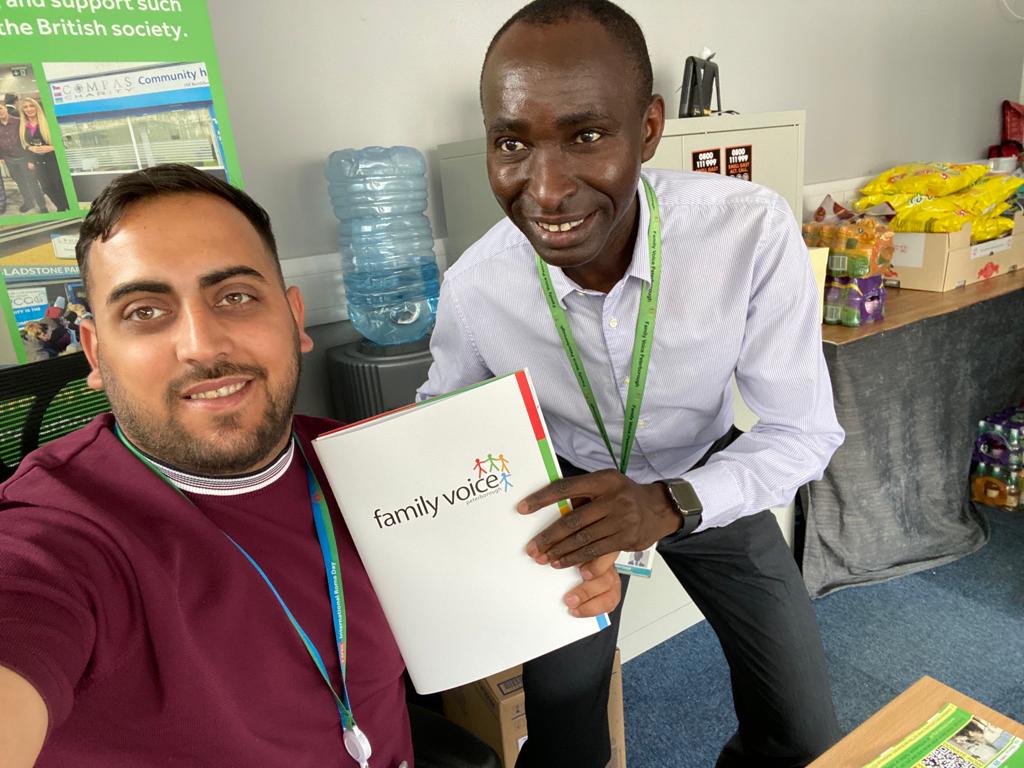
Information about reaching under-represented communities including examples from forums and the EDI toolkit
Read more
Contact Parent Carer Participation Advisers
Parent Carer Participation Adviser's support the forum and provide a sounding board for the forum leadership. Find your forum's named adviser here.
Read more
Social Media
Social media can be a powerful tool that forums can use to reach parent carers.
Read more Developing a communication plan
Information on how forums can develop a communication to help them reach parent carers in their local area.
Read more
Communication and gathering the parent carer voice
From reaching out to more families to forum websites, social media and communication plans.
Read more
Policies and Procedures
Find more information and downloadable templates for policies and procedures.
Read more