Nigel will be talking at our October conference. Parent carers of children with a rare condition are invited to join us
“Fatherhood is one of those momentous points in your life when you are awed by the miracle of birth. You know it will be life-changing – but I didn’t know how life changing it would be until Matthew came along. So, let’s talk about Matthew.
“Sophia, my wife had been carrying Matthew uneventfully for nine months and finally the day came at Eastbourne General Hospital when Matthew was born. Our natural reaction when we meet someone new is to look into their eyes but as soon as I looked into Matthew’s, I knew something was wrong. Both were closed and the one on his left side was sunken into his skull as if there was nothing there. It’s hard to relate, but you can imagine how excitement in one moment turns to uncertainty and fear for the future in the next. I can still remember sitting in the hospital room in those early hours recognizing that dreams and reality had collided.”
Contact was able to support us right at the start of our journey
“Matthew was diagnosed with a condition we had never heard about, Peter’s anomaly. We were told nobody really knew much about the condition or its prognosis. The one thing we did know was that he would be blind with potential significant neurocognitive impairments.
“As Sophia and I left the hospital we looked on the doctor’s notice board and saw a poster about Contact. This turned out to be a life saver as they were able to support us, and sign-post us to other groups right at the start of our journey. I have so much respect for what they do that I served for some time as a trustee and I’m still currently a Patron of Contact.”
Matthew inspired me to change my life!
“Matthew’s birth in 1996 was the catalyst for me to look at my own life and I vowed to work for companies who would give hope to people living with rare diseases. Within 6 months I was employed at Orphan Europe, a company that specialises in bringing drugs to market for rare diseases.
“I now serve as the global patient advocacy lead for Egetis, a Swedish based biotech company focused on creating a better future for those living with rare conditions including MCT8 deficiency – an ultra-rare, genetic condition which leads to multiple symptoms such as neurocognitive impairment, muscle wasting, lack of weight gain and elevated heart rate and blood pressure problems. The condition has a profound impact on both people living with the condition and their carers from birth. Find out more about World MCT8-AHDS Awareness Day on 8 October.
“Matthew is now 27 years old and living with carers in a residential setting. He still continues to love music, trips out and being with family. I hope the pictures show a young man living and loving life in spite of the many challenges behind and in front of him.
“I am acutely aware that I would not have this role and platform without Matthew and always pay tribute to him for inspiring me to be better. If it helps someone else be motivated to make a difference, I’ll continue to keep talking about Matthew!”
The UK government has announced a number of proposed reforms to the Work Capability Assessment.
What is the Work Capability Assessment?
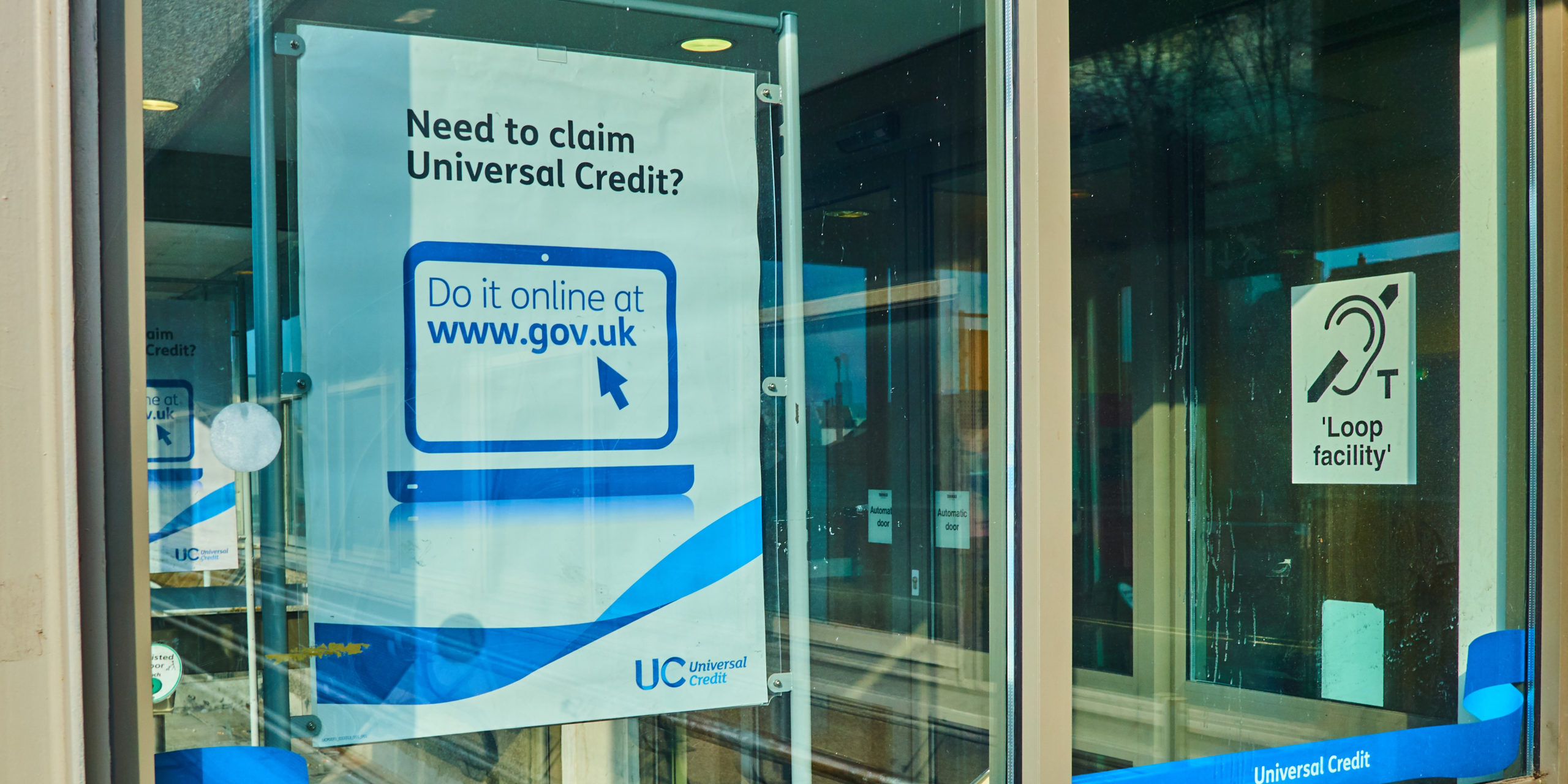
The Work Capability Assessment is a Department of Work and Pensions medical assessment. The DWP currently uses it to decide:
Whether a person with health problems is expected to look for work as part of a claim for Universal Credit or Employment Support Allowance (ESA).
Whether that person will receive higher payments as a disabled person part of their Universal Credit or ESA.
There are three possible outcomes of a Work Capability Assessment:
The DWP finds you fit to work.
The DWP finds you to have a “limited capability for work”.
The DWP finds you to have a “limited capability for work and work related activity’(LCWRA).”
If you are in the last group, the DWP cannot ask you to meet any work-related conditions like job seeking or training while claiming benefits. You are also entitled to an extra amount of benefit.
In the meantime, the government is now proposing making changes to the Work Capability Assessment from 2025.
The government argues that reform of the Work Capability Assessment is justified on the basis that flexible and homeworking opportunities have changed the world of work significantly in recent years. To that end, it is consulting on several specific changes that will see a drop in the number of people the DWP assesses as having LCWRA.
Mobilising
In looking at how the Work Capability Assessment deals with people who have difficulties in mobilising, it is consulting on whether it should:
Remove the mobilising activity entirely; or
Amend the LCWRA mobilising descriptor to bring it in line with the equivalent descriptor in PIP, so that people will need to have difficulties in walking 20 metres rather than 50 metres in order to have a limited capability for work; or
Under the Work Capability Assessment, a disabled adult can score points for difficulties in getting around without the assistance of another person, for example due to anxiety problems. The government is consulting on the options of:
Removing the ‘getting about’ activity entirely; or
Reducing the number of points awarded for difficulties in getting about.
Coping with social engagement
Under the Work Capability Assessment, a disabled person can score points for difficulties they have in engaging socially with other people face-to-face. The government is consulting on:
Removing the ‘coping with social engagement’ activity entirely; or
Reducing the points awarded for LCW descriptors for coping with social engagement.
Absence or loss of bowel/bladder control
Currently, people who experience a loss of bowel or bladder control score points under the Work Capability Assessment. Depending on the severity of the issue, the DWP may be find them to have a LCWRA.
The government is consulting on whether it should:
Remove the continence activity entirely; or
Amend the LCWRA continence descriptor so that claimants are required to experience symptoms ‘daily’ rather than ‘weekly’; or
Reduce the points awarded for the LCW continence descriptors.
Substantial risk to health
Under current rules, the DWP can still treat someone as having a LCWRA even if they do not qualify under the normal tests. This occurs when the DWP decides there is a “substantial risk to their physical or mental health or to the physical or mental health of someone else if [they are] found not to have a LCWRA”.
The government is consulting on whether to:
Amend the substantial risk definition so it does not apply in cases where a person could take part in “tailored or a minimal level of work preparation activity and/or where reasonable adjustments could be put in place to enable that person to engage with work preparation”; or
Remove the LCWRA risk criteria entirely, so that anyone who would meet the current threshold would instead be treated as having a limited capability for work only.
Our free online conference taking place on 4 October is a rare opportunity for you to meet and share experiences with other parent carers and rare condition support group members – and at the same time help shape and develop Contact’s growing network of rare conditions groups across the UK.
The average annual energy bill will drop to £1,923 in October for households in England, Scotland and Wales, the UK energy industry watchdog Ofgem has announced.
The energy price cap is the maximum amount energy companies can charge customers on standard tariffs for each unit of energy. The cap has been £2,074 since July, when it fell below the government’s energy price guarantee.
The energy price cap is not a cap on your total bill. While the maximum unit cost fixes the average bill at £1,923, any household with above-average energy usage will see their bill surpass this. This includes many families with disabled children.
Families paying almost double but can’t cut back
Commenting on today’s announcement, Una Summerson, Head of Campaigns at Contact, says:
“Families will welcome a drop in energy costs, but our Out of energy research shows that families disabled children are paying almost double that of an average UK household on their energy bills.
“Essential equipment like ventilators, food pumps and hoists, as well as more washing due to continence issues or more heating due to mobility issues, all add up to bigger bills. And for many it could be dangerous to cut back on usage.”
The government is failing by not introducing a social tariff
Like other charities and families themselves, we would like to see energy social tariff introduced.
Una continues:
“A social tariff would give discounted energy prices to disabled people, older people and carers facing high energy costs. It’s incredibly disappointing that the government has up until now failed to take steps to do this. We urge government to act and protect families who face higher energy bills due to disability costs.”
Worried about your household bills?
If you’re worried about how you’re going to pay your bills, talk to your energy supplier.
Parent carer Sarah Danby-Cooper cares for her 7-year old son Indiana and works in our wonderful Fledglings team too.
Sarah wanted to share the following with anyone who is finding the long summer break stressful.
“Like many parents out there, there is an inner struggle to showcase on social media that you are taking your child to every possible event and enriching their holidays with museum trips or even vacations abroad. However, for us, this is not always feasible.
“We understand our children, their needs, and how unfamiliar places that are overcrowded with other families can be overwhelming for them. It’s alright to feel disheartened, but the reality is, we know our children best.
“It’s perfectly fine to stay at home and enjoy playing board games or watching videos on iPads. We know what makes our children happy, and social media can often be deceiving. Remember, no one posts pictures of doing the dishes or lounging on the couch watching TV, but that doesn’t mean it doesn’t happen every day! Be kind to yourself and know that you have everything under control.”
If you have a 16-19 year old who’ll be staying in school or college after the summer holidays, remember to let the Tax Credit Office know by 31 August or you could lose out on tax credit payments.
Keep the Tax Credit Office informed or your payments will stop
Our benefits expert Derek Sinclair said:
“The Tax Credit Office always assume that a 16-year-old is a school leaver during the summer. As a result, they automatically stop any tax credit payments for a young person from 1 September.
“In order for your these payments to continue, you must contact the Tax Credit Office. You must confirm details of the course your 16-year-old will be doing after the summer.
“You still need to do this even if you live in England, even though 16-year-olds in England are required to remain in education or training until they are 18. This is because the definition of approved education used by tax credits is different from that used by the Department for Education.”
To make sure that your tax credit payments aren’t reduced, call the Tax Credit Office on 0345 300 3900. You should also contact the Child Benefit office to let them know separately on 0300 200 3100. Alternatively, you can let them both know online if you have a government gateway account.
Similar rule applies to 18 and 19-year-olds
Derek continues:
“As well as 16-year-olds, a similar rule applies to 18 and 19-year-olds. You also need to let the Tax Credit Office know if you have an 18 or 19-year-old staying in full-time non-advanced education or approved training after the summer. If you don’t, payments for them are likely to stop.”
What if I miss the deadline?
So long as you contact the Tax Credit Office by 31 August, your tax credit payments should not be affected. You can do this either by phone or online.
If you miss that deadline, phone the Tax Credit Office as soon as you can to make sure that payments for your 16-19 year old are re-instated as quickly as possible. The maximum these payments can be backdated is one month. If you don’t tell them until after 31 September, you will end up losing out.
Missing the deadline may be a particular problem if your 16-19 year old is the only child you get tax credits for. If that applies, your tax credits could stop altogether. If that happens, and you try and reclaim, HMRC may argue that you have to claim Universal Credit instead. Seek further advice if you find yourself in this position.
When can tax credit payments continue?
You can continue to get child tax credit payments for your 16-19 year old if they attend a course of non-advanced education that averages more than 12 hours supervised study a week. Payments can also continue if they are attending certain types of approved training. In England, payments can continue for a 16-19 year old if they are on a study programme.
If your child is temporarily out of education due to ill-health, but intends to return to full time non-advanced education in the future, contact our helpline for further advice.
I get Universal Credit child payments for my 16-19 year old rather than tax credits. What should I do?
We recommend that you leave a note in your online journal, making clear that your son or daughter will be staying on in full-time non-advanced education.
It is important to note that if your child is 19, Universal Credit payments you get for them as a child will stop at the end of August. This is the case even if you let the DWP know that they are staying on in non-advanced education. Child Benefit and Child Tax Credit payments for a 19-year-old in non-advanced education can continue until the day before they turn 20. But under Universal Credit rules, payments for a 19-year-old dependent cannot continue beyond the August after their 19th birthday.
If you get Universal Credit child payments for a 19-year-old staying in full time non-advanced education, contact our helpline. We’ll discuss the possibility of making a claim for Universal Credit for them as a young disabled adult to replace the child payments that will be stopping in your Universal Credit claim.
The new school term is just around the corner, yet many parent carers are still facing major hurdles to secure transport arrangements for their disabled child.
School transport is a big concern for our families around this time of year, so our education team recently hosted a Q&A session to assist parent carers in England with any questions or issues they may be having.
If you missed it, the Q&A is still available to read in our Facebook group – but to help, we’ve also rounded up the top 5 questions asked during the session below.
1. The LA says my son isn’t eligible for free transport because he isn’t attending his nearest mainstream school and the named school in his EHC plan was a parental preference. Is this correct?
If the EHC plan names your preferred school with no conditions and it is the only school named, then it automatically counts as the closest suitable for transport purposes. You would only be liable for travel costs only if the EHC explicitly states in section I that there is a closer suitable school.
If the local authority (LA) considered that there was a closer school that could meet your child’s needs, they should have discussed this with you and been clear about the transport implication. For example, they could have named your chosen school as parental preference but stated in your son’s EHC plan that there is a closer suitable school, and so that you would be responsible for school transport.
I suggest you take a look at section I of your son’s EHC plan to check the wording used by the LA. If section I is in their favour, you may be able to appeal to tribunal to get it changed – for example, by having your preference named as the only school in the EHC plan.
2. My son often has meltdowns in the morning, but he needs to be calm before boarding the bus as it’s a long journey. Should the driver have to wait for my son, especially if there are no other children on the bus?
As your son is the only child in the vehicle, it would be considered a reasonable adjustment for the driver and escort to wait for him until he is calm. If they have other responsibilities and are therefore strained with time, another reasonable adjustment that could be made is hiring adults that are happy to wait as long as necessary to ensure the child is calm. Paragraph 80 on page 28 of the government’s statutory Travel to School Guidance outlines the need for arrangements to be safe and stress-free.
The guidance was also recently updated to include a specific section about managing behaviour related to a child’s special educational need or disability. This new section, on page 34, acknowledges that: “Some children may find change distressing and benefit from having consistency in their travel arrangements wherever possible. Where a change to travel arrangements is planned, time to get used to the idea of a new route or vehicle, or an opportunity to meet a new driver or passenger assistant, may be helpful.”
3. Do I need legal representation at a transport appeal meeting? And what can I do if I lose the appeal?
Most parents do not have legal representation for transport appeals. However, do get representation if that would help your family feel more confident at the appeal panel. It is likely the panel will be virtual, unless you have asked for it to be in person. Taking your son could be useful if the appeal panel is in person, but the local authority (LA) will be making their decision using professional evidence and the law.
If the appeal is lost, the next stage would be to make a formal complaint to the LA about their decision. If you are not happy with the outcome of the local appeal process, you may be able to take matters further to the Local Government Ombudsman (LGO). You can do this if you think the local authority did not follow proper procedure in the appeal or that the decision was not in keeping with the law. You can read more about this on our school transport webpage, or visit the LGO’s website for detailed information about how to make school transport complaints as well as examples of previous complaints they have considered.
4. Our LA is considering replacing all post-16 transport provision with personal travel budgets and travel training, but they haven’t been clear about how eligibility will be assessed. What can I do?
A personal travel budget (PTB) or travel training will not necessarily be appropriate for all young people. The local authority (LA) may offer a PTB and training in the first instance, but they must consider expectational circumstances. Paragraph 29 on page 10 of the government’s statutory guidance for post-16 transport and travel support provides details of the needs and circumstances that the LA must have regard to when assessing transport arrangements.
Bear in mind that an LA must follow certain procedures when consulting on changes to its school transport policy. Inadequate consultations, inadequate policies, and blanket policies that restrict eligibility are all issues that we have identified across local authority transport policies. Some of these issues are potentially, and in some cases actually, unlawful – and could be reason to challenge the policy. I suggest taking a look at our webpage bout challenging transport policies for more information about this.
5. My LA agreed to issue an EHC plan for my child last year, but we’ve not even seen a draft plan yet. Their transport team won’t organise transport until this plan is in place. How can we sort this out before September?
This sounds very frustrating. First of all, I suggest that you put in a formal complaint to your local authority about the delay to the EHC plan, as they are well outside the statutory timescale.
The transport team clearly need to know which school your child is going to in order to assess eligibility. However, having an EHC plan is not a necessary condition for transport. If everyone is in agreement about the chosen school and naming it is just a formality, then I suggest asking the SEN team if they can put this in writing in order to move things forward quickly.
If you run into any issues or need further support, get in touch with our helpline so that one of our education advisers can help you.
Clinically vulnerable children and carers in the UK will be offered the Covid vaccine booster this autumn.
People aged 12-64 who are ‘household contacts’ of people with weakened immune systems will also be offered the booster.
The Joint Committee on Vaccination and Immunisation (JCVI) has advised that the programme is completed by early December 2023.
Public health experts expect Covid to circulate more widely over the winter with clinically vulnerable people most at risk of getting seriously ill from the virus.
Eligibility: who counts as a carer and who is considered clinically vulnerable?
People eligible for the booster this autumn include:
Family carers can get an autumn booster if they are eligible for Carer’s Allowance or if they are aged 16+ and are sole or primary carer of an elderly or disabled person at increased risk of dying if they get Covid (and therefore are clinically vulnerable).
Clinical risk groups for children under 16 include those with:
Chronic respiratory diseases
Chronic heart conditions
Chronic conditions of the kidney, liver or digestive system
Chronic neurological disease (including those with a neuro-disability and/or neuromuscular disease that may occur as a result of cerebral palsy, autism, epilepsy or muscular dystrophy; those with Down’s syndrome; or those with severe or profound and multiple learning disabilities, including everyone on the Learning Disability Register)
Endocrine disorders
Immunosuppression
Asplenia or dysfunction of the spleen
Serious genetic abnormalities that affect a number of systems
NHS England, NHS Wales and the Public Health Agency in Northern Ireland are yet to confirm when or how eligible people can access an appointment, but the JCVI has recommended delivering the booster programme by early December.
In Scotland, appointments are due to start from 18 September beginning with those aged 65+ or aged 12-64 in a clinical risk group. People should wait for NHS Scotland to contact them with more details. Where possible, the Covid vaccine will be administered alongside the flu jab.
So we were delighted to hear that Unity Mutual are helping parents access savings in Child Trust Funds on behalf of disabled youngsters who lack mental capacity to manage their money.
Helen from Sheffield got in touch with us to say:
“After reading Contact’s advice about Child Trust Funds, I contacted my son’s provider, Unity Mutual. They asked me to fill out a form and to see a copy f DWP appointee certificate. The whole process took 12 days from start to finish. We can now use some of these savings to get a wheelchair accessible sand table and toys as well as a sensory wall toy which my son will love.”
We’d encourage other parents to do what Helen did and contact their Child Trust Fund provider about accessing savings.
Unity Mutual joins One Family, Foresters, and Columbia Threadneedle who have put in place a scheme that saves families from having to go through the stressful complexity of applying to the Court of Protection to access savings.
If you have started the Court of Protection process to access a Child Trust Funds and would be willing to talk about your experience to the media, please get in touch with our head of campaigns [email protected]
We know that schools can provide routine and structure for many children with additional needs. When this routine stops, for example in the school holidays, some children can find the change hard to manage.
To help, we’ve put together 10 top tips to help take some of the stress out of the holidays ahead:
Mark up key dates for your family this summer on a calendar to help your child understand what’s coming up. Include things like days out, days you are working, days your child will be at childcare or a playscheme, any holidays away – and the day school starts again. Crossing the days off will show your child that school is getting closer.
Use photographs and other visuals to show your child daily routines. For example the Tom Tag range in our Fledglings shop uses symbols to show a series of separate tasks or the steps involved in a task that are part of a routine for a whole range of different situations.
Social stories can be a great way to help your child what’s happening this summer holiday.
Find some free activities. Look out for places where kids can eat for free and family days out as well as museums, libraries, parks, BBC online games, craft activities at home. Maybe you have a local children’s centre or toy library. Look out for autism-friendly attractions by checking accessibility guidelines.
Don’t over-plan activities – you and your child will be exhausted! It’s important to allow for down-time.
Get out early and take a packed lunch and snacks!
When you are out and about don’t forget to bring a bag of distractions and spare clothes.
Don’t forget to take emergency contact information with you.
If you live in the Midlands or London and have an autistic child check out the free parent workshops we have coming up including support strategies for the summer holidays.
Take action on the lack of holiday childcare for families with disabled children
The committee, which scrutinises the value for money of government projects, estimates that more than £1.7billion is sitting in accounts waiting to be accessed. At least 80,000 of those accounts are owned by young people with a learning disability who lack mental capacity.
Their report backs up what Contact and campaigners have been saying about the Court of Protection process needed when a disabled youngster lacks mental capacity to access savings – it’s difficult, time consuming, and costly.
“The money will mean so much to Harry – but at the same time the bureaucracy, cost, and overall impact of the legal implications is huge. I saved for my son, like I did for his brother – the whole system is wrong if it deprives Harry of what is rightfully his.”
Contact has joined parent campaigners, legal and financial firms campaigning to unlock £210 million of savings in Child Trust Funds for 80,000 disabled youngsters. To date nearly 2000 of our supporters have written to their MP calling for a simplified process to help release savings.
“All we’re asking is for the government to come up with a simple process. None of us want fraudulent activity to take place. But you don’t necessarily need such a heavy duty process.”
As of this week more than £58 million of savings in Child Trust Funds has been locked away from disabled youngsters.
Martin Lewis speaks out
Martin Lewis, the financial expert, has recently raised his concerns about the issue. He agrees that the Government has so far ‘failed to meaningfully act’ to help young people locked out of their savings. He wrote to Children’s Minister calling for action, you can read her response in his blog: https://www.moneysavingexpert.com/news/2023/07/martin-lewis-minister-responds-child-trust-funds/
What do MPs say should be done?
The Public Accounts Committee report makes a number of recommendations, including calling on the government to set out what action they are taking to help the families of young people who lack mental capacity to access their Child Trust Funds without excessive bureaucracy and cost.
It also says government should do more to find and contact young people who have not claimed their Child Trust Fund.
We are calling on the government to increase the scope of the DWP Appointee Scheme to cover Child Trust Funds and Junior ISAs up to £5,000.
This would bring England and Wales in line with Scotland, where an Access to Funds scheme makes it easier and cheaper for young people who lack mental capacity to access their savings.
If your child lacks mental capacity to manage their own money talk to your provider. Some providers including One Family and Foresters Financial will consider each situation on a case-by-case basis, applying a process that mirrors the DWP’s appointee paperwork requirements to enable parents to access accounts using documentation that they already hold.
School transport is a big concern for families with disabled children. We hear from many families whose child is clearly eligible for school transport, but they have been refused. And from families whose child has been offered unsuitable transport such as a disabled child who needs close supervision when out in public offered a bus pass to get public transport to school.
That’s why we’re holding aspecial Facebook Q&A over in our closed (private) Facebook group on 3 August, when you can ask our education experts any questions you have about school or college transport for your child. It’s a great opportunity for anyone worried about their child’s school transport to get immediate, expert advice and help.
The session will take place in writing (not a video livestream). This means you can stop by our group anytime between 10am and 11:30am on Thursday 3 August to ask your question in the comments under our Q&A post. Then, simply come back later at a time that suits you to read our team’s reply.
Can’t make 3 August ?
Once the session on 3 August has finished, you’ll be able to read through all the answers at a time that suits you.
Parents in the Midlands and London who care for a child with autism are invited to our free online workshops and drop-in sessions next week. Your child does not need a diagnosis of autism in order for you to attend.
Workshop for parents of children with anxiety
This workshop will help you understand the causes of anxiety, how it makes your child feel and strategies to help.
For Midlands parent carers this workshop will take place on Tuesday 25 July, 10:30-11:30. Book your free place here.
For London based parent carers this workshop will take place on Tuesday 25 July, 2-3pm. Book your free place here.
Virtual Drop-in session
This informal one-hour session is for parents and carers of autistic children to meet and chat. We can also offer signposting to local support services.
Commissioned by NHS England’s Workforce, Training and Education Team, these workshops are part of the Autism Central Peer Education Programme. This new programme aims to offer families and carers of autistic people high-quality and accessible autism information, education and coaching and is co-delivered by autistic people, families and carers.
Contact and Ambitious about Autism are the London and Midlands Regional Hub partners for the programme.
Thanks to everyone who attended our recent Facebook Q&A session about post-16 education in England for your disabled child.
There’s certainly a lot to think about when your disabled child turns 16 – from the next education setting they will attend and the SEN support they may need, down to the new legal rights they will have as young people.
To help, we’ve rounded up the top 5 questions that parent carers asked our SEN advisers during a Q&A session earlier this month in Contact’s private Facebook Group.
Q. My son finishes SEN school aged 19 next summer. We’ve been told there isn’t a place at the local colleges for a variety of reasons such as they don’t have space for the physical equipment, or lack of suitably qualified staff, or there is no suitable course for him. We would love him to continue his education as he is still learning. He has an Education, Health and Care (EHC) plan. What are our next steps? Does the local authority have to find a suitable solution/place for him?
A. As your son would like to remain in education and still requires special educational provision, the local authority (LA) have a duty to find a suitable setting or make a suitable arrangement for your son. As he will not be moving until next summer, there is enough time for your LA to formally start the process of reviewing and amending the plan. The LA also have a duty to consult the settings that you would like them to consider for your son. Consultation involves sending these settings a copy of the EHC plan and reports. The settings must then respond with their opinion about whether they have space or a suitable course.
Q. Is there any financial support out there for trying to do A levels from home? Are there any other study groups or organisations from home schooled 16 plus?
A. If a young person has an Education, Health and Care (EHC) plan and it is evident that they cannot physically attend a post-16 setting, it is possible for the local authority to fund education at home. However, if the young person does not have an EHC plan, it is unfortunately unlikely that the local authority will provide any financial support.
There may be a grant-giving organisations that can give you financial support. We have an education grants list with detailed information about different charities that provide educational grants to families. It may also be worth using the Turn2Us Grants search tool on our website onto check if there are other organisations can help you but that haven’t been included in our education grants list.
For further information on home education, we would suggest contacting Education Otherwise. As well as offering home education resources, they also run regional Facebook communities where you can meet other home-educating parents and find groups in your local area that meet regularly in person.
Q. I really need support to get a college Education, Health and Care (EHC) plan right. The LA have failed him previously and he’s behind and I only have a couple of days left of my 15 day review of the draft. Can I get some help? The plan is so woolly.
A. You could ask your local authority (LA) for an extension as you are still seeking specialist advice in order to make an informed response. Many LAs are happy to give another week or so.
To help you check the plan, have a look at our information specifically on checking the draft plan which goes through each section in turn. There is also some useful information from the Council for Disabled Children on examples of good practice in EHC plans.
Finally, although we don’t have enough capacity to look at documents, if you call our education helpline on 0808 808 3555 we would be happy to talk through the principles of what should be in the EHC plan. The helpline is open Mon – Fri from 9.30am to 5pm (with a later start on Tuesdays from 10.15am).
Q. We had a meeting with the college about the support they can put in place for my son who explained really well in his own words, that because of autism, adhd and dyslexia, he can’t remember things, even short term and he was told he would have to learn how to remember! I know if the first couple of months don’t go well he will leave education and I will never get him back in and he is not capable of a job at this point in his development, how do we get the college to fully understand his needs and support him correctly?
A. I am so sorry to hear that he was told to learn to remember – this could be considered discrimination. If you have not been already, ensure that you and your son are speaking to the learning support team in the college. Further education colleges have a legal duty to use their best endeavours to secure the special educational provision that a young person needs. They must fulfil this duty for all students with SEN, even if they don’t have an EHC plan. There should also be a named person in overall charge of SEN provision at college, similar to a school’s special educational needs coordinator (SENCO). Take a look at our information about SEN support in post-16 settings.
Colleges also have a duty to not discriminate against disabled young people, and they must make reasonable adjustments to prevent them being placed at a substantial disadvantage.
I suggest emailing the learning support team in the college to remind them of these duties. If you’d like, feel free to call our helpline on 0808 808 3555 to speak to an education adviser about this beforehand.
Q. Do (young disabled people) have to go to day centres when they turn 19 or should the Education Health and Care (EHC) plan still apply even with severe Learning Difficulties? My Local Authority (LA) are suggesting day centres.
A. The EHC plan must continue as long as the young person still has special educational needs, stays in some kind of education or training, and it is still necessary for the LA to arrange the extra support that they need in order to achieve the educational outcomes set out in their EHC plan. Some special schools have developed separate further education provision for 19-25 year-olds.
It may be worth asking the LA to put their view in writing with reasons as to why they are suggesting day centres.
Many disabled children need structure and routine to maintain sensory regulation which helps reduce anxiety and challenging behaviour. When structure is absent, for example in the summer holidays, disabled children’s needs may increase not just in the home but also upon their return to school.
Parent carers based in London and the Midlands are invited to join one of our two free online workshops providing you with tips and tools for supporting children with autism during the summer holidays.
Book your free place today. You don’t need a diagnosis for your child in order to attend.
About these workshops
Commissioned by NHS England’s Workforce, Training and Education Team, these workshops are part of the Autism Central Peer Education Programme. This new programme aims to offer families and carers of autistic people high-quality and accessible autism information, education and coaching and is co-delivered by autistic people, families and carers. Contact and Ambitious about Autism are the London and Midlands Regional Hub partners for the programme.
Has your family asked for help from social care only for them to refuse it?
Or worse, have you been put through an unwarranted child safeguarding process?
If so, we want to hear from you.
The government in England is currently consulting on changes to its statutory guidance, Working Together to Safeguard Children.
We are preparing a response to the consultation. And we want to make sure we fully include the views and experiences of parents of disabled children.
What is Working Together?
Working Together is guidance that organisations in England must follow to promote and protect the wellbeing of children. It covers both the regular support disabled children get from social care services, as well as safeguarding and child protection processes.
The government is updating the guidance as part of its overarching long-term strategy for children’s social care in England, Stable Homes, Built on Love. The draft guidance says it “wants a stronger focus on support and protection for disabled children”. It proposes changes to “reshape and improve the way children’s services support disabled children and their families”.
What are the issues?
Social care is consistently the third most common inquiry to our helpline. Often we hear from parents whose child is refused a needs assessment or is assessed and then face delays getting support.
Research by the charity Cerebra in 2021 found parents of disabled children often felt humiliated and blamed when they sought help from social care services. More rarely, disabled children may be subjected to care orders when the crisis could have been averted with much earlier social care support for the family.
Alongside disabled children’s social care experts, we are concerned that proposed changes do not address these challenges families are facing with the assessment process.
There’s a lot to consider in terms of your disabled child’s future education as they approach 16 – from the next setting they will attend and the SEN support they may need, down to the new legal rights they will have as young people.
To help you understand what your child’s education rights and options are at 16, our SEN advisers are running a special Q&A session for parent carers in England this Thursday (13 July) at 10-11:30am in Contact’s private Facebook Group.
This is a great opportunity for families in England to ask questions and get expert advice from our helpline team about your child’s education rights at 16, including:
Education and training options available.
SEN support at college (mainstream or specialist).
The session will take place in writing (not a video livestream). This means you can stop by our group anytime between 10am and 11:30am on Thursday to ask your question in the comments under our Q&A post. Then, simply come back later at a time that suits you to read our team’s reply.
Can’t make it on 13 July?
If you can’t make the Q&A, don’t worry: all of the questions and answers will remain available to read in our group once the session is finished.
To help families, we were delighted to run a special Q&A session in our Facebook Group last week where parent carers had the chance to get direct advice from our helpline team.
We’ve rounded up the top 5 questions asked during the Q&A below – but you can head over to our group to read all questions and answers in full!
1. What are the best places to go to for help with funding towards holidays and play schemes?
Many charities can help families with this, ranging from small local charities to large national organisations such as the Family Fund – who often help with holidays. Our Grants webpage has information and tips about searching for a grant, as well as our own downloadable grants list with a summary of grant-giving charities and trusts.
Social services departments have a duty under Section 17 (10) of the Children Act 1989 to safeguard and promote the interests of ‘children in need,’ and to promote their upbringing. The statutory guidance for assessments, called ‘Working Together to Safeguard Children’, requires the local authority to consider factors such as health and safety, and this should include the child’s social, emotional, and developmental needs as well as family and social relationships.
Families with a disabled child may be entitled to help towards a holiday from local social services departments under Section 2 of Chronically Sick and Disabled Person’s Act 1970 and The Children’s Act 1989. You can find more advice on page 10 of our Services & Support parent guide (England only).
However, even where the need for a holiday is recognised, provision will be subject to the council’s eligibility criteria. You can check your local authority website’s ‘Local Offer’ for information on needs assessments or ask to see the eligibility criteria set by your local authority’s Children’s Services Department.
2. What are the criteria you have to meet to access holidays for your disabled child?
To access holidays outside the universal provision within the local authority (meaning provision that is open to all children and young people with no additional needs), you may need to request a ‘child in need’ assessment. Our website has more information about this assessment and a downloadable template letter you can use to request it.
After social services have carried out this assessment, they need to reach a decision about whether you and your family are in need of services, and which services are needed. In many local authority areas, a panel decides the package of services that may be offered. A care plan should be agreed between social services and you and your family, explaining the needs identified and explaining how these needs will be met. Short breaks or holidays may then be offered to help meet one of your identified needs. See page 10 onwards of our Services & Support parent guide for more information about services that could be offered (England only).
However, the criteria for an assessed need that may result in holiday, respite or short breaks package is not available nationally. Each local authority has their own eligibility criteria based on a number of factors. Unfortunately, these criteria are not always published, but you can check your local authority website’s ‘Local Offer’ or ask your social worker (the person who carried out the needs assessment) to see the eligibility criteria set by your local authority’s Children’s Services Department.
If you’re in England, this is the kind of issue you may also choose to raise with your local Parent Carer Forum so that they can work with the local authority to address any problems or difficulties families are facing.
3. How can I access short breaks for my disabled child?
To access short breaks, the starting point usually involves requesting a needs assessment from your local authority’s social services department. They have a duty to assess the needs of all disabled children, and you are entitled to get your needs as a carer assessed too.
This assessment is a process used decide if your child or your family require extra help to meet any identified needs, such as in the form of short breaks or other services. Our website has more information about how to request this assessment, including a downloadable request template letter you can use.
After social services have carried out an assessment, they need to reach a decision about whether you and your family are in need of services, and which services are needed. However, please be aware that each local authority uses their own eligibility criteria to determine whether a child or family qualify for services. See page 22 of our Services & Support parent guide for more information about this (England only), or take a look at our online advice and factsheet for advice about accessing short breaks.
4. Most holiday groups find my autistic daughter too ‘disruptive’. Where can I find groups that are inclusive and equipped to work with disabled children?
Have a look at your council’s Local Offer, which should be available on their website. This should have information about short breaks and other services for families in your area. You could also get in touch with your council’s Family Information Service who may be able to help, as well as with your Parent Carer Forum for more information about local provision.
It’s worth being aware that the Equality Act 2010 applies to all businesses and services and protects disabled people by ensuring services make ‘reasonable adjustments’ to allow accessibility. You could get advice on whether the groups and schemes you have tried are potentially breaching the Equality Act. The Equality Advisory and Support Service can give you excellent advice on this. They offer a Freephone helpline (0808 800 0082) as well as other ways of getting in touch.
5. Where can I find more information about short breaks or holiday clubs in Kent? My council’s Local Offer doesn’t give clear answers.
I’m very sorry to hear that your council’s Local Offer is not helpful. You can get in touch with Kent’s Family Information Service to see if they know more. It’s worth noting that all councils must have a Short Breaks statement on their website too. Take a look at Kent County Council’s statement on their website for more information.
Your local authority’s social services may be able to help with funding, short breaks or holiday service provision. The starting point to access this support is getting an assessment of your child’s and family’s needs. Our website has a downloadable request template letter you can use, and our Social Care pages will take you through the whole process of requesting an assessment through to what help you may be able to get.
We also have online advice about where to find holiday clubs, accessible play schemes and other recreational services near you.
Get the latest SEND updates, benefits advice, practical help caring for your child, plus free workshops and family events in our weekly email newsletter.
(Make sure you select ‘News updates’)